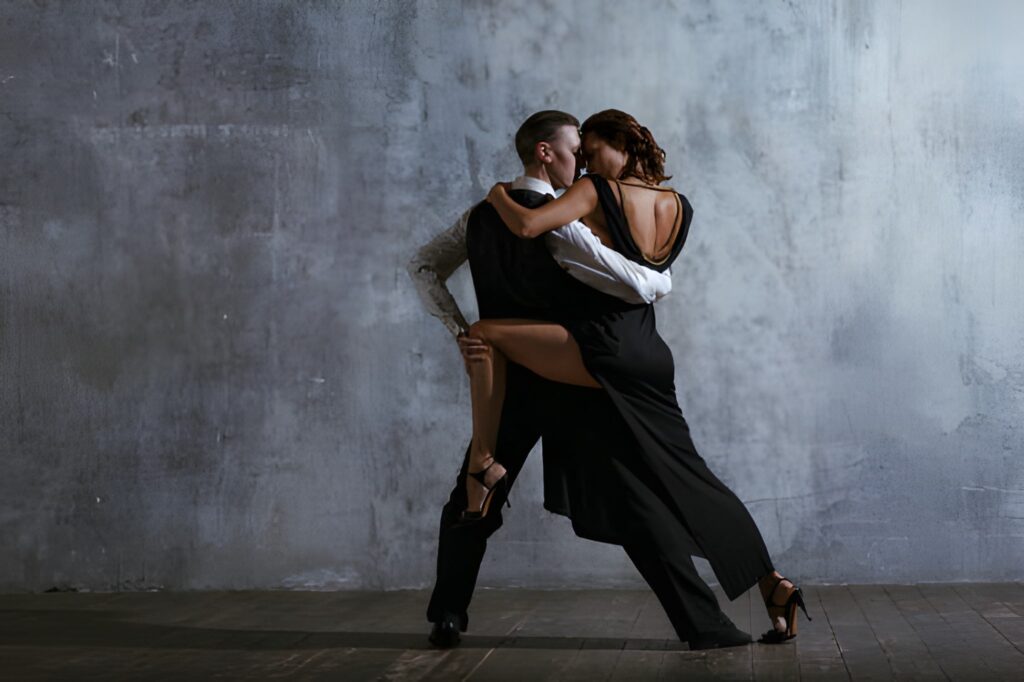
You’ve been dancing. You can execute basic patterns in most of your dances. You’re getting comfortable with lead and follow, finding the music, moving with a partner. You’re Bronze 1 – and now you’re looking at Bronze 2.
What’s actually different? What changes? What should you expect?
Here’s the honest preview of what happens when you build the bridge from Bronze 1 to Bronze 2.
The Construction vs. Decorating Metaphor
Think of Bronze 1 as construction. You’re building the house – the foundation, the walls, the basic structure. Everything is functional but unfinished. The house is livable, but it’s not beautiful yet.
Bronze 2 is decorating. The structure exists. Now you’re adding character – paint colors, furniture, artwork, the details that make a house feel like a home.
In dance terms: Bronze 1 teaches you to execute patterns correctly. Bronze 2 teaches you to execute them expressively. The “what” is established; now comes the “how.”
This doesn’t mean Bronze 2 is easier – decorating decisions are genuinely difficult. But it builds on a solid foundation rather than starting from scratch.
What Stays the Same
First, some reassurance. Much of what you learned in Bronze 1 remains central:
Timing and rhythm. You’ve developed a feel for the music. That doesn’t reset. Bronze 2 uses the same timing – you’re just doing more interesting things within it.
Basic frame and hold. Your frame fundamentals transfer directly. Bronze 2 refines rather than replaces them.
Lead and follow principles. The communication between partners works the same way. Bronze 2 leads and follows are more nuanced, but the underlying mechanics are familiar.
Your Bronze 1 patterns. You don’t stop using what you learned. Bronze 2 patterns often link to and build from Bronze 1 material. The vocabulary expands – it doesn’t replace.
What Changes
Now the new territory:
Technique gets more specific. Bronze 1 teaches “put your foot here.” Bronze 2 teaches “put your foot here with this specific action, this timing, and this quality of movement.” The precision increases.
Character development begins. Each dance has a personality. Bronze 1 introduces the dance; Bronze 2 develops its character. You’re not just dancing Waltz – you’re expressing what Waltz feels like.
Patterns gain complexity. More direction changes. More footwork variations. More options for linking patterns together. The choreographic possibilities multiply.
Styling enters the picture. Arm movements, head positions, expressive gestures – the elements that transform competent dancing into attractive dancing. Bronze 2 begins this development.
In fact, many students find Bronze 2 more interesting than Bronze 1 precisely because the dancing starts to feel less mechanical and more personal.
Dance by Dance: What’s Coming
Here’s a preview of what each major dance develops in Bronze 2:
Foxtrot: The Long Game
Bronze 1 Foxtrot establishes the smooth, continuous movement that defines the dance. You learned basic box, promenade, rock turns – the essential vocabulary.
Bronze 2 Foxtrot introduces the long game: extended patterns that travel further, combinations that flow seamlessly, and the concept of swing and sway. You’ll learn to feel the characteristic rise and fall more deeply.
The Foxtrot becomes more about journey than arrival. You’re not just executing patterns – you’re creating unbroken, elegant motion across the floor.
Pro Tip: Pay attention to your contra body movement in Bronze 2 Foxtrot. This is where the dance starts to look effortlessly sophisticated.
Waltz: The Geometry
Bronze 1 Waltz teaches the three-count timing, the rise and fall, and basic patterns like box, progressive, and turning patterns.
Bronze 2 Waltz emphasizes geometry – how your body moves through space on curves rather than straight lines. Turning becomes more important. The shape of your movement becomes more deliberate.
You’ll also develop the characteristic “lift” of Waltz – that floating quality that makes it one of the most beautiful dances to watch.
Cha Cha: The Hip Action
Bronze 1 Cha Cha establishes timing and basic figures. You can do the dance. But if you’re honest, the hips might feel a bit mechanical.
Bronze 2 Cha Cha addresses this directly. Hip action – the authentic Cuban motion that makes Latin dances visually compelling – becomes a primary focus. You learn to settle properly, to let the hips move as a result of leg action rather than separate effort.
This is the level where Cha Cha starts to look Latin rather than just feel like a different rhythm.
Rumba: The Softness
Bronze 1 Rumba teaches the slow, controlled timing and basic partnership patterns. It establishes Rumba as a dance of connection rather than speed.
Bronze 2 Rumba develops softness – the quality of movement that makes Rumba romantic rather than stiff. You learn to move with intention and control but without tension. Arms begin to participate as expressive elements, not just balance aids.
The emotional character of Rumba becomes more accessible. You’re not just dancing with someone – you’re dancing to someone.
Tango: The Sharpness
Bronze 1 Tango introduces the staccato character, the closed hold, and basic figures. It’s intense from the start – but Bronze 2 intensifies further.
Bronze 2 Tango emphasizes sharpness – the dramatic stops, the rapid movements, the “attack” that makes Tango theatrical. You learn to contrast sharp and smooth, to create dynamic range within the dance.
Head movements begin to develop. The connection with your partner becomes more dramatic. Tango starts to feel like a performance, not just a dance.
Swing: The Elasticity
Bronze 1 Swing establishes the basic rhythm, connection, and essential patterns. You can dance through most swing music and hold your own.
Bronze 2 Swing develops elasticity – the bounce, the stretch, the energetic quality that makes swing infectious. The triple step becomes more grounded. The rock steps develop more personality. The entire dance becomes bouncier and more joyful.
You’ll also learn more variation, including different ways to execute similar moves depending on the music and partnership.
The Bridge-Building Process
Transitioning from Bronze 1 to Bronze 2 isn’t a single step – it’s a gradual bridge. Here’s what the process typically involves:
Refinement of Bronze 1. Before adding Bronze 2 material, your instructor will often refine your Bronze 1 execution. Technique improvements make Bronze 2 learning smoother.
Selective introduction. You won’t learn all Bronze 2 content simultaneously. Different dances advance at different rates based on your strengths and readiness.
Integration work. Bronze 2 patterns need to connect with Bronze 1 patterns. Part of the learning is figuring out how pieces fit together into flowing routines.
Application through events. Practice Parties and showcases give you chances to use Bronze 2 material socially and competitively, cementing the learning.
Common Challenges
A few things students commonly find challenging during the Bronze 1 to Bronze 2 transition:
Feeling like a beginner again. You got comfortable at Bronze 1. Bronze 2 material creates temporary discomfort. This is normal – progress requires leaving comfort zones.
Coordinating new elements. Adding hip action while maintaining timing while executing a new pattern while leading/following clearly – the cognitive load increases before it decreases.
Patience with character development. Technique improvements happen faster than character development. The “feel” of each dance takes time to internalize.
Over-focus on new material. Some students neglect Bronze 1 patterns while learning Bronze 2. Both levels need attention – they’re complementary, not sequential.
What Success Looks Like
A successful Bronze 2 dancer:
- Executes patterns with improved technique and styling
- Shows recognizable character for each dance
- Combines patterns fluidly rather than treating each as isolated
- Demonstrates appropriate musicality – dancing with the music, not just to it
- Maintains quality connection with partners throughout patterns
- Shows confidence and presence on the floor
You’re not expected to master all of this immediately. These are goals that develop throughout the level. But knowing what you’re building toward helps focus the journey.
The Payoff
Why push through the discomfort of Bronze 2 learning?
Because this is where dancing becomes genuinely expressive. Bronze 1 gives you capability. Bronze 2 gives you artistry. The difference is visible to anyone watching – and more importantly, it’s feelable to you.
Bronze 2 dancers enjoy their dancing more. The patterns are more interesting. The musicality is more rewarding. The connection with partners is deeper. The experience transforms from “I can do this” to “I love doing this.”
In fact, many students report that Bronze 2 is where they got hooked – where dancing stopped being a skill to acquire and became a pursuit they genuinely loved.
The bridge is worth building. The other side is worth reaching. And you’ve already built the foundation that makes the crossing possible.
Ready to start decorating?