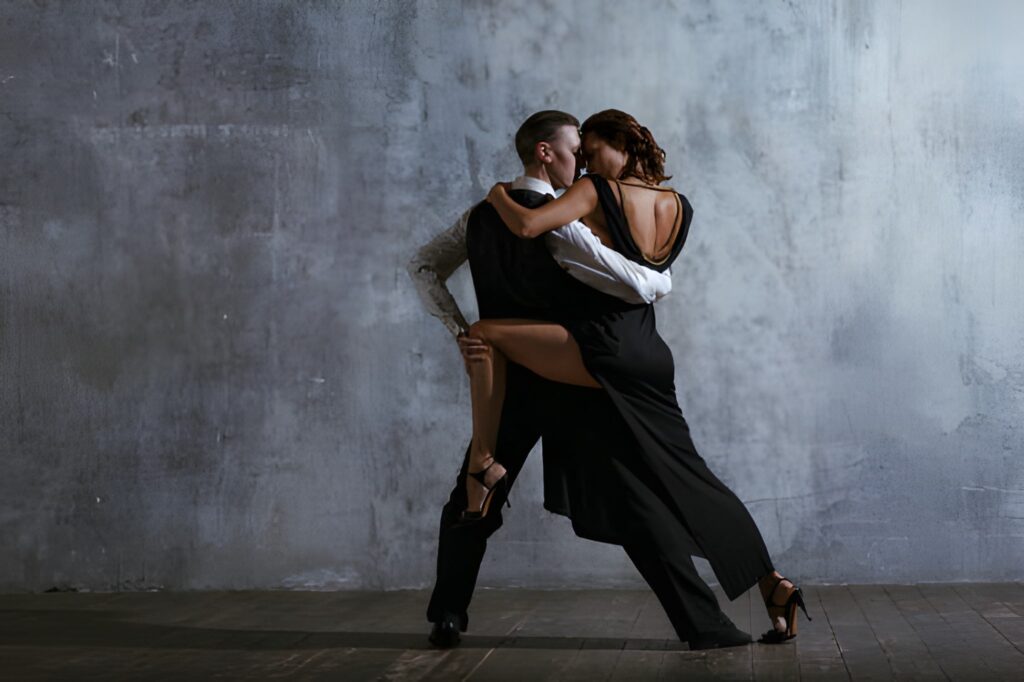
Buying Your First Dance Shoes
Are those tennis shoes you’ve been wearing not cutting it lately? It may be time to invest in your first pair of dance shoes.
Here’s the thing – there comes a point in every dancer’s journey where street shoes become the enemy. You’re trying to execute a smooth pivot, and your rubber soles grip the floor like they’re afraid of letting go. Your Foxtrot turns into a friction fight. Your spins become stumbles.
The right dance shoes change everything. But where do you start?
Before You Shop: The Sizing Surprise
There are plenty of online retailers to choose from, but that may not be the best place to start. Ballroom dance shoes don’t generally match your street shoe size. In fact, you may normally wear a size 8 but may find that you’ll have to wear a 7.5 or even a 7 in ballroom shoes.
The best thing to do is visit a local retailer; even though online has a huge inventory, by visiting a store you will have a better idea of the fit.
You will also want to make sure your new dance shoes have suede soles not leather soles. Leather soles tend to be slippery whereas suede will provide you with some grip – but still allow you to turn and pivot smoothly. It’s the Goldilocks zone of dance floor friction.
Ladies: The Glitter Temptation
As tempting as it may be, step away from the glittery 3-inch heel Rhythm shoes.
I know what you’re thinking: “I wear heels all the time, these will be no problem.”
There is a distinct difference in the structure of Rhythm shoes (open-toed heels) and your fabulous Manolos in the closet. Dance shoes are meant to be pliable and move with the flex of your foot. They bend where regular heels would fight you.
It’s not that you can never buy those sparkly shoes; they’ll just take some getting used to, because you may feel a bit wobbly in them at first.
Your First Shoe Options
Option 1: Practice Shoes
This is our top recommendation for beginners. Practice shoes are universal and can be used for all your dance needs in the studio. They’re comfortable, supportive, and won’t make you feel like you’re learning to walk all over again.
Option 2: Low-Heel Open Toe
If you’re partial to the open toe look, you can buy a pair with a low heel. You get the aesthetic without the ankle anxiety.
Option 3: Smooth Shoes (Closed Toe)
These have a little more structure and can be used in both Smooth and Rhythm dancing. If you just have to have a heel, this is your best starting point.
When it comes time for your first event, you can consult with your instructor on what shoes will be best. Safe to say that practice shoes will serve you well until then.
Gentlemen: The Simple Choice
Lucky for you the choices are pretty simple: Latin or Smooth heels?
Latin shoes have a 1.5-inch heel, while the Smooth shoes will have a heel like the dress shoes you’re used to buying for a special occasion.
Survey says: go for the Smooth heel.
You can use this shoe for both your Smooth and Rhythm dancing. The Latin heel, for most men, is awkward because they are not used to the heel (unless you were a member of the Beatles), and this heel can be very slippery when you dance Smooth.
In fact, the 1.5-inch Latin heel requires a different posture and weight distribution that takes time to develop. Start with what feels natural, then graduate to specialty shoes as your dancing evolves.
One More Thing: Matte Over Patent
Stay away from the patent leather and go for the matte leather. Patent leather looks fancy but when your feet rub together they catch and can cause a stumble – not fun when you’re looking to impress your partner with your leading skills.
The Universal Truth
The universally important thing is to find shoes that are comfortable. Just keep in mind they are meant to fit snug on the foot as they will stretch. Don’t be discouraged if you have to go through a few pairs to find the right one for you; most novice dancers have to discover for themselves what they like in a dance shoe.
Once you find the right shoe you won’t even know how you danced without them.
That moment when you first step onto the floor in proper dance shoes? It’s like someone turned off the friction and turned on the glide. Everything you’ve been trying to do becomes instantly easier.
Where to Find Them
For a list of local and online retailers ask your teacher or studio receptionist – they’ll be happy to start you on the right path.
Many Arthur Murray studios also carry shoes or can order them for you. This has the advantage of being able to try before you buy with people who understand exactly what you need.
For more on building your dance wardrobe, check out Finding the Right Pair of Dance Shoes for intermediate and advanced options, or read about 7 Things You Don’t Need for Your First Dance Lesson.