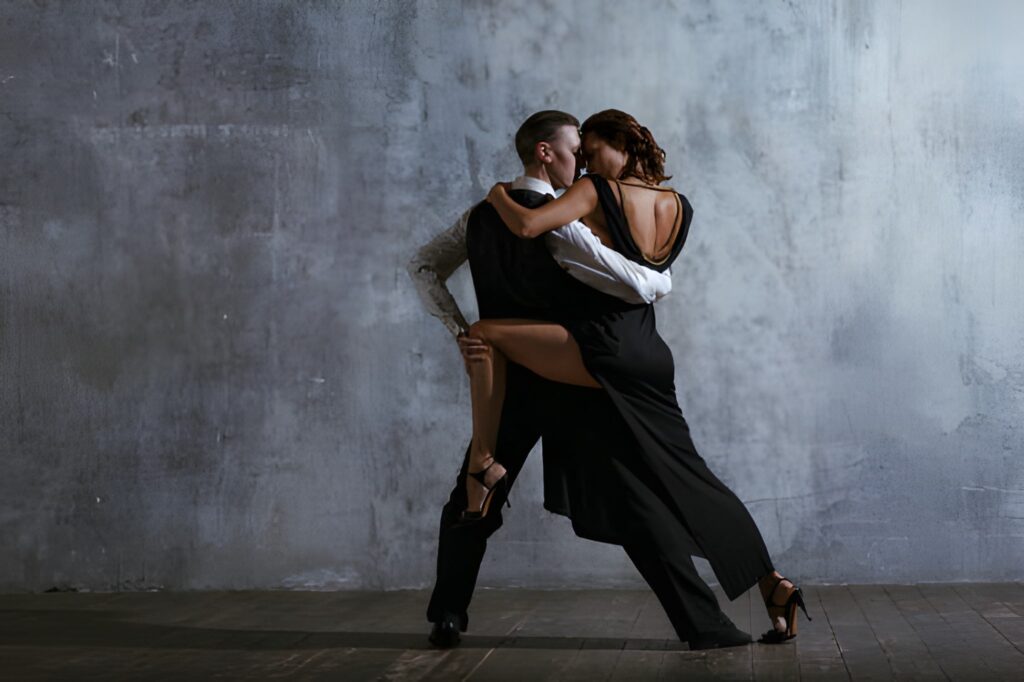
90 Seconds. That’s it.
It’s about how long it takes to brush your teeth, microwave a burrito, or hold your breath in a public bathroom. In our day to day lives, 90 seconds could be a blip on the radar (microwave burrito), or a critical time period in your life (hopefully not the microwave burrito).
A dance routine is one such event. Routines can supercharge your progress, make you more confident, and are a lot of fun. The trick is surviving for 90 seconds.
This is how to not screw that up.
Avoid These 5 Dance Performance Pitfalls
1. Avoid Last Minute Choreography Changes
Seems simple, right? Nevertheless, dancers new and experienced will feel a sudden “surge of creativity” and want to slice and dice a solid routine.
Your comfort zone voice disguises itself as inspiration. It says things like “what if we tried something different?” right before you’re about to perform. Don’t listen.
Phrases to watch for:
- “I’ve always wanted to try this”
- “Change of plans! I’ve got a new vision.”
| Improve Your Dance Performance Recommendation #1: Changing the choreography won’t improve the execution of your performance, it will actually hinder it. Just like acting – learn your script as quickly as possible, then you can start working on acting. In fact, the best performances come from routines that are so well-rehearsed that the dancer can focus entirely on expression, not recall. |
2. Avoid Panic
For the record, if your heart doesn’t beat a little faster prior to a routine – then you’re either a robot or you just don’t care. We talk about this in greater depth in “The Survival Guide To Your First Dance Performance”.
Your brain can label the sudden surge of adrenaline as excitement, nervousness, or total nuclear war. Panic is that last one.
Phrases to watch for:
- (Early in the process) “I’ve totally got this”
- “I never get nervous. I’ll be fine.”
| Improve Your Dance Routine Recommendation #2: Many people that panic took a casual approach to the early stages of the process. Over-confidence early in the process leads to panic the day the routine is unveiled (or the book report is due). Instead, we recommend worrying more. That’s right, worried means you care, you’re not over-confident, and it can prompt you to work harder to improve. Panicking is spilling the milk, freaking out, and rolling in it. |
3. Avoid Giveaways
If you make a mistake, 95% of the audience will never know unless you give it away. If you say something, slump your shoulders, stop dancing, or swear like a sailor – even non-dancers will understand that there was an error.
Here’s the thing about mistakes: They only exist in your head until you advertise them.
Things to Watch for:
- Physical recognition of the mistake: Eye roll, full body sigh, shaking your head
- Verbal recognition of the mistake: Grunts, Groans, or Exclamations
| Improve Your Dance Performance Recommendation #3: Every dancer makes mistakes. Yes, even professionals. One of the biggest differences between professionals and amateurs is the pros know how to cover them up (and usually with a smile on their face). That takes a lot of discipline, and practice. What you need to remember is to play it like a hand of poker: No tells. Finish your number. Smile, bow, say thank you – and even when people ask, keep it under wraps. |
4. Avoid Anything You Didn’t Rehearse
Deviating from the material you’ve practiced seems like an obvious “no-no”, but deviating from the WAY you’ve practiced is a much bigger problem. Going from “Casual” to “Ultra-Turbo” in the energy department is still an adjustment that was not practiced.
A great article on this is “16 Ways To Utilize A Dance Coach”.
Phrases to Watch for:
- “I don’t need to dance full out until the day of the performance.”
- “Once that music comes on, I get waaay better.”
| Improve Your Dance Routine Recommendation #4: Treat your performance like a bank heist: Don’t deviate from the plan or try to be a hero. If you simulate your dance number at full “Ultra-Turbo” energy, you’ll eliminate surprises on the day of the performance. Practice at performance level, or accept that performance day will feel completely foreign. |
5. Avoid The “One and Done” Approach
You know why so many people regret moments in their lives? Because they only had one chance at it. Whether it was your prom, a term paper, or a company presentation: What if you had three mandatory practice versions of it? That’s the Rule of Three.
It takes 3 performances for your dance routine to truly arrive. With each performance, more of your senses are available, you settle in, and by the third version you are much more comfortable.
| Improve Your Dance Performance Recommendation #5: Don’t pass judgement, suggest wholesale changes, or make any program-altering, dance-hobby threatening, statements after your first performance. That’s like leaving a Yelp review for your high school after your freshman year. It’s really just a partial grade. Follow the rule of three and allow the evolution to take place. |
HONORABLE MENTION:
- Don’t wear a costume you haven’t shown your teacher
AKA: The prelude to a wardrobe malfunction. - Approve all props with your teacher (and the fire marshall)
Surprises are great for parties, but horrible for medical procedures and dance routines - Match routine production value with your dance lesson schedule
Your concept may be a blockbuster, just don’t flop on the work behind it.
The Real Enemy
Here’s something that took me years to understand: Performance anxiety isn’t the enemy. In fact, it’s a sign that you care.
The real enemy is avoidance. It’s the voice that says “maybe next time” or “I’m not ready yet” or “what if I mess up?”
That voice will never go away completely. The dancers who perform the best aren’t the ones without fear – they’re the ones who perform despite it.
Confidence is generated from your day to day comfort zone about as often as chiseled abs are created from carbs and inactivity.
Impossible.
Performance anxiety is not an incurable allergy. It’s just an early, uncomfortable stage in the confidence-building process. Tolerating that momentary discomfort has the same residual value as tolerating any sort-of-scary-but-incredible experience you’ll have in your life.
Final Thought
Let’s face it, we all want to get better as dancers, and more confident as people in the process.
Routines can do that for you – but only if you perform them.
90 seconds. That’s all that stands between who you are now and who you could become. The question isn’t whether you’ll be perfect. The question is whether you’ll show up anyway.
Happy Dancing!