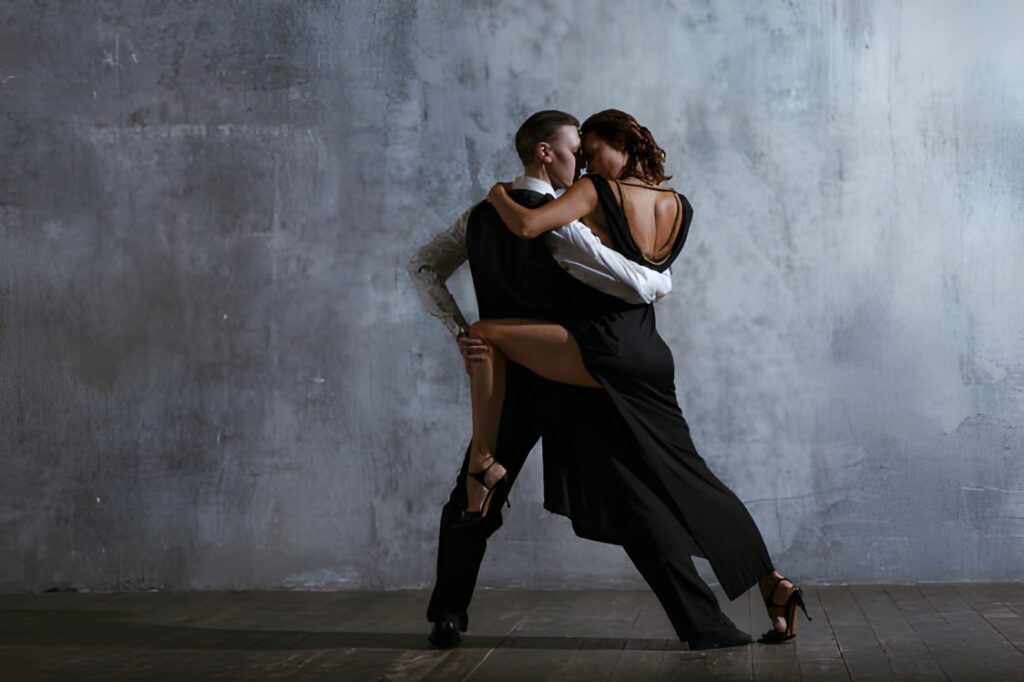
How far are you willing to go to be right?
Learning to dance as a couple can be one of the most rewarding activities you do with the special person in your life. Working as a unit, moving in harmony, and doing something just plain sexy together has many advantages over the average couple offerings – TV coma anyone?
But in a world where the ends justify the means, what if the means bring your hobby to an end?
The truth is, couples who dance together often fight together too. Not on the dance floor, necessarily, but around it. The friction happens in the car ride home, during practice sessions in the living room, and in those loaded silences after a lesson that didn’t go as planned.
Here are the behaviors that kill the joy – and how to avoid them.
9 Joy Killing Behaviors That Can Doom A Dance Partnership
1. Dance Experience Leverage
Sounds like: “You should listen to me because I took a dance class in college.”
Potential Damage: Being reminded of someone’s dance experience doesn’t make it any easier to dance with that person. In fact, it’s quite the opposite. It creates resentment, establishes a hierarchy, and puts your partner on the defensive before a single step is taken.
Solution: Let your teacher do the teaching. Having some dance experience can be helpful to your own journey, but it could hinder your partner’s. Your role is to be a supportive partner, not an assistant instructor.
2. Skipping Appointments
Sounds like: “We are so busy. We’ll see you the same time next week.”
Potential Damage: In many cases, this is the original problem that evolved into others listed in this article. Inconsistency breeds frustration. Frustration breeds conflict. Conflict breeds quitting.
Solution: We know you’re busy. If you’ve got kids, we recommend checking out the Dance Lesson Escape Plan For Busy Parents. If you work too much, we recommend 6 Things Dancers Do To Anger Corporate America. The staff at your local Arthur Murray Dance Studio are wonderful at setting a strategy for your lessons that will fit your life.
3. Comparing Yourself To Your Partner
Sounds like: “Well, I’ll never be as good as her.” Or “He’s the dancer in the family.”
Potential Damage: If you believe this one, it could be devastating to your dance hobby. This is one of the greatest dance myths out there, next to “two left feet” and “born with no rhythm.”
Solution: Unless your partner is planning on dancing your part, you have nothing to worry about. Leaders send the signals, followers read and respond to them. Two different sides, two different skills, two different job descriptions. It’s like comparing a quarterback to a wide receiver – different roles, equally important.
4. Not So Silent Judgement
Sounds like: (at the studio) “I can’t believe you forgot that turn!”
Potential Damage: Verbal criticism adds pressure to the task that your dance partner was struggling with. So, in effect, it guarantees that it won’t get better immediately. You’ve just made the problem worse while feeling like you’re helping.
Solution: On the plus side, voicing concerns on your lesson gives your teacher a chance to fix them. We recommend that you utilize heaping amounts of Personal Accountability and Benefit of the Doubt – to keep things productive and civil.
We recommend these 3 Business Books Every Ballroom Dancer Must Read as a great place to start.
5. Silent Judgement
Sounds like: “No I’m fine, really” (later at home) “I can’t believe you forgot that turn.”
Potential Damage: Silent criticism is the ninja assassin of dance enjoyment. As a couple, your dance partner comes home with you. Negative dance critiques at home breeds negative feelings towards the activity as a whole.
Solution: Communication with supervision. Your teacher is a dance arbitrator. It’s much easier to handle your case when they’ve heard it. Keep the criticism in the studio where someone can mediate – or better yet, reframe it as a shared challenge rather than a personal failure.
6. Eject From The Dance Floor
Sounds like: “[Expletive deleted], I’m done… taking a break.”
Potential Damage: Sometimes a dance hiccup can feel like a total meltdown. Stopping in the middle of the dance floor to “converse” about how things should have gone rarely has a positive result. You’re now making a scene and adding embarrassment to frustration.
Solution: Dancing less is never the solution to a dance problem. When in doubt, dance another basic pattern. If that’s giving you trouble, flag down your teacher and they can help you out of the jam.
7. Unfair Comparisons
Sounds like: “We’re never going to look like that dance couple over there.”
Potential Damage: Unfair comparisons remove the lightbulbs of optimism. There’s something semi-permanent that happens when you make negative statements. You start to believe them – and so does your partner.
Solution: In the article The 5 Dysfunctional Comparisons of a Dance Student, we made the point that it’s okay to be “inspired” by specific things about someone else’s dancing, but you should avoid overall direct comparisons. Be specific: “I love how they used that arm styling” is productive. “We’ll never be that good” is destructive.
8. Little Fixes
Sounds like: “Put your hand here.” “Keep your elbows up.” etc.
Potential Damage: For new dancers, available brain real estate for dance related stuff is pretty scarce. Additional items on the to-do list only adds to the cognitive overload. You might think you’re helping. You’re not.
Solution: Your teacher isn’t saying anything about the frame, or the eyes, or any other fix – and it’s not because they don’t notice it, but because it’s not critical to the current mission. Follow your teacher’s lead. If it’s really causing trouble, your teacher will take care of it. If it’s really just bugging you, use a disclaimer and keep the focus on your part.
9. practicing at Practice Parties and Group Classes
Sounds like: “Move the couch. It’s time to talk about that grapevine.”
Potential Damage: There are environments that are built for instruction, and then there’s your living room. It’s not to say that you will kill each other if you practice through Practice Parties and Group Classes, but the environment could make you vulnerable to some of the behaviors listed in this article.
Solution: Give yourself a time limit, and be willing to walk away if things get tricky. Your teachers are always the best resource for instruction, so clue them in on what you’ve attempted at home. Better yet, keep your lessons closer together, skip the living room, and go to a nice dinner or your company’s next office party. We recommend checking out, “Win The Holiday Office Party Season With Ballroom Dance Lessons”.
The Underlying Problem
Here’s what all of these behaviors have in common: They prioritize being right over being happy.
When you correct your partner, you’re saying “I know better.” When you compare yourself to them, you’re competing instead of collaborating. When you storm off the floor, you’re choosing ego over progress.
Dancing as a couple requires surrender – not to each other, but to the process. You both have to be willing to look foolish together. You both have to be willing to fail together. And you both have to be willing to laugh about it together.
The couples who make it are the ones who decide that their relationship is more important than any individual dance. They’re the ones who can mess up a turn and shrug it off. They’re the ones who celebrate the small victories and let go of the small failures.
Final Thought
It’s easy to forget this, but you’re in elite company.
There are countless Arthur Murray students who come in for dance lessons, but without their other half. These are people who have turned ballroom dancing into a hobby, but it’s with an asterisk. Why? It was all done without the one partner they wanted most.
So consider yourself lucky. Sure, it can be challenging at times, test your patience, and reveal quirks you didn’t know existed, but don’t all of those things also strengthen your bond?
So enjoy the process. If there is one thing you should know it is this:
You don’t need to have perfect dancing to have the perfect dance partner.
For more tips on dancing as a couple, check out 21 Tips for Couples Starting Social Dance Lessons.