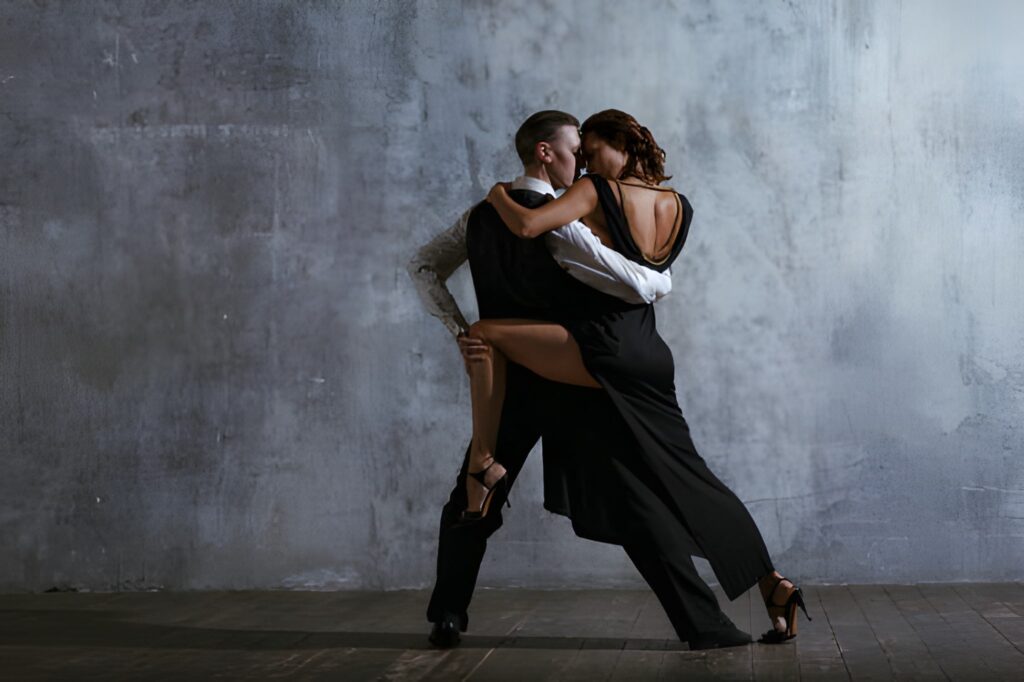

Once you learn to dance, something changes permanently in how you watch movies.
Those romantic ballroom scenes that once seemed magical now reveal cringe-worthy technique flaws. The dramatic dance numbers that swept audiences off their feet now display obvious choreography shortcuts.
Welcome to the curse of the trained dancer: you can never unsee what you’ve learned to see.
Why Dancers Watch Movies Differently
Before taking dance lessons, movie dance scenes register as impressions—romantic, dramatic, energetic. The specifics blur into overall effect. A couple moves beautifully across a ballroom, and that’s enough.
After learning proper technique, your eye catches everything:
- Broken frames that would never work in actual partner dancing
- Footwork that defies the musical timing
- Leads that communicate nothing to the follow
- Styling choices that contradict the dance’s fundamental character
This knowledge doesn’t ruin movies—it adds a new layer of appreciation for films that get dancing right and entertaining recognition of films that don’t.
Spider-Man 3: Jazz Club Catastrophe
The Scene
Peter Parker, influenced by the alien symbiote, struts into a jazz club and proceeds to dance in what the film presents as smooth, confident style. The scene aims to show Peter’s transformation into a more aggressive, self-assured character.
What Dancers See
Where do we begin?
The timing: Peter’s movements bear only coincidental relationship to the music. Beats pass without acknowledgment. Phrases end without resolution. The symbiote apparently doesn’t enhance musical awareness.
The partnering: When Peter interacts with other dancers, he displays none of the connection essential to partner dancing. His “leading” involves moving independently and hoping others somehow follow.
The style: The choreography attempts to suggest jazz, swing, and contemporary club dancing simultaneously while achieving none of them. Each style has specific vocabulary and movement qualities that require commitment—mixing them randomly produces confusion rather than fusion.
Why It Matters
The Spider-Man 3 jazz club scene has become legendary among dancers as a masterclass in how not to portray dancing. The filmmakers clearly understood that dance should appear in this moment, but lacked the expertise or resources to execute authentic dance content.
This matters because the scene’s intentions—showing Peter’s newfound confidence—require believable dancing to succeed. When the dancing reads as awkward rather than smooth, the entire character beat falls flat.
Indiana Jones and the Kingdom of the Crystal Skull: The Sock Hop
The Scene
Young people dance at a 1950s-era diner, establishing the time period through period-appropriate social dancing.
What Dancers See
The extras perform what might be called “television sock hop”—movements that visually suggest 1950s dancing without embodying its authentic character.
Swing dancing specifics: Authentic 1950s swing (whether East Coast Swing, Jive, or the Lindy Hop that still thrived in some communities) has specific timing, slot movement, and rock step patterns. The background dancing displays generic bouncing that lacks these fundamental elements.
Partner connection: Real swing dancing requires genuine lead-follow communication. The couples appear to dance at each other rather than with each other.
Period accuracy: The specific dance styles popular in the 1950s varied by region, race, and social class. The scene presents a homogenized version that matches no actual dance community of that era.
Historical Context
This matters to dancers because social dance history reveals fascinating cultural dynamics. The 1950s featured tension between authentic swing communities and the sanitized versions promoted on television. Films that flatten this rich history miss opportunities for authentic period detail.
Harry Potter and the Goblet of Fire: The Yule Ball
The Scene
Hogwarts students attend a formal ball where they perform a choreographed opening dance, followed by social dancing.
What Dancers See
The Yule Ball actually fares better than many Hollywood dance scenes, though it still reveals gaps in dance understanding.
The opening choreography: The formal opening waltz shows evidence of actual dance training. The leads and follows maintain reasonable frame, and the patterns follow waltz principles. This section received appropriate choreographic attention.
The social dancing afterward: When the formal choreography ends and students supposedly dance freely, the quality drops significantly. The movements become generic swaying that lacks any specific dance vocabulary.
The physical impossibilities: Some turns and lifts shown would require physics-defying partner cooperation or result in serious injury if attempted as portrayed.
What They Got Right
Credit where due—the Harry Potter production invested in teaching the lead actors actual waltz basics. Emma Watson and her partners display genuine dance training in close-up sequences. The problems emerge in wide shots and background dancing where less attention was paid.
Why Hollywood Struggles with Dance Scenes
The Assumption Problem
Many filmmakers assume dancing is intuitive—that anyone can fake it convincingly with minimal preparation. This assumption fails because dance involves highly specific technique that reads immediately to trained eyes.
Compare this to other specialized skills. Films don’t assume actors can fake Olympic gymnastics or concert-level piano playing. Dance deserves the same recognition as a technical discipline requiring genuine expertise.
The Choreography Challenge
Even when productions hire choreographers, challenges remain:
- Time constraints: Actors may receive only days of training for scenes requiring months of development
- Physical limitations: Not all actors have the physical capability for complex dance content
- Camera considerations: What reads well on the dance floor may not translate to camera angles
- Director priorities: Non-dancer directors may not recognize technique problems
Budget Realities
Authentic dance sequences require significant investment:
- Extended rehearsal time with principal actors
- Skilled background dancers (not just extras who can “sort of dance”)
- Choreographers with specific style expertise
- Multiple camera setups to capture movement effectively
When budgets tighten, dance quality often suffers.
Films That Get Dancing Right
Shall We Dance (2004)
Richard Gere trained extensively for his role, and the results show. His ballroom technique demonstrates genuine progression throughout the film, matching his character’s development arc.
Dirty Dancing (1987)
Patrick Swayze’s professional dance background ensures authentic movement throughout. Jennifer Grey trained intensively to match his level. The result remains a standard against which dance films are measured.
Silver Linings Playbook (2012)
Bradley Cooper and Jennifer Lawrence prepared rigorously for competition scenes, working with actual ballroom professionals. Their technique shows appropriate amateur competitor level—not professional perfection, but genuine trained dancing.
La La Land (2016)
While not exclusively a dance film, the production invested in making Ryan Gosling and Emma Stone’s dancing believable. Their technique reflects characters who are learning rather than masters, but the learning itself reads as authentic.
How Training Changes Your Viewing Experience
The Curse and the Gift
Learning to dance creates permanent changes in perception. You’ll never watch dance scenes with innocent eyes again. The “curse” means cringing at beloved films when dance sequences fall short.
But there’s also a gift. You appreciate excellent dancing more deeply. You recognize the countless hours behind smooth performances. You understand what makes certain dancers extraordinary and certain films exceptional.
Watching with Non-Dancer Friends
The trained dancer’s tendency to critique movie dance scenes can irritate companions who just want to enjoy the film. Learn to save detailed analysis for fellow dancers who share your obsessive attention to technique.
Sometimes letting the romance or drama work as intended serves the movie experience better than constant internal critique.
Using Films for Learning
Even flawed dance scenes offer educational value:
- Identify what specifically looks wrong
- Consider how proper technique would improve the scene
- Recognize that performing for camera differs from social or competitive dancing
- Appreciate the difficulty of making dance look good on screen
Frequently Asked Questions
What movie has the most accurate ballroom dancing?
“Shall We Dance” (2004) ranks highly for ballroom accuracy. Richard Gere trained extensively, and the production used authentic Arthur Murray methodology. “Strictly Ballroom” (1992) also showcases genuine competitive ballroom dancing.
Why do some dance scenes feel “off” even when I can’t identify the problem?
Your brain recognizes natural movement patterns even without conscious analysis. When dancing violates physics, timing, or partnership principles, something registers as wrong even if you can’t articulate the specific issue.
Do actors ever train enough to dance convincingly?
Yes, when productions invest appropriately. Patrick Swayze brought professional training to his roles. Channing Tatum drew on competition experience. Current productions increasingly recognize that convincing dance requires genuine training investment.
How long does it take to develop a “dancer’s eye” for watching films?
Most students begin noticing film dance flaws within months of starting lessons. The more specific styles you learn, the more specifically you identify what’s wrong in movie portrayals of those dances.
Can learning from movie dance scenes help my dancing?
Watching excellent film dancers provides inspiration and exposure to styling possibilities. However, movies should supplement rather than replace proper instruction. Many film dance techniques wouldn’t work socially or competitively.
The Joy of Informed Watching
Learning to dance transforms movie watching from passive entertainment to active analysis. This isn’t a loss—it’s an expansion of your experience. You see more, understand more, and appreciate more.
The next time a film presents a romantic ballroom scene, you’ll watch with educated eyes. You’ll notice the frame, the footwork, the connection. You’ll recognize what’s real and what’s Hollywood magic.
And occasionally, you’ll encounter a film that gets it right—where trained dancers perform authentic technique and the magic on screen matches the magic on the dance floor. Those moments make the curse worthwhile.
Ready to develop your own dancer’s eye? Start your Arthur Murray lessons and begin seeing the world—including movies—through new eyes.