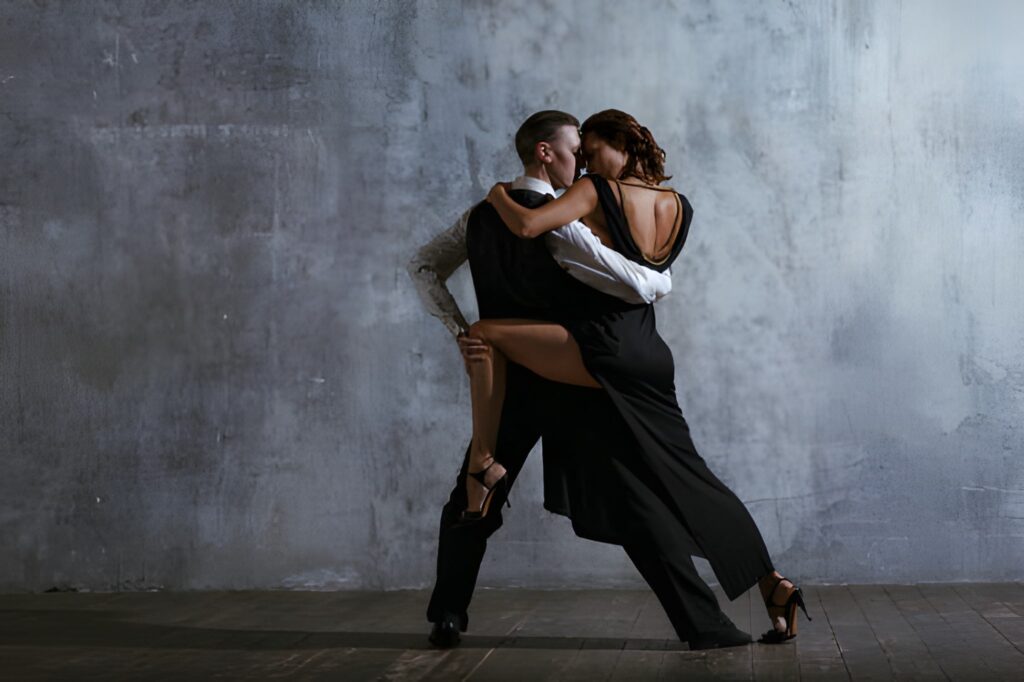
Learn how to handle mistakes during ballroom dance competitions and why recovery is the most important skill you can develop as a competitive dancer.
The Pains and Gains of Dance Competition Mistakes
By Kristen Salazar
You might also enjoy: Dance Competition Strategies
Our hearts were pounding. Not just because of the adrenaline, but because we were on our third swing heat of the afternoon.
Superama 2015. My husband, Serge, and I were in the final of the Rising Star Rhythm.
He spun me out and I saw a couple dancing right into my line travel. That’s OK.
We practice frequently, so I made my normally traveling turn into a spin on the spot. I thought I was so clever as I lunged into my pose.
Usually Serge follows me and turns his head sharply at the last minute to look me up and down. Cute, right?
Usually.
Because he looks away before I hit my line, he didn’t know I stopped far shorter than my expected mark.
And he headbutted me in the shoulder.
His eyes watered and head throbbed. I was knocked off my foot and rendered incapable of sleeping on my left side for a week and a half. But we kept dancing…for the remaining minute and five seconds of the swing.
Some Perspective On Dance Recovery
I always joke with my students that “dancing is 90% recovery.” And after reading “31 Things Dance Judges Want To See You Do,” I started recalling how truly important recovery is in all aspects of dancing.
You practice and practice trying to perfect your craft. That’s great. Because that’s all you can do. When you walk onto the floor for the first time at a dance competition, you suddenly realize that there are other people out there also attending the Hula-Rama.
What?!
Now your strong routines have to combat with other people’s choreography, and if there’s one thing you cannot control, it’s other people.
But that’s why you’re there.
There’s no perfect routine. We are all on the same yellow brick road trying to find the magic solution to our dance problems. You know what’s working and what’s not when you can dance with all the extra stimulation and movement on the floor and keep going.
You will look about a thousand times more confident and competent a dancer if someone bumps into you or gets in your way and you can remain calm, shake it off and recover. Don’t be frustrated. Everyone else on the floor is just as surprised as you are that people signed up for Hula-Rama.
Why Mistakes Are Actually Valuable
Learning Opportunities in Disguise
Every mistake on the competition floor teaches you something:
- Spatial Awareness: Learning to navigate around other dancers improves your floor craft
- Adaptability: Quick recoveries demonstrate and develop flexibility in your dancing
- Mental Strength: Working through challenges builds the resilience needed for peak performance
- Partnership Trust: Recovering together strengthens your bond with your partner
The Judge’s Perspective
Here’s what many dancers don’t realize: judges expect mistakes. What they’re evaluating is how you handle them. A graceful recovery often impresses judges more than a technically perfect but sterile performance.
Professional dancers at the highest levels make mistakes in every competition. The difference is in how quickly and seamlessly they move past them.
Practicing Dance Recovery
When you get off the floor, shaken, but no worse for wear, you go back to the studio and practice.
As you work on new choreography or techniques, recovery is key here as well. The process of trial and error can be frustrating, humbling and exciting. When things don’t work right away, and they won’t, it’s important to recover on a mental and emotional level.
You’re not an incapable dancer if the new connection doesn’t work yet. Your partner isn’t maliciously trying to throw you off your foot when you fall out of that turn.
You can’t give up if it doesn’t work. No one’s at fault. Everyone’s just growing. And there’s always growing pains.
Just ask my left shoulder.
How to Practice Recovery Skills
Physical Recovery Drills:
- Practice stopping mid-routine and starting from any point
- Have your instructor or partner create unexpected obstacles during practice
- Work on “plan B” options for every major figure in your routines
Mental Recovery Exercises:
- Visualize potential mistakes and your calm response to them
- Practice positive self-talk that you’ll use during competitions
- Develop a “reset” ritual that brings you back to the present moment
Partner Recovery Practice:
- Establish non-verbal signals for common problems
- Practice staying connected through unexpected moments
- Build trust by working through challenges together in a supportive environment
The Emotional Side of Dance Competition Mistakes
Managing Frustration in the Moment
It’s natural to feel frustrated when something goes wrong during a competition. The key is not to eliminate the frustration, but to process it quickly and return to your dancing.
Quick Recovery Techniques:
- Take one deep breath
- Make brief eye contact with your partner (with a smile if possible)
- Focus on the next musical phrase, not what just happened
- Trust your training to carry you forward
Post-Performance Processing
After your heat is over, it’s healthy to acknowledge what happened:
- Acknowledge the feeling: “That was frustrating, and it’s OK to feel that way”
- Identify the lesson: “Next time, I’ll check my spacing before that turn”
- Release and move forward: “I learned something, now I’m ready for the next heat”
This processing is best done between heats, not during them. While dancing, your only job is to keep dancing.
Building Recovery Into Your Training Program
The Arthur Murray Unit system provides multiple opportunities to develop recovery skills:
Private Lessons
Work with your instructor on specific recovery scenarios. They can create controlled “problem situations” that help you practice responding calmly and continuing your dancing.
Group Classes
Group classes naturally include unpredictable elements. Different partners, varied skill levels, and crowded floors. This is excellent preparation for competition conditions.
Practice Parties
Practice parties offer the closest simulation to actual competition conditions. You’ll dance on a floor with multiple couples, navigate traffic, and experience the unexpected moments that require recovery skills.
The more you expose yourself to challenging dancing situations in practice, the more natural recovery becomes during actual competitions.
Types of Dance Competition Mistakes and How to Handle Them
Physical Mistakes
Stepping on Each Other’s Feet:
- Don’t stop dancing
- A quick “sorry” glance is enough
- Keep your frame and continue
Losing Your Balance:
- Use your partner’s connection to stabilize
- Turn the wobble into intentional styling if possible
- Regain your center and proceed
Forgetting Choreography:
- Default to basic patterns you know well
- Follow/lead your partner’s cues
- Smile and make it look intentional
Environmental Challenges
Crowded Floor:
- Adjust your travel without stopping
- Use smaller versions of traveling figures
- Stay aware of dancers around you
Collision with Another Couple:
- Smile and briefly acknowledge them
- Quickly reposition and continue
- Don’t assign blame (even mentally)
Sound System Issues:
- Count in your head if music cuts out
- Stay with your partner through confusion
- Trust your muscle memory
Partner-Related Issues
Miscommunication of Lead/Follow:
- Don’t stop to discuss
- Adapt to what your partner is doing
- Resolve it after the heat
Different Timing:
- Match your partner’s timing
- Use strong musical accents to synchronize
- Stay connected physically and musically
The Competition Mindset for Success
Before You Compete
Mental Preparation:
- Visualize successful performances AND successful recoveries
- Establish your pre-competition routine
- Set process goals, not just outcome goals
Physical Preparation:
- Ensure you’ve practiced your routines until they’re automatic
- Warm up thoroughly before competing
- Get adequate rest the night before
During the Competition
Stay Present:
- Focus only on the current moment
- Don’t replay mistakes from previous heats
- Don’t worry about upcoming challenges
Embrace the Experience:
- Remember why you’re there, because you love dancing
- Find joy in the music and movement
- Celebrate being on the floor with your partner
After the Competition
Constructive Review:
- Watch videos with your instructor, not alone
- Identify specific areas for improvement
- Celebrate what went well
Planning for Next Time:
- Incorporate lessons learned into your practice
- Set new goals based on your experience
- Schedule your next competition while motivated
How To Get Started with Competitive Dancing
If you’re interested in getting started with competitive dancing, the journey begins with building a solid foundation through regular training.
Step 1: Build Your Foundation
Work with your instructor to develop strong basic technique. This foundation is what you’ll fall back on when things get challenging during competition.
Step 2: Participate in Studio Events
Studio showcases and practice parties provide low-pressure performance opportunities. These events help you get comfortable dancing in front of others.
Step 3: Attend Your First Competition
Start with local or regional competitions where the atmosphere is supportive and welcoming. Your first competition is about gaining experience, not winning trophies.
Step 4: Learn and Grow
Every competition provides information for improvement. Work with your instructor to incorporate these lessons into your ongoing training.
Frequently Asked Questions About Dance Competition Mistakes
How do judges view mistakes during competition?
Judges understand that mistakes happen. They’re evaluating your overall dancing, including how you handle unexpected situations. A graceful recovery often impresses more than a technically perfect but emotionless performance.
Should I stop if I make a major mistake during my routine?
Almost never. Unless there’s a safety issue, keep dancing. Stopping is actually more noticeable than most mistakes, and it breaks the flow of your performance.
How can I practice recovery without a partner?
While partner practice is ideal, you can solo practice by working on your basic patterns until they’re automatic, visualizing challenging scenarios and your responses, and mentally rehearsing your recovery techniques.
What if my partner gets frustrated during competition?
Have a pre-agreed plan for handling frustration. Usually, a brief touch, eye contact, and smile can help reset both partners. Save any discussion for after the heat.
How do I get over the fear of making mistakes in competition?
Accept that mistakes are inevitable and valuable for growth. Focus on process goals (dancing your best) rather than outcome goals (winning). The more you compete, the more comfortable you become with imperfection.
Final Thought
The story that opened this article, the headbutt, the pain, the continuation, isn’t just about physical resilience. It’s about the mindset every competitive dancer needs to develop.
Mistakes will happen. Collisions will occur. Choreography will be forgotten. And through all of it, the dancers who succeed are the ones who keep dancing.
Recovery isn’t just a skill. It’s a philosophy. It says, “Whatever happens, I’m still here, still dancing, still enjoying this moment.”
That’s the mindset that wins competitions. More importantly, it’s the mindset that makes competitive dancing a joyful, growth-oriented journey rather than a stress-filled pursuit of perfection.
So the next time something goes wrong on the dance floor, take a breath, flash a smile, and keep dancing. Your recovery might just be the most impressive thing the judges see all day.
Ready to test your skills in a supportive environment? Join us for a practice party at your local Arthur Murray Dance Studio and build the confidence you need for competition.