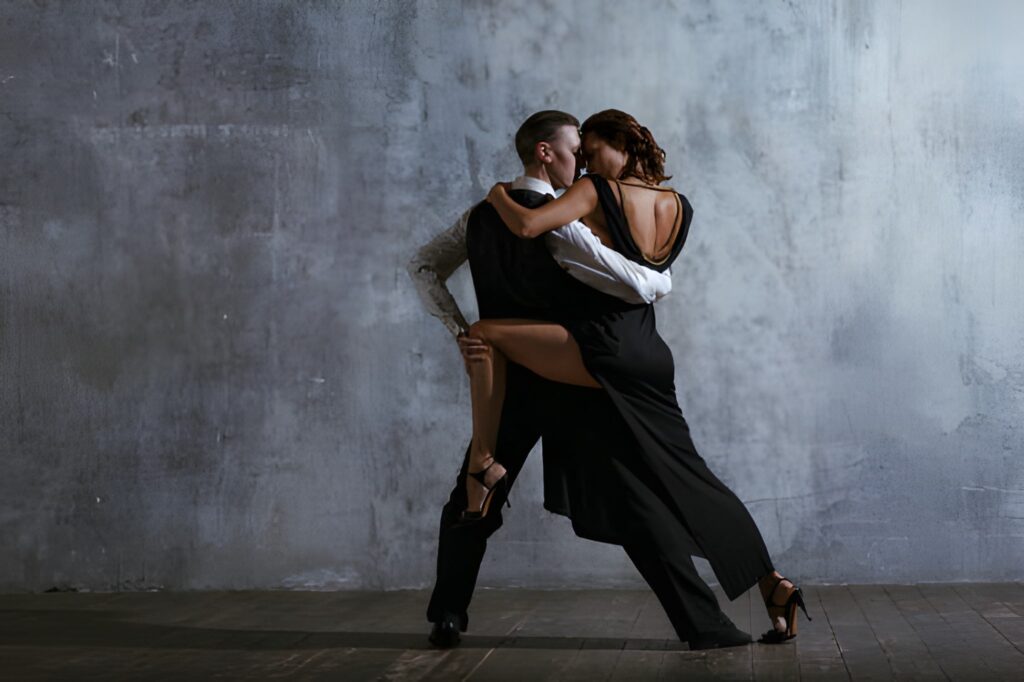
Your Ballroom Costume Says More Than You Think
You’ve been taking lessons for months. You’ve practiced at home, attended group classes, and now you’re ready for something bigger – a showcase, a competition, or maybe your first Medal Ball. But then it hits you: What are you supposed to wear?
Choosing a ballroom costume isn’t just about looking good (though that matters too). It’s about performing at your best, feeling confident under those lights, and making sure nothing gets in the way of your dancing. The wrong outfit can distract you, restrict your movement, or worse – become the thing you remember instead of your actual performance.
Why Your Costume Choice Actually Matters
Here’s something most students don’t realize until they’re standing backstage: your costume becomes part of your choreography. That dress isn’t just fabric – it’s an extension of your movement. Those pants aren’t just covering your legs – they’re either helping or hurting your lines.
In fact, professional dancers spend almost as much time selecting their performance attire as they do rehearsing their routines. There’s a reason for that.
When you’re on the floor, judges and audiences see the complete picture. A stunning ballroom costume enhances every turn, every extension, every moment of connection with your partner. A poorly chosen one? It creates visual noise that competes with your dancing.
Smooth and Standard: The Art of Elegant Flow
If you’re dancing Waltz, Foxtrot, Tango, or Viennese Waltz, you’re in Smooth or Standard territory. These dances are all about long lines, sweeping movement, and that unmistakable ballroom elegance.
For women, this typically means floor-length gowns. But not just any floor-length gown – you need one that moves with you, not against you. Look for:
- Flowing skirts that create beautiful shapes during turns and sways
- Fitted bodices that stay put during quick directional changes
- Strategic weight in the hem (helps the skirt move predictably)
- Arm coverage that allows full range of motion – nothing worse than a sleeve that restricts your frame
For men, the classic look is a tailsuit for International Standard or a vest and dress pants for American Smooth. Fit is everything here. A jacket that pulls across the shoulders or pants that restrict your stride will affect your posture – and your judges will notice.
Rhythm and Latin: Where Personality Takes Center Stage
Cha-Cha, Rumba, Swing, Bolero, Mambo – these dances demand a completely different approach to costuming. The energy is different, the movement is different, and your wardrobe needs to reflect that.
For women, shorter cuts dominate this category. Why? Because Latin dances feature intricate footwork, hip action, and leg lines that simply disappear under a floor-length gown. Popular choices include:
- Fringe details that accentuate hip movement (the fringe literally dances with you)
- Fitted silhouettes that show body movement clearly
- Strategic cutouts that add visual interest without compromising coverage
- Bold colors that pop under stage lighting
Men have more flexibility in Latin styles – fitted dress pants, open-collar shirts, and occasionally vests. The key is clothing that moves with your body rather than hanging off it.
The Nine Rules of Ballroom Costume Selection
After watching thousands of students navigate their first costume decisions (and making plenty of my own mistakes along the way), here’s what actually matters:
1. Match Your Costume to Your Dance Style
This seems obvious, but you’d be surprised how often it gets overlooked. A stunning Rhythm dress is completely wrong for a Waltz. A gorgeous Standard gown will look awkward during a Cha-Cha. Know what you’re dancing and dress accordingly.
2. Choose Colors That Work Under Stage Lighting
That beautiful dusty rose that looks perfect in the store? It might wash out completely under competition lighting. High-contrast colors – deep jewel tones, true blacks, vibrant reds – read much better on the floor.
In fact, many dancers bring fabric swatches to their venue beforehand to test how colors look under the actual lights. Is that obsessive? Maybe. Does it work? Absolutely.
3. Highlight Your Best Features
Strategic design choices can emphasize what you want to show and downplay what you don’t. Great arms? Consider a sleeveless design. Beautiful legs? A well-placed slit or shorter hemline. Strong shoulders? Structure that draws the eye upward.
Your ballroom costume should make you feel confident – not self-conscious.
4. Movement Comes First
Can you do your full choreography in this outfit? Not some of it. All of it. That includes your biggest movements, your fastest turns, and everything in between.
Before committing to any costume, run through your routine (or at least your most challenging sequences) while wearing it. You’ll discover problems you never would have noticed just standing in front of a mirror.
5. Consider the Camera
Your performance will likely be recorded. Some details that look fantastic in person – subtle beading, intricate lacework, delicate embroidery – can disappear entirely on video. Meanwhile, bold patterns and high contrast translate beautifully to recordings.
If having great video footage matters to you (and it should – it’s the best way to track your progress), factor that into your costume choice.
6. Accessories Must Be Secure
Nothing derails a performance faster than a falling earring, a shifting necklace, or a bracelet that catches on your partner’s sleeve. Every accessory needs to be locked in place.
Consider: earrings that screw on rather than just post, necklaces that sit flat against your skin, and hair accessories that are sewn or pinned rather than just clipped. Your dance teacher has probably seen every accessory disaster imaginable – ask them what to avoid.
7. Budget Realistically
Ballroom costumes range from around $100 for basic ready-to-wear options to several thousand dollars for custom designs with premium stones and materials. Know your budget before you start shopping.
Good news for beginners: you don’t need a competition-level costume for your first showcase. In fact, many dancers recommend starting with a more affordable option until you’re certain about your style preferences and competition plans.
8. Men: Fit Is Everything
Guys, I know the costume conversation often focuses on the women’s side – the dresses get most of the attention. But a poorly fitted suit or shirt can sabotage your appearance just as thoroughly.
Get your measurements taken professionally. Consider having your competition clothes tailored. Make sure you can move freely but that nothing is loose or baggy. Your frame and posture should look sharp, not sloppy.
9. Allow Time for Custom Orders
If you’re going the custom route, start early. Most designers need 2-3 months lead time, and that’s before alterations. Rush orders are expensive (when they’re even possible), and the added stress isn’t worth it.
Where to Shop for Your Ballroom Costume
You have several options, each with trade-offs:
Custom Designers: The most expensive option but also the most tailored to your body and preferences. Names like LeNique, Artistry in Motion, and Chrisanne Clover are well-established in the ballroom world. Expect to invest both money and time.
Ready-to-Wear Retailers: Companies like Dance Costumes Online offer pre-made options at lower price points. The fit won’t be as precise, but for many dancers – especially those just starting out – this is the practical choice.
Resale and Consignment: Don’t overlook pre-owned costumes. Many dancers sell their gently used competition attire after one or two performances. Sites dedicated to ballroom costume resale can offer significant savings on quality pieces.
Studio Resources: Ask your dance teacher. Many studios have connections to costume suppliers, know of local seamstresses who specialize in dance attire, or can point you toward former students selling their costumes. This network is more valuable than any Google search.
The Pre-Event Checklist
Once you’ve selected your ballroom costume, there’s still work to do:
- Break it in. Wear it during at least two full practice sessions before the event. You need to know exactly how it moves, where it might shift, and what adjustments you’ll need to make.
- Check everything. All stones secured? All seams holding? All zippers working? Do this a week before the event – not the night before.
- Prepare a backup plan. Bring safety pins, fashion tape, a mini sewing kit, and any specialty items your costume requires. Hope for the best, prepare for the worst.
- Coordinate with your partner. Your costumes don’t need to match, but they should complement each other. Clashing colors or competing patterns create visual chaos.
What About Your First Performance?
If this is your first showcase or competition, here’s the honest truth: you’re probably overthinking the costume part. Your main job is to execute your choreography and enjoy the experience. A simple, well-fitted outfit that allows you to move freely is all you really need.
Safe to say that no one remembers what beginners wore at their first event. They remember how those dancers handled themselves on the floor – the confidence, the commitment, the joy of performing.
Start with something that makes you feel good and doesn’t break the bank. You can always upgrade as you advance through your competition journey and develop your personal style.
Your Costume Is Part of Your Growth
Here’s the thing about ballroom costumes: they mark your progression as a dancer. That first simple dress or basic suit? It represents the courage to get on the floor at all. Your eventual custom design with premium stones and perfect tailoring? That represents years of dedication and growth.
Each costume tells a story. And the best ones? They disappear into your performance entirely – enhancing your dancing without ever distracting from it.
Ready to start shopping? Talk to your instructor about what’s appropriate for your level and upcoming events. They’ve guided hundreds of students through this decision before, and they’ll steer you right.
Now stop worrying about the costume and get back to practicing. The dancing is what matters – the outfit is just the finishing touch.