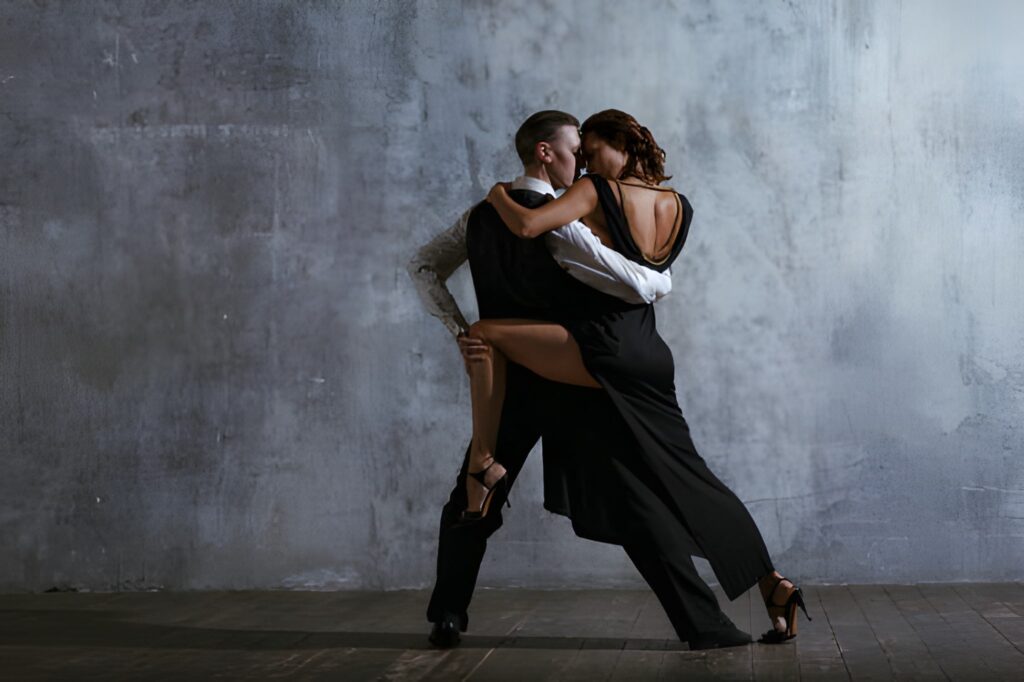
You’re sweaty, breathing hard, and your body is trying to keep it together while your brain freaks out. Welcome to Salsa.
Finding the rhythm in Salsa is one of the most common struggles for new dancers. The music is fast, the patterns are complex, and everything seems to happen simultaneously. But here’s what your stressed-out brain doesn’t want you to know: there’s a method to conquering this, and it doesn’t involve just “trying harder.”
Why Salsa Rhythm Feels Impossible
Salsa music typically runs between 160 and 220 beats per minute. For comparison, a comfortable Foxtrot is around 120 BPM. Your feet need to move nearly twice as fast – and they need to move correctly.
That’s a lot to ask of a beginner. Your brain is processing new patterns, trying to maintain connection with a partner, managing the fear of messing up, AND trying to stay on beat. Something has to give – and usually, it’s the rhythm.
But the problem isn’t you. The problem is the training approach.
The Secret: Start Slower Than You Think
Here’s the counterintuitive truth about learning fast dances: you need to learn them slow. Not a little slow – dramatically slow.
Spoiler alert: You’re going to need to take some dance lessons to get better at Salsa. But how you take those lessons matters as much as taking them at all.
The Five-Step Method for Finding Salsa Rhythm
Step 1: Begin With Cha-Cha Music
Before you touch Salsa music, get comfortable with Cha-Cha. Why? Because Cha-Cha uses the same basic rhythm framework but at a significantly slower tempo.
Find Cha-Cha tracks in the 110-120 BPM range. Practice your basic step patterns here until they feel automatic. Not “pretty good” – automatic. You shouldn’t have to think about the steps; they should just happen.
Step 2: Master the Salsa Basic at This Slow Speed
Now, using that same slow Cha-Cha tempo, switch to Salsa footwork. The rock step, the timing, the weight transfers – practice them all at this comfortable speed.
In fact, this is where most dancers rush – and it’s exactly where you need to slow down. Your body needs to groove into the pattern before your brain can let go and trust it.
Step 3: Add Complexity Before Adding Speed
Still at the slower tempo, start adding triple steps between your rock steps. This is essentially Triple Mambo – the dance that eventually evolved into Cha-Cha. You’re working the connection between rhythm and footwork, but you’re doing it at a manageable pace.
The goal here is to build what dancers call “rhythm recognition” – the ability to feel where you are in the music without consciously counting.
Step 4: Remove the Training Wheels
Once the triples feel comfortable, remove them. Go back to the basic Salsa step at the same slow tempo. Notice how much easier it feels now? That’s because your body has internalized the rhythm through the more complex pattern.
This is the secret competitive dancers use: practice harder than you’ll perform. When you remove difficulty, what remains feels effortless.
Step 5: Gradually Return to Full-Speed Salsa
Now – and only now – start increasing the tempo. Do it gradually. Increase by 10 BPM, practice until comfortable, increase again.
When you finally hit authentic Salsa tempo, something magical happens: your body already knows what to do. The rhythm isn’t something you’re chasing – it’s something you’re riding.
Why This Method Works
Your brain can only process so much new information at once. By separating the challenges – first learning the movement pattern, then learning to do it quickly – you’re giving yourself a chance to actually develop skill instead of just surviving chaos.
Safe to say that most people who “can’t find the rhythm” in Salsa simply never gave their bodies time to internalize it at a comfortable speed. They jumped straight into full-tempo music and wondered why nothing clicked.
Common Rhythm Mistakes and How to Fix Them
Starting on the wrong beat: Salsa starts on beat 1, but many beginners accidentally start on 2 or 3. Practice just standing still and clapping on beat 1 until you can find it instantly in any song.
Rushing the rock step: The pause on 4 and 8 (the “hold” beats) often gets compressed. Exaggerate the pause in practice until it feels natural.
Moving from the legs instead of the hips: Salsa rhythm lives in the hips. If you’re stepping without hip motion, you’re doing cardio, not Salsa. Work on Cuban motion separately before combining it with footwork.
Holding your breath: Yes, really. Many beginners concentrate so hard they forget to breathe naturally. Oxygen helps rhythm. Breathe.
Practice Exercises You Can Do Anywhere
The Kitchen Step: While cooking or doing dishes, practice the basic step. No music needed – just groove into the rhythm while you work.
The Parking Lot Practice: Before going into work, sit in your car with Salsa music playing. Don’t dance – just count. Feel where beat 1 lands. Learn to predict it.
The Slow-Mo Dance: At home, put on Salsa music at half speed (YouTube and Spotify both have this feature). Dance at this impossible-to-mess-up tempo. Then gradually increase.
The Path Forward
Finding the rhythm in Salsa isn’t about natural talent – it’s about smart practice. Everyone who dances well went through the awkward, sweaty phase. The difference is how they moved through it.
Start slow. Build the foundation. Add complexity before speed. And give yourself permission to struggle – because the struggle is the process, and the process is what makes you a dancer.
The rhythm is in there. You just need to slow down enough to find it.