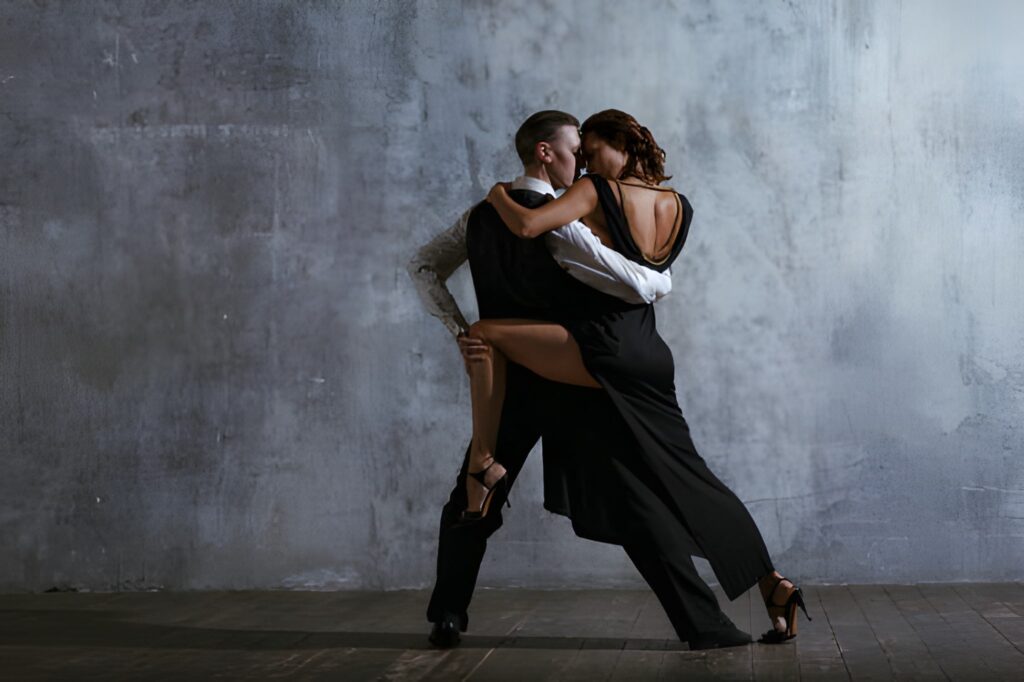
5 Social Dance Partner Tips
You may not have an actual dance partner, but each and every time you social dance with someone – you do.
That might sound obvious, but think about what it means. Every dance is a mini-relationship. It has a beginning, a middle, and an end. It has communication (verbal and nonverbal), expectations, and outcomes. And just like any relationship, there are ways to make it great and ways to make it awkward.
So whether you’re new to partner dancing, you’re a Bronze Student developing your skills, or an advanced student looking to refine your partnering etiquette – you’ve come to the right article.
What is Social Dancing?
Social Dancing is a form of partner dancing that is designed for practical use, instead of for exhibition or competition. If you compared it to language, Social Dance would be a conversation, while exhibition would be closer to a pre-planned speech.
In order for this to work effectively, the technique of Leading and Following is heavily emphasized to send and receive dance signals from one partner to the other.
1. Be Prepared
Even though social dancing does not rely on choreography, that doesn’t mean you shouldn’t be prepared with, at the very least, the basic skills in the dance you’re attempting.
There have been plenty of leaders that believed that alcohol or good music will help their dance skills, and an equal number of followers that feel that good leaders are the only requirement for a great time on the dance floor.
Unfortunately, neither are true.
Dance lessons are the quickest way to prepare, and you don’t need perfect footwork, timing, or a championship dance frame to enjoy yourself and enjoy a dance with someone else. In fact, the bar for “prepared enough to social dance” is much lower than most people think. You need to know the basic step, a few patterns, and how to navigate without causing collisions. That’s it.
What you don’t want is to show up completely empty-handed, expecting the music or your partner to carry you through. That’s not fair to anyone – especially the person you’re asking to dance.
2. Introduce Yourself with a Smile
So if smiling is the “gateway to the soul”, let us proclaim it’s also the fast track to a positive dance invitation.
Think about it like retail sales for a second.
You will always buy more, tip more, and return more when the professional is warm and friendly. As humans, we will choose people we like, even if they are less skilled, over people we don’t, and smiling is a big part of that.
Regardless of how much you may, or may not, know, smiling reminds your dance partners that you’re human, and that you’re enjoying your dance time on Earth. Which is a big improvement over the emotionless experts who dance technically well but make you feel like you’re interrupting their evening.
3. Have a Conversation
It’s called social dancing for a reason. Without a little conversation, it can feel more like “stuffy dancing”. In fact, the conversation doesn’t even need to be dance related. After all, for the few minutes you’re dancing together, you’re partners.
So get to know your partner.
Asking questions is a great way to connect. Notice how the questions vary from dance, to regular life. Try them out:
- What was your first lesson like?
- Who was the first person you told after it was over?
- Greatest vacation you’ve ever been on?
- Have you had a chance to dance on vacation yet?
- Random question, what’s one movie you’ve seen more than 5 times?
The key is genuine curiosity. You’re not interviewing them – you’re connecting with them. And if the conversation flows naturally, the dancing often does too.
4. General Upkeep
If your smile is the invitation, then how you smell is the party. So don’t throw a stinky party.
Okay, maybe that’s a bit extreme, but if “extreme” is the adjective your would-be partners might use to describe your overall scent – then maybe not.
Here’s the checklist (none of this should be surprising):
- Fresh breath
- Deodorant that’s actually working
- Clean clothes
- Reasonable cologne/perfume (less is more)
- A towel or handkerchief if you tend to sweat
Dancing is physical. Bodies get close. Be considerate of the person who has to be in your space for the next three minutes.
5. Role Confidence
You don’t need to be the best dancer, but you’ve got to show confidence in your side of the dance frame.
Internally, it’s a fight or flight response that you need to accept is happening, and by focusing your dance efforts on your own role, you’re fighting the urge to blame your partner.
What does role confidence look like?
For leaders: Commit to your decisions. A hesitant lead is harder to follow than a clear but imperfect one.
For followers: Trust the lead. Resist the urge to anticipate or back-lead. Your job is to respond, not to guess.
For both: Own your part. If something goes wrong, don’t point fingers. Laugh it off, reset, and try again.
6. Gracious Ending
Every partner, regardless of the quality of dance execution, deserves a smile, a warm thanks, and an encouraging word.
Think about it this way: Someone just agreed to dance with you. They took a risk. They put themselves in your space for a few minutes. The least you can do is end on a positive note.
Even if the dance was rough, find something genuine to appreciate. “Thank you, that was fun” works. “I love how you handled that turn” works better if it’s true. What doesn’t work is a cold “thanks” followed by immediately scanning the room for your next partner.
The Unwritten Rules
Here are a few more things that experienced social dancers know:
Don’t teach on the floor. Unless someone specifically asks for feedback, save the corrections for their actual instructor. Nothing kills the mood faster than unsolicited coaching.
Accept invitations graciously. You can say no – that’s your right – but do it kindly. “I’m going to sit this one out, but maybe the next one?” is much better than a flat “no thanks.”
Dance to your partner’s level. If you’re an advanced dancer paired with a beginner, dial it back. The goal is a good experience for both of you, not a demonstration of your skills.
Respect personal space. Social dancing requires closeness, but there’s a difference between dance frame and inappropriate contact. Stay professional.
Final Thought
While some partners may be lacking in some areas, the great thing about Arthur Murray is that the studio is a greenhouse – no this isn’t a dig at the rising temperatures that occur during the practice parties – but the environment is designed to stimulate growth.
Not just in dancing, but in how to interact with the people you dance with.
Social dancing is a skill that goes far beyond footwork. It’s communication. It’s consideration. It’s connection. And the better you get at those things on the dance floor, the better you get at them everywhere else.
A goal is just future regret until you take action. We hope this article inspired you to do just that. Spend 45 minutes of your time and we know you’ll discover something that will positively impact your life.
For more on social dancing fundamentals, check out Become A Successful Social Dancer in 17 Steps.