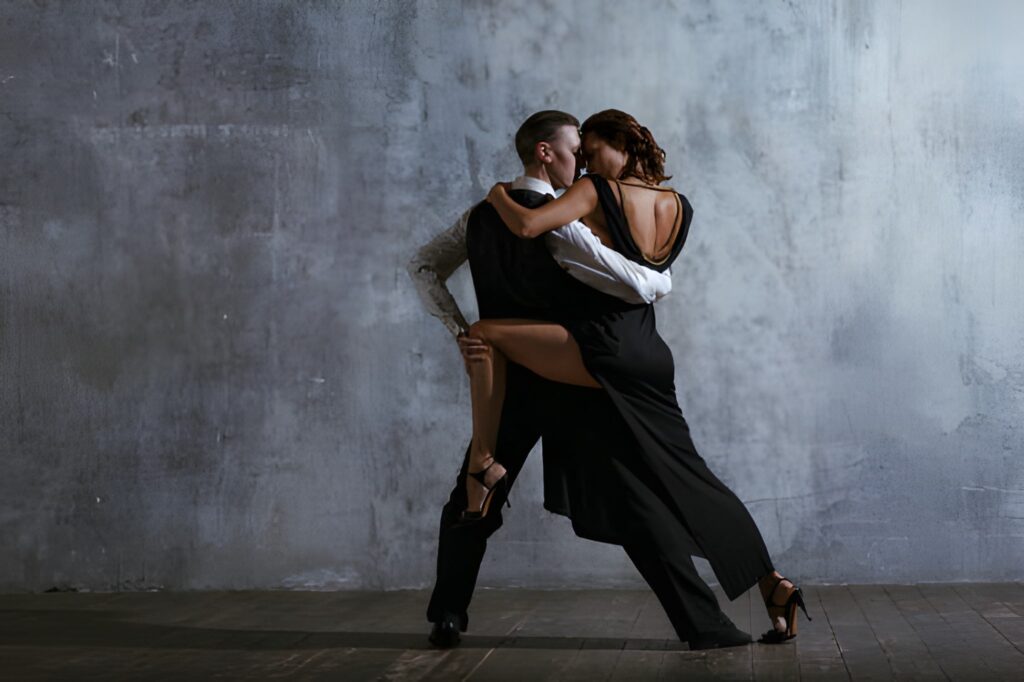

Discover the 14 most common phrases dance teachers say during lessons and learn what each one really means for your dance progress. A fun guide for ballroom dance students.
Are you ready to take score?
See how many of these things your dance teachers say during your lessons, and share your score with fellow students. Keep in mind, not all of them are positive, and any one of them used too often can cause overload.
You might also enjoy: Things You Should Never Say To Your Dance Teacher
You might also enjoy: Why Your Arthur Murray Teacher Recommends the C…
You might also enjoy: Why Dance Teachers Leave
The goal of this article is not just to understand what your dance teacher says, but why they say it in the first place. Understanding the intent behind these common phrases will help you get more out of every lesson and accelerate your dance progress.
The 14 Things Dance Teachers Say the Most
Every dance student has heard at least a few of these phrases. Let’s break down what each one means and why your instructor keeps coming back to them.
1. “Close Your Feet…”
There might be a time (or maybe a few dozen times) where you are convinced that you’re doing something, like closing your feet, and you’re not. But don’t worry, this little phrase wouldn’t make this list if everyone who felt like they were closing their feet actually were.
Why Teachers Say This:
Closing your feet is fundamental to clean, polished dancing. When your feet don’t come together properly between steps, your patterns look sloppy and your balance suffers. What feels like a complete foot closure to a beginner often leaves several inches of gap.
What You Can Do:
Trust your teacher’s eyes over your own feelings. Practice in front of a mirror to calibrate your body awareness. With time and repetition, what feels like closing your feet will actually match what it looks like.
2. “Keep Your Head Up…”
Thrill ride engineers know that things like speed, obstacles, and sharp changes of direction can make the average roller coaster rider lower their hands or tuck their head to their chin. It’s all part of the design. It’s expected and perfectly normal.
Your dance teacher hasn’t designed your lessons to bring your head down and your arms in, but they do know that those traits are part of the learning process when you’re learning to dance.
Why This Happens:
Your head comes down for similar reasons as on a roller coaster. Your brain is working at high speed to process data like music, physical actions, and proximity to your dance partner. While that is much more complex than dodging an obstacle, it is processed in a similar way nonetheless.
The Good News:
While roller coasters may teach you a few things about how loud you’re capable of screaming, it’s the variety of simultaneous functions while learning to dance that make ballroom dancing such an ideal activity for better brain health. The only temporary downside is posture challenges in the early stages.
3. “Feel the Music…”
Imagine if Mr. Miyagi’s entire training regimen for Daniel in The Karate Kid consisted of “Daniel, feel like a karate expert,” or if your next golf lesson consisted of the teacher telling you to “feel like you’ve got a better swing.”
The Reality Check:
If you haven’t noticed, this statement by itself is absolutely useless. So, hopefully, your teacher is using something a little more substantive to teach things like timing on the dance floor.
What Great Teachers Do Instead:
Effective dance instructors break down timing into concrete, actionable components. They’ll use counting, sound effects, physical cues, or visual demonstrations. “Feel the music” might be the end goal, but getting there requires practical tools and techniques.
What You Can Request:
If you’re hearing “feel the music” without additional guidance, don’t hesitate to ask for specifics. “What should I be listening for?” or “Can you count it out for me?” are perfectly appropriate questions.
4. “One More Time…”
Whatever the dance program is, this will always be the greatest lie in the history of dance instruction. You should be honored to have a teacher say this to you… more than once.
What It Really Means:
“One more time” is your teacher’s way of saying “we’re getting close” or “I see potential here and want to capitalize on it.” If they didn’t think repetition would help, they wouldn’t bother. Each “one more time” is an investment in your improvement.
The Hidden Compliment:
When a teacher wants to repeat something, it means they believe in your capacity to get it right. They’re not giving up on the pattern or moving to something easier. They’re pushing you toward a breakthrough.
5. “Here’s What We’re Going to Do…”
We are all drawn to confidence. With the pace of the world these days, you expect to have a teacher who can take initiative and keep your attention. It’s phrases like these that do just that.
Why This Works:
This phrase signals that your teacher has a plan. They know where you are, where you need to go, and how to get you there. It creates structure and momentum in your lesson.
What It Says About Your Teacher:
Instructors who use this phrase are taking ownership of the lesson. They’re not waiting for you to direct the learning. They’re leading it. This proactive approach is a sign of effective teaching.
6. “Keep Your Head Left…”
As if keeping your head up wasn’t challenging enough, now you’ve got to keep it up and to the left in the ballroom dances. While this may seem like an overembellishment or some trivial detail, stretching your head up and to the left is one of the small nuances that can add years of polish and the look of experience to any dancer.
What This Detail Reveals:
If your teacher is focusing on head position rather than just keeping your focus higher than your feet, that means you’re progressing. This is an intermediate-to-advanced correction that teachers save for students who have mastered the basics.
Why It Matters:
Proper head position affects your entire frame, your balance, and your visual lines. It’s one of the details that separates beginners from experienced dancers. When you get this right, everything else looks better.
7. “I’ve Got a Crazy Idea…”
Let’s get one thing straight: Your comfort zone never would have allowed you to get to this point in your dancing, and it is the job of great teachers to continue to remind you of that.
What Follows This Phrase:
“I’ve got a crazy idea” can come in the form of new dances, a new dance routine, or something new on your dance calendar. While this may make your comfort zone agitated (which could make you suspicious of your teacher’s intentions) just remember what this really means.
The Reality:
New and crazy ideas that someone has for you will always beat the alternative: nothing new and always predictable. Growth happens at the edge of comfort, and your teacher knows this.
How to Respond:
Embrace the “crazy idea” with curiosity rather than resistance. Even if it feels uncomfortable initially, trust that your teacher has seen this work for other students.
8. “Bigger Steps…”
When it comes to the ballroom dances, bigger is better. The goal is to basically get across the floor with great posture, in a wonderful dance frame, but in the fewest steps possible.
Why Size Matters in Ballroom:
Large, sweeping movements create the elegant, floating quality that defines ballroom dancing. Small, timid steps look hesitant and lack the visual impact that makes ballroom so impressive.
The Challenge:
Taking bigger steps feels risky when you’re learning. You’re more likely to lose balance or step on your partner. But as you develop technique and confidence, those bigger steps become the foundation of beautiful dancing.
9. “Smaller Steps…”
The Latin dances, on the other hand, feature more compact movements. This means that your teacher may give you feedback like “smaller steps,” especially if you’ve just gone from Waltz to Rumba.
Why Size Changes for Latin:
Latin dances emphasize hip motion, body isolation, and rhythmic precision. Taking huge steps makes it nearly impossible to achieve the characteristic Latin styling. The smaller footwork allows for greater control and more expressive body movement.
The Transition Challenge:
Switching between ballroom and Latin dances requires adjusting your step size, which can be disorienting. Your teacher’s reminders help you recalibrate as you move between styles.
10. “Boom, Chicka-Chicka…”
We’re using “Boom, Chicka-Chicka” as a generic, all-encompassing term. It is the teaching sound effect delegate in the ever-growing sound effect dance instruction convention.
What’s Really Happening:
Yes, your teacher will utter phrases like these that make perfectly good sense on the dance floor but make no sense off of it. The idea is to find the right key to unlocking the door to your understanding of dance timing.
Why Sound Effects Work:
Teachers try a variety of “Boom, chicka-chicka” type tools to find the key that fits the lock, the approach that corresponds best with your brain. What works for one student might not work for another, so instructors develop a whole repertoire of sounds.
The Lasting Impact:
Coincidentally, you may find yourself repeating these sound effects long after your lesson has ended. Don’t be surprised if you catch yourself humming “Boom, chicka-chicka” in the grocery store.
11. “You’re Making Progress…”
Your teacher tells you this often, but not for the “you’re supposed to say that” reason you may be expecting. They say it often because there is a thick layer of self-doubt that can cloud your ability to see your own progress.
Why Self-Assessment is Unreliable:
Often, that cloud of self-doubt masks the fact that you are following a process that works. You’re too close to your own dancing to see the improvements that are obvious to outside observers.
What Great Teachers Do:
They are going to tell you, show you, and create a trail of evidence any attorney would be proud of until you begin to see that you are, in fact, making dance progress. They become cheerleaders for your improvement.
Trust the Process:
When your teacher says you’re making progress, believe them. They have no incentive to lie and every incentive to give you accurate feedback that helps you improve.
12. “At Some Point…”
There are people who build their careers on being forward thinkers, visionaries, and prognosticators in every sector of our world. Dancing is no different.
How This Phrase is Used:
The best teachers use phrases like “at some point” to illustrate a way for you to apply what you are learning. Examples include:
- “At some point, you’re going to be dancing, and you’ll look around and notice that all eyes are on you.”
- “This dance may not seem important now, but at some point someone will ask you to dance and you’ll be so happy we worked on it.”
Why This Matters:
This can add just the right amount of purpose to your process of learning and shed some positive light along the way. Connecting today’s practice to tomorrow’s success keeps motivation high.
Your Future Self Will Thank You:
So “at some point” you’re going to notice that your teacher says this to you, and you’ll smile and think of this article. And at some point after that, you’ll realize they were right all along.
13. “Watch Your Footwork…”
In the ballroom dances, it’s the heels. In Latin dances, it’s the toes. As you get more advanced, your teacher will start to sound like your podiatrist.
Why Footwork is So Important:
While this can add another element to think about that may seem non-essential, your teacher wouldn’t bring it up if that were the case. Footwork is fundamental to balance, movement quality, and visual appearance.
Expert Perspective:
John Kimmins, the Former World Amateur Ballroom Champion and President of Arthur Murray, once said, “Your footwork is the most important because it’s the only part of a dancer’s body that is touching the floor.”
The Bottom Line:
So remember your footwork. Yes, it’s called foot-work, not foot-fun, but the end result is worth the effort.
14. “Remember When…”
A great teacher will know how to put things into perspective for you, and nothing does that like the phrase “remember when…”
Why Perspective Matters:
Maybe you’re getting frustrated with your progress, or your nerves are getting the better of you as you prepare for a big performance. If your teacher can remind you of where you started, you can get recalibrated to where you are going.
An Example:
“Remember when you came in for your first lesson? Do you remember how you thought you’d never have the courage or the time to even get through four lessons, and now you’re getting ready to perform for your friends and family. It’s incredible how far you’ve come.”
The Power of Reflection:
Without perspective, it’s easy to lose our way. A teacher who says “remember when” is a teacher who is doing everything they can to keep your progress and social dance journey in perspective.
Applying What You’ve Learned
Now that you understand what these phrases mean, you can get more from every lesson. Here are some practical ways to apply this knowledge:
During Private Lessons
Listen actively when your teacher uses these phrases. Instead of feeling corrected, recognize that each phrase represents an opportunity for growth.
At Group Classes
When attending Group Classes, you’ll hear instructors use many of these phrases with the entire room. Understanding the intent helps you apply the feedback more effectively.
During Practice Parties
Practice Parties are perfect for applying what you’ve heard in lessons. Without the pressure of instruction, you can focus on implementing corrections like closing your feet, keeping your head up, and maintaining proper footwork.
Between Lessons
Reflect on the phrases your teacher used in your last lesson. Which ones came up most frequently? Those represent your current areas for improvement.
Final Thought
Somewhere, at some point in your life, you realized you wanted to learn how to dance. It could have been a lifelong dream or an immediate dance emergency, but somehow you did the most improbable, wonderful thing, and walked in on your first of many dancing lessons.
It was then that you met a team of people who understood, maybe even more than you, how big that first step was.
Teachers, managers, and administrators in your dance studios want to see you succeed and exceed every limitation you ever thought you had on the dance floor, regardless of your initial dance skills.
Do dance instructors get repetitive from time to time? Yes.
Is it repetitive for all the best reasons? You better believe it.
Every phrase, every correction, every encouragement comes from a place of genuine investment in your success. The next time you hear one of these 14 phrases, smile, apply the feedback, and appreciate the dedicated professional helping you become the dancer you want to be.
Frequently Asked Questions
Why do dance teachers repeat the same corrections?
Repetition is essential for building muscle memory. Your teacher repeats corrections because changing physical habits takes time and consistent reinforcement. Each repetition brings you closer to automatic, correct technique.
Is it bad if my teacher says “one more time” a lot?
Not at all! It means they believe you’re close to getting it right and want to help you have that breakthrough. Teachers don’t invest extra repetitions in students they don’t believe in.
How can I remember all the corrections between lessons?
Many students keep a dance journal where they note the main corrections from each lesson. Attending Group Classes and Practice Parties between private lessons also helps reinforce what you’ve learned.
What should I do if I don’t understand a correction?
Ask for clarification! Good teachers welcome questions. Request that they demonstrate, explain differently, or break down the correction into smaller parts.
Why does my teacher use sound effects instead of just counting?
Sound effects often capture the quality and rhythm of movement better than numbers. “Boom, chicka-chicka” might convey the weight and timing of a step more effectively than “1, 2, 3.”
How do I know if I’m actually making progress?
Trust your teacher’s feedback. Also, look for objective signs: Are you attempting more complex patterns? Can you recognize music and rhythms you couldn’t before? Do movements feel more natural? Progress is often gradual but definitely real.
Want to hear these phrases in action? Contact your local Arthur Murray Dance Studio to schedule a lesson and experience expert instruction firsthand.