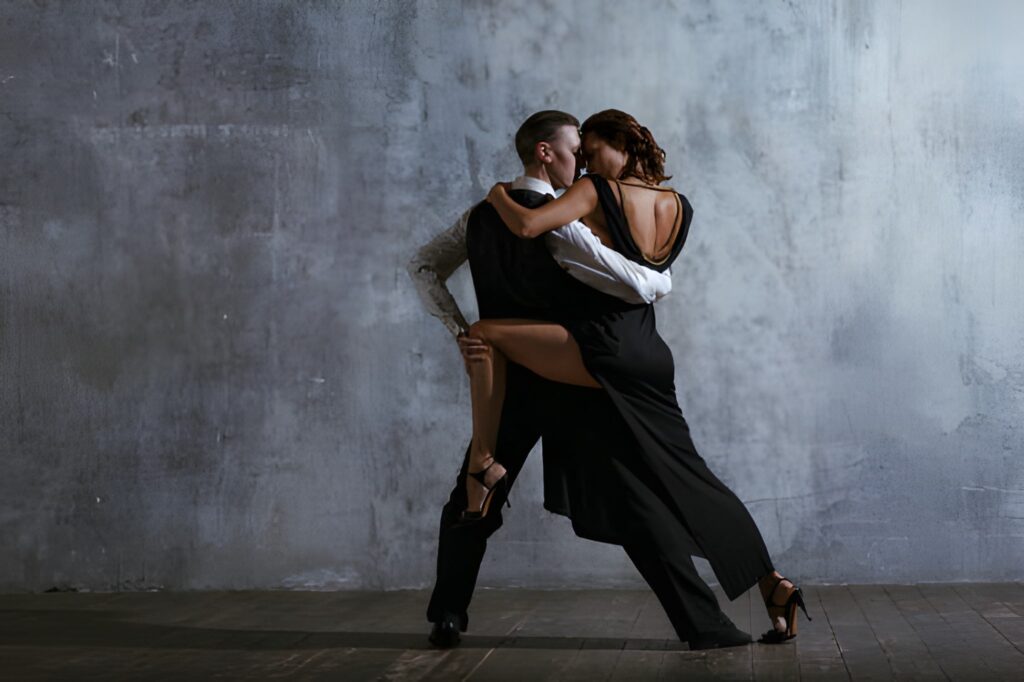

This is Your Brain on Dancing
You can’t argue with science, or the Bee Gees: You Should be Dancing.
Need proof? We’ve got it. We’ve collected facts from a variety of medical studies showing the incredible effects that dancing has on the brain. So regardless of the Dance Myths that you’ve believed for far too long, it’s time to look at the science.
1. Dancing Makes You Happy
According to Columbia University neuroscientist, John Krakaur, synchronized music and movement are a pleasure “double play” for your brain. The music stimulates the brain’s reward centers, while dance activates its sensory and motor circuits.
2. Increased Brain Activity
Using PET imaging, learning to dance increases activity in the:
- Motor Cortex: Planning, control, and execution
- Somatosensory Cortex: Responsible for motor control, key in hand-eye coordination
- The Basal Ganglia: the group of structures in the brain responsible for coordinating movement
- The Cerebellum: Integrates the input from the brain and spinal cord to help fine and complex motor actions.
3. Lowers Risk of Dementia
In a 2003 study at the Albert Einstein College of Medicine, researchers found that dance was the only leisure activity, out of 11 different types, to lower the participants’ risk of dementia.
4. Dance Beats Reading
In that same study, published in the New England Journal of Medicine, regular dance reduced the risk of dementia by 76%, twice as much as reading.
5. Social Dancing Beats Choreography (in the Brain Building Department)
Neurologist Dr. Robert Katzman said, �Freestyle social dances, such as foxtrot, waltz and swing, requires constant split-second, rapid-fire decision making, which is the key to maintaining intelligence because it forces your brain to regularly rewire its neural pathways, giving you greater cognitive reserve and increased complexity of neuronal synapses.�
Ready to take the first step towards dance and brain skills? Why not start with a free private lesson? Regardless of dance experience, you’ll be moving within five minutes of your appointment.
‘8317f50b-2573-47d5-9c70-e2e013e65f1f
6. Improves Neuroplasticity
Social Dance is an activity that activates our brains’ neuroplasticity. Neuroplasticity is the ability of the brain to form and reorganize synaptic connections, especially in response to learning. Neuroplasticity is what enables the brain to recover from things like a stroke, learning disabilities, fight addictions, recover after injuries, or overcome things like ADD or obsessive compulsive behavior.
7. Works as Therapy
A 2005 study by Montreal�s McGill University utilized the Argentine Tango as a tool for combatting Parkison’s Disease. �In the study, we found the tango was helpful in significantly improving balance and functional mobility, and seemed to encourage patients to appreciate their general course of therapy. We also found modest benefits in terms of patients� cognitive functions and in reducing fatigue” says clinical research fellow, Dr. Rios Romenets.
Read More about this Study involving Tango and Parkinson’s Disease Research
8. Improved Memory
A recent article in the AARP newsletter cites a Korean study which found that older adults who were taught to cha-cha, twice a week for six months, improved their memory and cognitive function.
9. Stretch Your Mental Capacity
According to psychiatrist Dr. Joseph Coyle of the Harvard Medical School, the hippocampus and the cerebral cortex � both of which play a role in dance � are rewired and consequently improved with frequent use.
10. Builds Body Intelligence
According to Harvard University psychologist, Howard Gardner, believes that dancers are just like athletes and surgeons. They are body intelligent.


Walking in to your first appointment at Arthur Murray may feel like a barrier, but it’s not. We believe that so much that we offer your first private appointment free. Then you can see for yourself why our company slogan is “Walk in, Dance out.”
‘8317f50b-2573-47d5-9c70-e2e013e65f1f