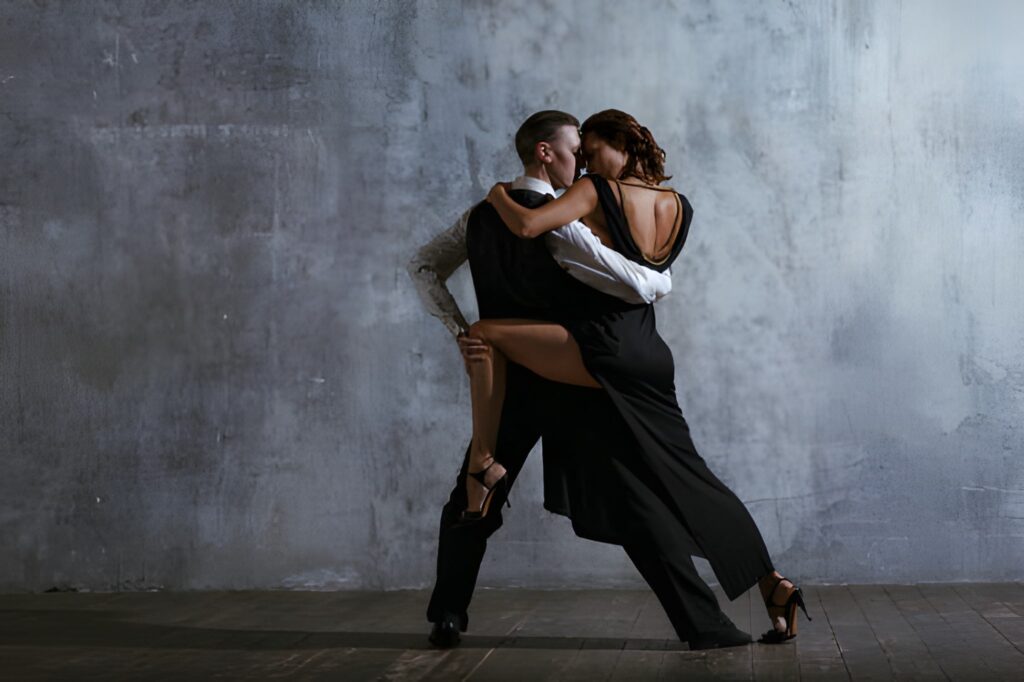
Why every serious dancer needs Waltz in their repertoire—even if it’s not your favorite style.
You might think Waltz is old-fashioned. Maybe you’re drawn to the energy of Salsa or the cool factor of Swing. But experienced social dancers know something beginners often miss: Waltz is the foundation that elevates everything else.
Here’s why this “formal” dance deserves a permanent place in your repertoire.
1. Take a Chill Pill
In a world of constant stimulation, Waltz offers something rare: genuine relaxation while moving.
The flowing 3/4 time signature creates a soothing atmosphere that feels more like a spa treatment than exercise. While faster dances energize, Waltz calms. After a stressful week, there’s nothing quite like the meditative quality of gliding across the floor to beautiful music.
This isn’t just perception—slower, rhythmic movement has been shown to reduce cortisol and promote relaxation. Waltz is essentially moving meditation.
2. Fancy Never Hurt Anybody
Think of Waltz as the tuxedo or ballgown of your dance wardrobe.
You don’t wear formal attire daily, but when the occasion calls for elegance—a wedding, a gala, a special celebration—you’re grateful it’s in your closet. Waltz serves the same purpose in your dance repertoire.
When the music turns romantic and couples take the floor for a sweeping Waltz, you’ll be ready instead of sitting on the sidelines. Some moments call for sophistication, and Waltz delivers.
3. The Timing Trainer
Waltz uses 3/4 time—three beats per measure instead of the more common four. Learning to recognize and move to this distinctive rhythm expands your musical ear.
Once you’ve internalized 3/4 time through Waltz, you’ll start hearing it everywhere:
- In movie soundtracks
- At weddings
- In classical music
- On the radio (more songs than you’d expect)
This rhythmic versatility makes you a more adaptable dancer across all styles.
4. The Posture Trainer
Proper Waltz technique demands excellent posture—and rewards you for it.
Imagine carrying a tray of champagne glasses across a crowded room. That’s the level of body control Waltz develops. Your core engages, your spine lengthens, and your upper body becomes a stable platform for movement.
This improved posture doesn’t disappear when the Waltz ends. It carries into your other dances, your daily life, and how others perceive you.
5. The Balance Trainer
Waltz continuously challenges your equilibrium through its signature technique: Rise and Fall.
This characteristic creates the flowing, dreamlike quality of Waltz—rising through your body on certain beats, then settling back down. It requires constant micro-adjustments to balance, strengthening the small stabilizer muscles throughout your body.
Over time, this training makes you more stable in every dance style and physical activity.
6. Transferable Poise Credits
The combination of timing, posture, and balance creates something greater than the sum of its parts: visible elegance.
This poise transfers directly to other dance styles. The ability to maintain a calm, composed upper body while your feet work intensively is a skill that elevates your Foxtrot, your Tango, even your Latin dances.
Think of Waltz as cross-training for your dance body.
7. New Attitude
Variety prevents predictability—and predictable dancers get boring.
The best social dancers surprise their partners with range. When you can shift from a playful Cha-Cha to an elegant Waltz to an energetic Swing, you become someone partners seek out.
Mastering diverse styles keeps you engaged longer at social events and makes you a more interesting dance partner.
8. Don’t Fight the Flight
Learning any new dance means stepping outside your comfort zone. Waltz’s graceful, flowing nature makes this leap feel natural.
There’s something about the sweeping, romantic quality of Waltz that aligns with the vulnerability of learning. The music supports you. The movement forgives hesitation. It’s an ideal dance for embracing the discomfort of growth.
9. You Can Be Classy at Any Age
Waltz represents timeless sophistication that transcends age.
Unlike dances that rely on athleticism or youthful energy, Waltz rewards maturity. The elegance, the musicality, the partnership—these improve with experience. You can Waltz beautifully at 25 or 75, and the dance looks appropriate at either age.
This longevity makes Waltz a wise investment in your dancing future.
The Versatile Dancer’s Edge
Skilled social dancers maintain a versatile repertoire. They can navigate any music, any partner, any occasion. Waltz is an essential tool in that toolkit—even if it’s not the dance that gets your heart racing.
Think of it this way: you might love Italian food, but a chef who only cooks pasta isn’t much of a chef. The same applies to dancing. Range matters.
Where Waltz Shines
You’ll be especially grateful for your Waltz skills at:
- Weddings (the bride and groom’s first dance is often a Waltz)
- Formal galas and charity events
- Holiday parties with seasonal music
- Cruise ships and ballroom events
- Any romantic moment when slower music plays
These are high-stakes social situations where dancing well matters most. Waltz ensures you’re ready.
Getting Started with Waltz
If Waltz isn’t already in your repertoire, it’s easier to learn than you might think. The basic box step is approachable, and the music naturally guides your movement.
At Arthur Murray, we teach Waltz as both a beautiful standalone dance and as foundation training that improves all your other dancing. Many students are surprised how quickly they develop the characteristic “floating” quality of good Waltz.
Find an Arthur Murray studio near you and add this essential dance to your repertoire. For seasonal Waltz music, check out our holiday Waltz playlist. And if you’re also considering Foxtrot, see 9 reasons to start with Foxtrot.
Frequently Asked Questions
Is Waltz hard to learn?
The basic steps are quite accessible. The challenge—and reward—comes from developing the characteristic rise and fall, the flowing quality, and the musical interpretation. But beginners can dance a pleasant social Waltz relatively quickly.
What music can I Waltz to?
Any song in 3/4 time works. This includes many classic songs, movie themes, and even some pop music. Your instructor can help you learn to recognize Waltz-appropriate music.
Do I need special shoes for Waltz?
Standard ballroom shoes with smooth soles work well. The gliding movements of Waltz benefit from shoes that can slide slightly on the floor.
Can Waltz help with my other dances?
Absolutely. The posture, balance, and body control developed through Waltz training transfer directly to other smooth dances like Foxtrot and even to Latin styles.