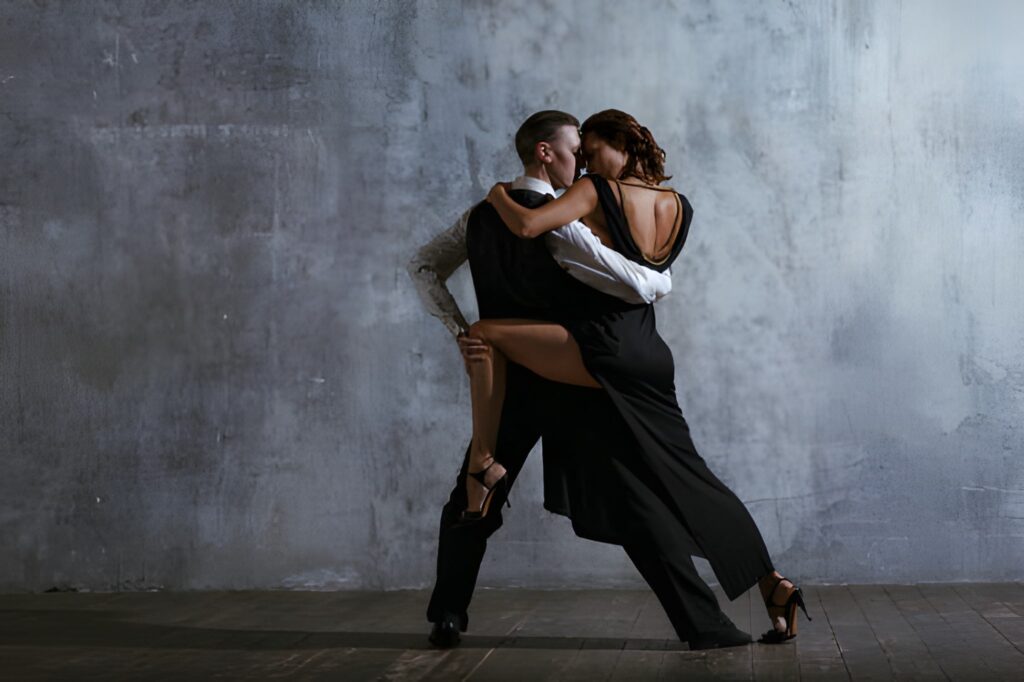
A vineyard wedding deserves a first dance that matches the setting – something elegant enough for the venue but relaxed enough for the atmosphere. Here’s how to make it happen.
Vineyard weddings are different from ballroom weddings, country club weddings, or backyard weddings. The setting itself creates expectations: romantic but not stuffy, beautiful but approachable, memorable but not over-the-top. Your first dance should reflect those same qualities.
Why the Venue Changes Everything
The dance floor at a vineyard is rarely a polished ballroom surface. You might be dancing on a patio, a wooden deck, or even a gently graded outdoor space. That changes things.
Some dances that work beautifully in a ballroom become challenging on uneven surfaces. Others – dances that don’t require traveling across the entire floor – work even better in intimate outdoor settings. In fact, vineyard first dances often look more romantic than their ballroom counterparts precisely because of those limitations.
The Three Best Dances for Vineyard Weddings
1. The Foxtrot: Classy But Not Too Serious
If there’s one dance that captures the vineyard vibe, it’s the Foxtrot. Smooth, elegant, and infinitely adaptable – it works whether you have twenty feet of dance space or fifty.
Why it works for vineyards:
- The gliding movement looks stunning at sunset
- It can be danced small (compact steps) or big (traveling patterns) depending on your space
- The music options are endless – from Frank Sinatra classics to Michael Buble covers
- It photographs beautifully because the hold is classic without being stiff
Song suggestions: “The Way You Look Tonight” (Sinatra), “L-O-V-E” (Nat King Cole), “Everything” (Michael Buble), “At Last” (Etta James)
The Foxtrot is also forgiving. Nervous? Steps not quite perfect? The smoothness of the dance hides minor imperfections in ways that sharper dances can’t.
2. The Rumba: The Ultimate Slow Dance
Vineyard weddings often happen at golden hour – that magical sunset light that makes everything glow. The Rumba is designed for exactly this moment.
Why it works for vineyards:
- It’s intimate without being showy
- You stay in one area – no traveling required
- The hip motion and arm styling add Latin flair without looking like a competition
- It fits perfectly with the romantic, wine-country atmosphere
Song suggestions: “Unchained Melody” (Righteous Brothers), “Can’t Help Falling in Love” (Elvis), “When I Fall in Love” (Nat King Cole), “A Thousand Years” (Christina Perri)
The Rumba is also practical. Many vineyard dance floors are small – and the Rumba doesn’t need much space to look impressive. You can create a complete, beautiful first dance in a space no bigger than your living room.
3. The Tango: Playful and Dramatic
Want to surprise your guests? The Tango brings drama without requiring massive choreography. Its sharp movements and intense connection create memorable moments that guests will talk about for years.
Why it works for vineyards:
- Argentine Tango is compact – perfect for smaller spaces
- American Tango can be adjusted for any floor size
- The dramatic pauses and poses photograph incredibly well
- It’s unexpected enough to be exciting but accessible enough to look natural
Song suggestions: “Santa Maria” (Gotan Project), “Por Una Cabeza” (Carlos Gardel), modern Tango covers of popular songs
The Tango works especially well if you want your first dance to have personality. It’s not the safe choice – it’s the interesting choice.
Matching Your Dance to Your Venue
Not all vineyards are created equal. Some offer grand ballrooms; others are purely outdoor. Here’s how to think about the match.
For outdoor-only venues: Choose dances that work in compact spaces – Rumba, Argentine Tango, or a small-pattern Foxtrot. Check the surface before your wedding day and practice in similar shoes on similar terrain.
For venues with indoor options: You have more flexibility. A traveling Waltz or expansive Foxtrot becomes possible. Just confirm the floor type and size.
For mixed settings (outdoor ceremony, indoor reception): Best of both worlds. You can dance a Rumba-style first dance outdoors at sunset, then lead a more traditional Foxtrot during the reception.
The Practical Considerations
What to wear: Ball gowns with heavy trains work against you on any dance floor. For vineyard dancing, consider a dress that allows movement without constant adjustment. Grooms: break in your shoes before the big day.
How much to prepare: Four to six lessons is usually enough for a confident first dance. Start at least two months before the wedding. In fact, couples who start earlier (three to four months out) report significantly less stress about the dance.
Music timing: Your song choice matters more than you think. Work with your instructor to edit the song if needed – most first dances work best at 90 seconds to two minutes, not four-plus minutes.
What Your Guests Actually Remember
Here’s something that might surprise you: guests remember how you looked at each other, not how perfectly you executed your steps. A simple dance done with genuine connection beats a complicated routine danced with stress and concentration.
The vineyard setting is already doing a lot of the work. The sunset, the views, the atmosphere – they’re creating the romance. Your job is just to be present with each other and let the moment happen.
Getting Started
Your vineyard wedding deserves a first dance that matches the setting – elegant, romantic, and memorable. Whether you choose the classic Foxtrot, intimate Rumba, or dramatic Tango, the key is starting early enough to feel confident by the wedding day.
Wine country awaits. And so does your dance floor.