The Short Answer: A Stricter, More Technical Style of Ballroom
You’ve probably heard the term “International Standard” thrown around at dance events or competitions. Maybe someone mentioned it while you were taking lessons. But what does it actually mean – and how is it different from what you’re learning at Arthur Murray?
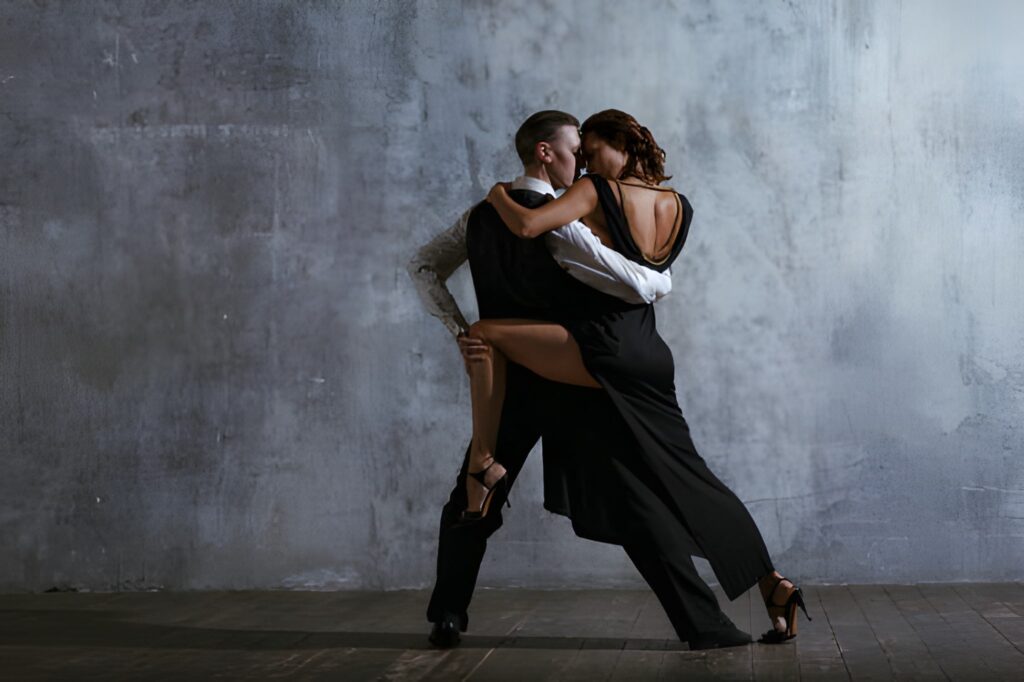
International Standard (also called “International Ballroom”) is a competition-focused style of ballroom dancing that includes five dances: Waltz, Tango, Slow Foxtrot, Viennese Waltz, and Quickstep. The defining characteristic? Partners maintain continuous body contact within the dance frame throughout the entire dance. No exceptions.
International Standard vs. American Smooth: What’s the Difference?
Here’s where things get interesting. If you’ve been taking ballroom lessons in the United States, you’ve likely been learning American Smooth style – and there’s a significant difference between the two approaches.
The Frame Rule
In International Standard, partners never leave the dance frame. Ever. Your body stays connected to your partner from the opening measure to the final note. In American Smooth, dancers can break away for side-by-side movements, underarm turns, and dramatic separations.
Which is better? That depends entirely on what you’re looking for.
Expression Through Restriction
International Standard forces dancers to express themselves through refined technique rather than spatial freedom. In fact, many dancers find this restriction surprisingly liberating – when you can’t rely on flashy separations, you’re pushed to develop deeper connection with your partner and more nuanced body movement.
American Smooth, on the other hand, gives you a broader canvas. You can incorporate open movements, showcase individual styling, and create more theatrical moments. It’s the style most commonly taught at social dance studios (including Arthur Murray) because it translates better to real-world dancing situations – like weddings, parties, and social events.
The Five International Standard Dances
Waltz
The Waltz in International Standard emphasizes technique, swing, sway, and balance – all while maintaining that closed frame. The leader begins with the right foot, and both partners flow through the characteristic rise and fall with seamless body contact. It’s elegant, controlled, and requires exceptional partnership.
Slow Foxtrot
This is where International Standard really shines. The Slow Foxtrot features flowing, continuous movement designed for spacious ballrooms. Dancers glide across the floor with smooth heel leads and extended steps – all without breaking the frame. It’s often considered the most challenging of the five dances because it demands such precise timing and body control.
Tango
International Tango is sharp, staccato, and dramatic – but still in closed position. Unlike its Argentine cousin (which has an entirely different feel and vocabulary), International Tango maintains the ballroom frame while incorporating quick head snaps and crisp leg actions. The contrast between the flowing Waltz and the fierce Tango is striking.
Viennese Waltz
Take everything you know about Waltz and speed it up. Viennese Waltz is danced at roughly twice the tempo, with partners rotating continuously around the floor in closed position. It’s breathtaking to watch and exhilarating to dance – once you’ve developed the stamina for it.
Quickstep
The party dance of International Standard. Quickstep is lively, bouncy, and full of syncopated rhythms – but yes, still in frame. Dancers incorporate hops, runs, and quick changes of direction while maintaining their connection. It requires excellent fitness and a genuine sense of fun.
Should You Learn International Standard?
Here’s the honest answer: It depends on your goals.
If you’re planning to compete seriously at the international level, learning International Standard is essential. The technique you’ll develop is invaluable, and many competitive dancers study both styles to become more well-rounded.
But if you’re dancing for social enjoyment, fitness, or preparing for a wedding first dance? American Smooth is probably more practical. You’ll learn patterns that work in real-world settings, develop skills that translate to any dance floor, and have more creative freedom in your expression.
In fact, many dancers start with American Smooth and later add International Standard to challenge themselves technically. There’s no rule that says you have to choose just one.
What Does This Mean for Your Arthur Murray Experience?
At Arthur Murray studios, the focus is primarily on American Smooth and American Rhythm styles – dances designed for social dancing and practical application. This approach gives you versatility and confidence on any dance floor, from your cousin’s wedding to a Saturday night out.
That said, many Arthur Murray instructors have training in International styles and can introduce those elements if you’re curious. Want to understand what it feels like to maintain closed frame for an entire Waltz? Just ask. Looking to develop stricter technique before a competition? Your instructor can guide you there.
The beauty of partner dancing is that there’s always more to learn. International Standard represents one path – a technically demanding, visually stunning approach that rewards dedication and precision. American Smooth represents another – a flexible, expressive style that adapts to any social situation.
Which path calls to you?
Ready to explore the differences firsthand? Check out our deep dive into International Ballroom vs. American Smooth for side-by-side comparisons and video examples.