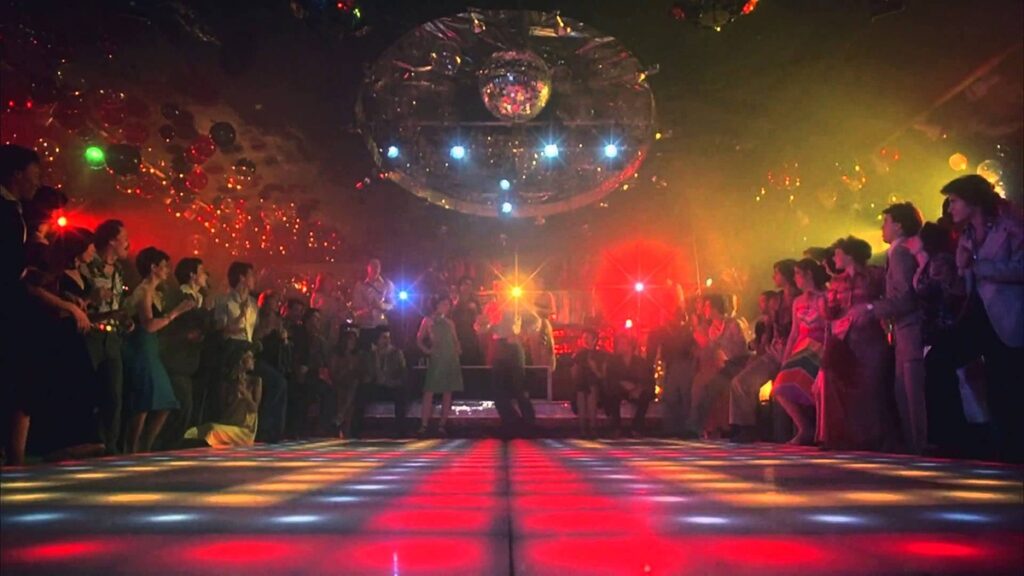
On June 27, 2017, a piece of disco history changed hands for $1.2 million. The iconic illuminated dance floor from Saturday Night Fever. The very platform where John Travolta strutted his way into cinema legend. Sold at auction, raising questions about who would pay such a sum and why this particular piece of movie memorabilia commanded such a price.
The sale captured international attention, not just for the amount but for what it represented: a tangible connection to a cultural moment that transformed how the world thought about dancing, disco, and Saturday nights.
The Dance Floor That Changed Everything
The 24×16 foot illuminated platform wasn’t just a movie prop. It was one of the costliest expenses of the entire Saturday Night Fever production, running approximately $15,000 to construct in 1977. Equivalent to roughly $70,000 in today’s currency.
The floor featured hundreds of illuminating panels that pulsed with colored light, creating the visual spectacle that made the film’s dance sequences unforgettable. When John Travolta’s Tony Manero stepped onto that floor, the lights seemed to respond to his movement, turning a Brooklyn disco into something magical.
Why the Floor Mattered to the Film
Director John Badham insisted on capturing Travolta’s dancing in wide shots that showcased both the performer and the floor together. This decision was unusual for the time. Many films used tight shots and editing tricks to disguise limited dancing ability or double in for stars.
Travolta, however, demanded the opposite approach. He wanted audiences to see that he was actually dancing, not watching a stunt double or edited compilation. The illuminated floor became his co-star, its patterns highlighting and framing his movements.
This creative choice made the dance floor inseparable from the film’s most memorable moments. The “You Should Be Dancing” sequence, the Bee Gees-scored strutting, the final competition. Each scene gained visual power from that glowing platform.
The Auction and Its Significance
Profiles in History, an auction house based in Calabasas, California, handled the sale. The company specializes in entertainment memorabilia, having previously sold items ranging from Marilyn Monroe’s dresses to original Star Wars props.
What Made This Item Special
Joe Maddalena, President and CEO of Profiles in History, described the floor’s significance: “Most people we talked to thought it was one of the coolest pieces of pop culture to ever come to auction.”
He compared its cultural importance to legendary artifacts like the Maltese Falcon statuette or Dorothy’s ruby slippers from The Wizard of Oz: “It defined a moment in time, the birth of the dance clubs.”
That comparison isn’t hyperbole. Saturday Night Fever didn’t just depict disco culture. It helped create and spread it globally. Before the film, disco was primarily a New York phenomenon. After its release, disco clubs opened worldwide, each trying to capture some fraction of the magic portrayed on screen.
The illuminated dance floor became the visual symbol of that entire movement.
The Mystery Buyer
Despite intense speculation, the identity of the purchaser remains unknown. The auction house maintained strict confidentiality, as is standard practice for high-profile sales.
The Travolta Theory
Naturally, speculation focused on John Travolta himself. The timing seemed significant. 2017 marked the 40th anniversary of the film’s release. Travolta had publicly expressed fondness for the movie that launched his career, and he certainly possessed the means for such a purchase.
His previous acquisition of Frank Sinatra’s former Palm Springs home demonstrated willingness to invest in iconic pieces of entertainment history. The dance floor would fit perfectly in someone building a collection of culturally significant memorabilia.
When asked directly whether Travolta was the buyer, Maddalena offered only: “No comment.” For more on this topic, check out 5 Clever Ways to Sneak Social Dancing Into Your Next Vaca….
Other Possibilities
The buyer could equally be a dedicated collector of disco-era artifacts, a museum planning a cultural exhibition, or a wealthy entertainment venue seeking a unique attraction. The floor’s functionality (it could theoretically be restored and used) adds value beyond pure collectibility.
Some speculated that a new disco-themed club or entertainment complex might incorporate the original floor as a centerpiece, charging premium prices for the chance to dance where Travolta once danced.
The Cultural Legacy of Saturday Night Fever
Understanding why someone would pay $1.2 million for a movie prop requires understanding what Saturday Night Fever meant to American culture.
Before the Film
Disco in 1977 was primarily a New York club phenomenon, centered in venues like Studio 54. The music had achieved radio success, but the full disco experience. The lights, the fashion, the dancing. Remained confined to urban centers.
The Transformation
Saturday Night Fever brought disco culture to middle America through the most powerful distribution network available: movie theaters. Suddenly, teenagers in Kansas and retirees in Florida experienced what had been an exclusive urban scene.
The film’s success was unprecedented:
- Grossed over $237 million worldwide
- Soundtrack became one of the best-selling albums in history
- Launched numerous fashion trends
- Created demand for disco dancing instruction worldwide
The Dance Instruction Boom
Particularly relevant to the Arthur Murray story: Saturday Night Fever triggered an explosion of interest in dance lessons. People who had never considered formal instruction suddenly wanted to learn the moves they’d seen on screen.
Dance studios experienced their biggest enrollment surge since the swing era of the 1940s. The desire to recreate what Travolta accomplished on that glowing floor brought millions of new students through studio doors.
What the Floor Represents Today
Forty-plus years later, the illuminated dance floor represents more than a movie prop or a nostalgic artifact. It symbolizes a particular American optimism about dancing and self-expression.
The Promise of Transformation
Tony Manero wasn’t born a great dancer. He became one through practice, dedication, and natural talent. His journey from paint store clerk to disco king suggested that anyone could transform themselves through dancing.
That promise resonates differently today than it did in 1977, but it hasn’t lost its power. People still come to dance lessons hoping to discover hidden abilities, to reinvent themselves, to become the best version of who they could be.
The Social Function of Dancing
Saturday Night Fever portrayed dancing as social salvation for its working-class characters. The disco floor was the one place where skill and style mattered more than money or connections. Tony Manero commanded respect there that he couldn’t earn anywhere else in his life.
Dance floors still serve that function. The person who struggles at work might shine at a salsa club. The shy introvert might come alive during a waltz. The social hierarchy that governs daily life suspends itself when the music plays.
The Investment Question
Was $1.2 million a reasonable price for a movie prop? From pure financial analysis, entertainment memorabilia has proven to be a strong alternative investment class. Items associated with cultural touchstones tend to appreciate significantly over time.
The original ruby slippers from The Wizard of Oz sold for $660,000 in 2000 and would likely command several times that amount today. James Bond’s Aston Martin, the Batmobile, Dorothy’s dress. These items consistently exceed auction estimates.
The Saturday Night Fever dance floor occupies similar cultural territory. As a one-of-a-kind piece from one of the most influential films of its era, its rarity and significance suggest continued appreciation.
The Story Continues
Whether sitting in a private collection, awaiting museum display, or being restored for actual use, the million-dollar dance floor continues its journey through history. Its story didn’t end with the auction. It simply entered a new chapter.
The floor’s ultimate destination matters less than what it represents: the enduring human desire to move to music, to express ourselves through dance, and to transform ordinary Saturday nights into something extraordinary.
That desire hasn’t diminished since 1977. If anything, it’s grown stronger as people seek authentic connection in an increasingly digital world. The dance floor, any dance floor, offers that connection.
Your Own Dance Floor Awaits
You don’t need a million dollars or a piece of movie history to experience what Tony Manero found on that illuminated platform. Every dance studio has a floor waiting for someone to make it special through movement and dedication.
The magic wasn’t in the lights or the panels. It was in the commitment to becoming better, the joy of moving to music, and the connection between partners and fellow dancers.
Ready to find your own Saturday Night Fever moment? Visit your local Arthur Murray studio and discover what the dance floor holds for you.