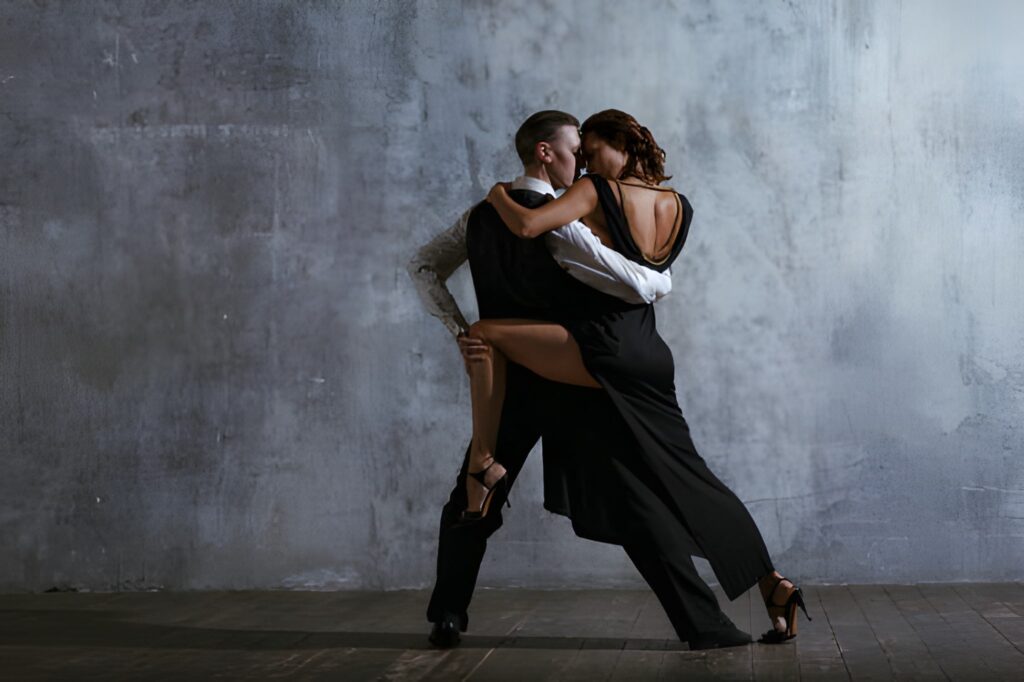
Dance is a language. And just like learning French or Spanish, your Bronze dance program follows predictable stages – each building systematically on the last, each unlocking new levels of expression and confidence.
Most students don’t realize that when they begin Bronze 1, they’re starting a language acquisition journey as sophisticated as learning any foreign language. Dance has vocabulary (patterns), grammar (technique), and ultimately, poetry (artistry).
Understanding these stages transforms how you approach your training, how you measure progress, and most importantly, how you appreciate the incredible transformation you’re undergoing from your very first lesson to your Bronze 4 graduation.
Bronze 1: Building Your Dance Vocabulary
Just as language learners begin with essential words – “hello,” “goodbye,” “please,” “thank you” – Bronze 1 students start by acquiring the fundamental vocabulary of ballroom dancing.
The Vocabulary You’re Building
Basic Patterns (Your First Words):
- Box Step (the “hello” of ballroom)
- Quarter Turns (directional changes)
- Underarm Turns (your first “conversation”)
- Basic Foxtrot, Waltz, Swing, and Cha-Cha patterns
Essential Grammar Rules:
- Frame and posture (sentence structure)
- Timing and rhythm (pronunciation)
- Weight changes (verb conjugation)
- Lead and follow signals (basic communication)
What This Stage Feels Like
Language acquisition research shows that beginners often go through a “silent period” where they understand more than they can express. In Bronze 1, you might recognize what your instructor is demonstrating but feel unable to execute it smoothly. This is completely normal.
Common Bronze 1 Experiences:
- “I understand the step but my feet won’t cooperate”
- “I can do it in practice but forget everything with music”
- “I feel like I have two left feet”
- “Other students seem to pick this up faster than me”
You’re not behind – you’re building vocabulary. Every pattern you learn creates the foundation for more complex combinations later.
Milestones to Celebrate
Your First Full Song: The moment you complete an entire song without stopping is like speaking your first complete sentence in a foreign language. It’s proof that the vocabulary is starting to stick.
Rhythm Recognition: When you stop thinking about timing and start feeling the music, you’ve achieved basic “pronunciation” fluency.
Frame Confidence: The day your frame feels natural rather than forced, you’ve mastered fundamental grammar that will support everything else you learn.
Practice Party Success: Dancing with different partners at practice parties proves your vocabulary is transferable – not just memorized with one specific person.
Pro Tip: Consistency is crucial. Language learners who practice daily advance faster than those who cram once a week. Even 10 minutes of mental review between lessons helps consolidate vocabulary.
Bronze 2: Constructing Dance Sentences
Language learners progress from isolated words (“food,” “good,” “want”) to basic sentences (“I want food” or “food is good”). Bronze 2 students make the same leap from isolated patterns to flowing combinations.
The Sentence Structure You’re Developing
Pattern Combinations (Your First Sentences):
- Linking 2-3 patterns smoothly
- Transitioning between dance styles within a song
- Adding simple variations to basic patterns
- Creating short but complete “conversations” on the dance floor
Improved Grammar (Technical Refinement):
- Cleaner timing and musical interpretation
- Better lead/follow communication
- Smoother directional changes
- Enhanced partner awareness and floorcraft
What This Stage Feels Like
This is where dancing starts to feel like actual communication rather than vocabulary practice. You begin having “conversations” with your partner through movement, responding and adjusting rather than just executing memorized sequences.
Common Bronze 2 Experiences:
- “I can actually lead/follow things I haven’t specifically practiced”
- “The music is starting to guide my movements”
- “I feel more confident asking people to dance”
- “I’m noticing other dancers’ techniques and styles”
The Breakthrough Moment: When you successfully recover from a mistake or forgotten pattern by improvising with vocabulary you know, you’ve crossed from memorization to communication. That’s huge.
Techniques You’re Mastering
Clear Lead Signals: Leaders learn to communicate intentions clearly through frame and body movement, not just hand positioning.
Multiple Direction Changes: Moving comfortably forward, backward, and sideways within the same dance sequence.
Promenade Work: Opening and closing positions that create visual variety and artistic expression.
Musical Phrasing: Beginning to dance with the structure of the music rather than just keeping time.
Pro Tip: Dancing with different people forces you to adapt your “pronunciation” and “grammar” rather than relying on one person’s specific style. Partner variety accelerates fluency.
Bronze 3: Developing Dance Paragraphs
Advanced language learners can construct paragraphs – complex ideas that flow logically from one sentence to the next, expressing nuanced thoughts and emotions. Bronze 3 dancers develop the same sophisticated movement conversations.
The Paragraph Structure You’re Creating
Extended Sequences (Your First Paragraphs):
- 4-6 pattern combinations that tell a story
- Seamless transitions between different dance styles
- Multi-pattern routines for showcases or performances
- Complex floorcraft navigation during social dancing
Advanced Grammar (Refined Technique):
- Syncopations and musical variations
- Advanced turn patterns and styling
- Rise and fall in smooth dances
- Cuban motion and hip action in Latin dances
What This Stage Feels Like
This is where dance becomes artistic expression rather than just technical communication. You start developing personal style and preferences, much like a language learner who begins expressing opinions and personality through their second language.
Common Bronze 3 Experiences:
- “I have favorite patterns and movements that feel like ‘me'”
- “I can interpret music differently depending on my mood”
- “People comment on my improvement and personal style”
- “I feel confident helping newer students”
The Artistic Awakening: When you stop thinking about what pattern comes next and start thinking about how to express the feeling of the music, you’ve entered the artistic phase of dance development.
In fact, Bronze 3 is where many students discover that dancing is about more than just steps – it’s about expression. That realization changes everything.
Techniques You’re Mastering
Syncopations: Adding rhythmic complexity that goes beyond basic timing into musical interpretation.
Advanced Turn Patterns: Multiple spins, traveling turns, and complex rotation sequences that require superior balance and technique.
Musical Phrasing: Dancing the structure of the music – building intensity during crescendos, creating pauses during musical breaks.
Emotional Interpretation: Expressing different moods through the same technical patterns – passionate Tango vs. playful Tango.
Side note: If you’re considering showcases or performances, Bronze 3 is typically where that opportunity becomes realistic. Your paragraphs are ready to be shared.
Bronze 4: Creating Dance Poetry
Master language users can create poetry – using familiar words and grammar to create entirely new expressions that move, inspire, and surprise. Bronze 4 dancers achieve the same artistic mastery in movement.
The Poetry You’re Composing
Original Expression (Your First Poems):
- Creating unique combinations from familiar patterns
- Spontaneous improvisation that responds to unexpected music
- Personal choreography that tells your story
- Artistic partnerships that feel like dance conversations between equals
Masterful Grammar (Technical Excellence):
- Flawless execution of complex patterns
- Seamless integration of multiple dance styles
- Professional-level frame, posture, and technique
- Advanced styling that enhances rather than distracts from partnership
What This Stage Feels Like
This is where dance transcends physical movement and becomes emotional communication. You’re not just executing patterns – you’re creating art that expresses who you are and connects deeply with your partner and audience.
Common Bronze 4 Experiences:
- “Dancing feels like meditation or flow state”
- “I can make any partner feel like a better dancer”
- “Music moves me to dance in ways I couldn’t plan”
- “I understand why people become passionate about this”
The Mastery Moment: When you can take any piece of music and create a dance that feels inevitable – like the music was written specifically for that movement – you’ve achieved dance poetry.
Common Challenges and How to Navigate Them
The Bronze 2 Plateau
Many students experience slowed progress around Bronze 2, similar to language learners who plateau after basic conversational ability. This happens because the easy gains are finished – basic vocabulary creates dramatic early improvement, but refinement takes longer.
Solution: Focus on social dancing and partner variety rather than pattern accumulation. Quality over quantity.
The Bronze 3 Perfectionism Trap
As students develop artistic awareness, they often become overly critical of their dancing. This mirrors language learners who become self-conscious about accent or grammar mistakes.
Symptoms: Hesitation, over-thinking, reduced spontaneity.
Solution: Regular performance opportunities that celebrate expression over perfection. The goal is dancing, not flawless execution.
The Bronze 4 Motivation Question
Students approaching Bronze completion sometimes question whether to continue. This mirrors language learners who achieve conversational fluency and wonder about pursuing advanced study.
The reality: Bronze 4 completion represents social dance fluency, but the artistic journey has only begun. Silver and Gold levels develop teaching-quality technique and competitive-level artistry.
The Transformation: From Student to Dancer
Bronze 1: “I’m learning to dance”
- Focus on not making mistakes
- Heavy reliance on instructor guidance
- Anxiety about looking foolish
- Vocabulary-building mindset
Bronze 2: “I can dance”
- Focus on successful pattern execution
- Some independence with familiar partners
- Confidence in controlled situations
- Sentence-building mindset
Bronze 3: “I am a dancer”
- Focus on artistic expression and style
- Adaptability with various partners
- Comfort in diverse social situations
- Paragraph-building mindset
Bronze 4: “I create dance”
- Focus on spontaneous artistic expression
- Leadership capability with any partner
- Contribution to the dance community
- Poetry-creating mindset
Measuring Your Progress: Fluency Markers
Bronze 1 Fluency Markers:
- Complete one full song without stopping
- Basic frame maintained throughout lesson
- Recognition of different musical tempos
- Successful lead/follow with instructor
Bronze 2 Fluency Markers:
- Smooth transitions between 2-3 patterns
- Comfortable dancing with guest instructors
- Natural recovery from mistakes
- Enjoyment of practice parties
Bronze 3 Fluency Markers:
- Personal style preferences emergence
- Ability to help newer students
- Comfortable social dancing outside studio
- Musical interpretation awareness
Bronze 4 Fluency Markers:
- Spontaneous pattern creation
- Teaching-quality movement analysis
- Artistic expression preferences
- Leadership in dance community
The Poetry of Partnership
Language poets use familiar words to create entirely new meanings that surprise and delight. Advanced dancers use familiar patterns to create partnerships that feel magical – where technical skill disappears into pure artistic expression.
Your Bronze journey isn’t just about learning steps. It’s about developing fluency in one of humanity’s oldest languages – the language of dance. Each stage builds systematically on the last, creating capabilities you can’t imagine from where you currently stand.
Bronze 1 students watching Bronze 4 dancers often say, “I’ll never be able to do that.” It’s like a beginning Spanish student watching a poet recite original verse and thinking the same thing. But poetry isn’t magic – it’s simply vocabulary and grammar refined through practice until expression becomes effortless.
Every master was once a beginner. Every poet started with simple words. Every Bronze 4 dancer began with a basic box step and the courage to try something new.
Your transformation from vocabulary to poetry begins with your next lesson. Trust the process, embrace each stage, and remember: you’re not just learning to dance – you’re learning to speak a language that connects hearts across cultures, generations, and social boundaries.
The dance floor is waiting for your voice. Start your Bronze journey and discover what you’re capable of expressing.