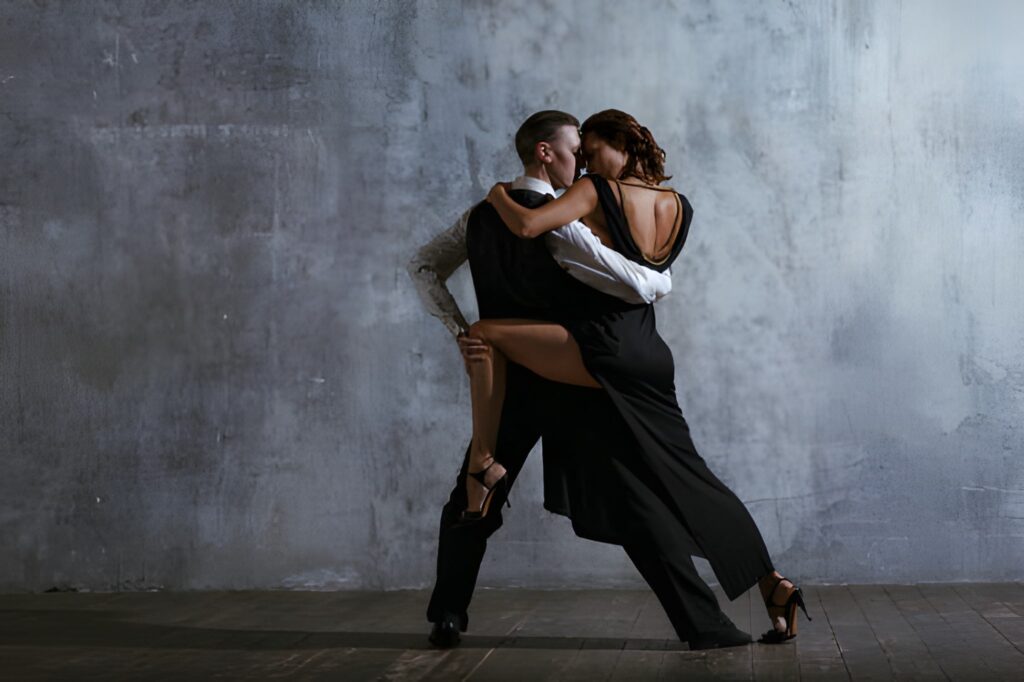
Every dancer experiences growing pains on their journey to becoming a confident ballroom dancer. Learn about the most common physical and emotional wounds and how to recover from them.
When constantly moving outside of your comfort zone, you’re bound to get hurt along the way.
But despite the bumps and bruises, aches and pains, Ballroom Dancing is a hobby worth the soreness, and all the comfort zone growing pains along the way.
As long as you can recover.
One of the greatest things about this list is that everyone, from the newest of the new to the World Champions, have felt some or all of these things. Learning to dance isn’t about finding the path of least resistance, waiting for a series of perfect events leading to an optimal outcome. Just like life, ballroom dancing is successful only after stretching beyond what you thought was initially possible, even if it causes you to stumble, step on your foot, and get mad at your partner.
Because the best dancers will get up, make adjustments, and enjoy the path to making it better.
1. Stepping on Your Own Foot
This is pain that is both physical and emotional. “How could I have done this to myself?!” doesn’t make your throbbing foot feel any better.
- Pain Type: Combination
- Pain Level: Physical (+8), Emotional (+10)
- Recovery: A few deep breaths and optional water break, and just know that this has happened to the greatest ballroom and latin dancers at some point. So you’re on your way.
The good news is that as you attend more group classes and practice sessions, your spatial awareness improves dramatically. Your brain begins to map your foot placement automatically, and these self-inflicted wounds become rare memories you’ll laugh about later.
2. Unfair Comparisons
Dance comparisons are hazardous to your dance health. Every dancer should make goals that are centered around becoming the best version of themselves, not an imitation of someone else.
- Pain Type: Emotional
- Pain Level: Emotional (+6-10)
- Recovery: It’s always important to communicate with your teacher about what you’re noticing. Rather than trying to do the dance version of a life-swap, your teacher will probably recommend watching certain dancers to pinpoint specific qualities you can set goals to achieve.
Remember that the dancer you’re comparing yourself to was once exactly where you are now. They had their own struggles, their own moments of frustration, and their own journey to travel. Your path is uniquely yours, and that’s what makes it beautiful.
3. Process Shrinking
Goals are sexy, the work is not. Achieving your dance goals will involve a process, and minimizing it doesn’t make the process go any quicker.
- Pain Type: Frustration
- Pain Level: Frustration (+6)
- Recovery: Setting goals is one thing, but Process Shrinking occurs when we fail to set parameters as well. Remember the goal, but lock in on the process to create your change and this won’t happen again for at least a couple of weeks… or hopefully longer than that.
The Arthur Murray Unit system is designed specifically to help you embrace the process. By combining private lessons with group classes and practice parties, you’re able to see incremental progress that keeps you motivated while working toward your bigger goals.
4. Floor Burn
Knee slides are a great way to put the old “blood, sweat, and tears” into your next Mambo routine. Avoid floor burn by wearing a low profile knee pad during practice so you can keep the blood and tears at bay and focus on the sweat instead.
- Pain Type: Physical
- Pain Level: Physical (+8)
- Recovery: At some point, you may be asked by your teacher, or coach, to put your knee on the dance floor… on purpose. Use the tip above to ensure that all of your knee stays with you.
For dancers working on more advanced choreography, investing in quality knee pads designed for dancers can prevent painful floor burns during dips, drops, and dramatic floor work. Your teacher can recommend appropriate protection for the moves you’re learning.
5. Partner Picking
As rewarding as it may seem to blame things on your partner, in the long run, it won’t fill the void in your dancing… and may dampen the can-do spirit in your partnership.
- Pain Type: Frustration
- Pain Level: Frustration (+6)
- Recovery: Leading and Following is pretty important to your hobby. You may have also found that pointing out all of your partner’s deficiencies doesn’t fix the problem, or make you feel any better. Instead, ask yourself “what can I do on my side of the dance frame to make this better?”, and you’ll have better results… and practices.
Practice parties provide an excellent opportunity to dance with multiple partners in a supportive environment. This variety helps you understand that connection is a two-way street, and it teaches you to adapt your lead or follow to different partners rather than placing blame.
6. Sharing Your Dance Success with the Wrong People
“Why can’t you spin more?” “You sure look slow out there.” “Can’t you do the splits?” These little zingers are just a small sample of what could happen if you show your non-dancing friends your dance videos. Now, there are those that will be incredibly supportive, but anyone who rolls their eyes when you mention ballroom dancing may not be one of them.
- Pain Type: Emotional
- Pain Level: Emotional (+3-9)
- Recovery: Unfortunately, there are going to be critical people in your life, even if they are lacking dance skills. Your dancing won’t change that, but maybe getting them dancing will. In the meantime, share your dance accomplishments with anyone who was excited to hear about your first dance lesson, including other students and your teacher, and there will be no shortage of validation or support.
The Arthur Murray community is filled with people who understand your journey and will celebrate your victories with genuine enthusiasm. Your fellow students at group classes and practice parties are going through the same experiences and make the perfect audience for sharing your progress.
7. Unsupervised Knee Action
Sometimes more is not necessarily better. Yes, moving your knees a specific way will create hip motion, but doing that 10,000 times by yourself in an unsupervised environment makes you more likely to become injured, and less likely to look like Shakira.
- Pain Type: Physical
- Pain Level: Physical (+10)
- Recommendation: Discontinue unsupervised hip motion practice immediately, add ice, inform your teacher, and check with your doctor if pain persists after an hour. Your heart was in the right place, but your knee wasn’t.
This is precisely why the Arthur Murray Unit system includes regular supervised practice opportunities. Group classes and practice parties allow you to work on techniques with guidance available, ensuring you develop proper form that protects your joints rather than damaging them.
8. Achievement Deflections
Believe it or not, there are times when you are actually making progress, even if you don’t think so. Deflecting praise from your teachers or fellow students can keep you from climbing out of the pit of negativity.
- Pain Type: Frustration
- Pain Level: Frustration (+2-9)
- Recovery: There is a skill to receiving a compliment appropriately. It isn’t something that just comes naturally. Keep in mind that while in the Conscious Use Stage in the Curve of Learning, you’ll typically be the last one to realize that the skill or step you are executing looks good.
Learning to accept praise gracefully is as important as learning your dance steps. When someone compliments your dancing, practice saying “thank you” without adding qualifiers like “but I still need to work on…” Trust that your teachers and fellow dancers can see progress that you might not yet recognize in yourself.
9. Award-itis
You can work as hard as you have worked, to dance as great as you have danced, but that won’t always win you an award.
- Pain Type: Emotional
- Pain Level: Emotional (+4-10)
- Recovery: You should reward yourself for a job well done. Whether that’s with a pint of your favorite ice cream, buying a new pair of dance shoes, or going to the next District Showcase, your personal milestones are important. Awards should never overshadow the personal Rewards of improving your dance skill.
The true victory in dance is the transformation you experience: the confidence you build, the friendships you form, the physical fitness you gain, and the joy of moving to music. These rewards are available to every dancer, regardless of placements or trophies.
10. Foot Pain
Guitar players develop calluses on their fingers after long periods of practice, and dancers develop calluses, bruises, aches, and pains as their dancing feet are forged in the fires of their dance shoes. A wound, yes, but also a necessary evil.
- Pain Type: Physical
- Pain Level: Physical (+2-9)
- Recovery: There will be aches, and you will now know first hand, or first foot, of the magic which is Epsom Salt.
Tips for Managing Foot Pain
- Invest in quality dance shoes: Proper fit and support make a significant difference
- Use moleskin or gel pads: Protect hot spots before they become blisters
- Epsom salt soaks: A dancer’s best friend after a long practice
- Rotate your shoes: Having multiple pairs allows each to dry completely between uses
- Stretch your feet: Daily foot stretches can prevent many common dance-related aches
Prevention Through Proper Training
The best way to avoid many of these dance wounds is through proper training in a supportive environment. The Arthur Murray Unit system provides a balanced approach to learning that minimizes injury risk:
Private Lessons
One-on-one instruction ensures you’re learning proper technique from the start. Your instructor can catch and correct potentially harmful habits before they become ingrained.
Group Classes
Learning alongside others normalizes the struggle. You’ll see that everyone experiences challenges, which reduces the emotional wounds of comparison and self-doubt.
Practice Parties
Practice parties offer supervised social dancing where you can apply what you’ve learned in a real-world setting. The supportive environment means you can make mistakes without judgment, building confidence gradually.
The Healing Power of Community
One of the most powerful remedies for dance wounds, both physical and emotional, is the community you’ll find at Arthur Murray. Fellow students become friends who understand exactly what you’re going through. Teachers become mentors who have seen it all and know exactly how to help you recover.
When you stumble, there will be hands to help you up. When you doubt yourself, there will be voices of encouragement. When you achieve something great, there will be people genuinely celebrating with you.
Frequently Asked Questions About Dance Injuries
How can I prevent blisters when starting dance lessons?
Start with comfortable, broken-in shoes and build up your dancing time gradually. Use moleskin or blister pads on areas prone to rubbing. As your feet toughen up, blisters will become less frequent.
Is it normal to feel sore after dance lessons?
Yes. Dancing uses muscles you might not normally engage. Mild muscle soreness is normal, especially when learning new movements. However, sharp pain or pain in joints should be discussed with your instructor and possibly a doctor.
How do I handle frustration when I’m not progressing as fast as I’d like?
Remember that everyone progresses at their own pace. Focus on celebrating small victories and trust the process. Your instructor can help set realistic expectations and show you the progress you might not see yourself.
Should I dance through minor aches and pains?
Minor muscle aches are generally fine to dance through, but listen to your body. If something feels wrong or if pain is sharp, stop and consult your instructor. Pushing through serious pain can lead to more significant injuries.
How do I recover from an embarrassing moment on the dance floor?
Laugh it off! Every dancer, including professionals and champions, has embarrassing moments. The dance floor is a judgment-free zone where mistakes are just part of learning. Your recovery is what people will remember, not the mistake itself.
Final Thought
One of the greatest things about this list is that everyone, from the newest of the new to the World Champions, have felt some or all of these things. Learning to dance isn’t about finding the path of least resistance, waiting for a series of perfect events leading to an optimal outcome.
Just like life, ballroom dancing is successful only after stretching beyond what you thought was initially possible, even if it causes you to stumble, step on your foot, and get mad at your partner.
Because the best ones will get up, make adjustments, and enjoy the path to making it better. For injury prevention and faster recovery, consider adding 10 yoga poses that improve your ballroom dancing to your routine.
Ready to start your dance journey with proper guidance and support? Contact your local Arthur Murray Dance Studio for a complimentary introductory lesson.