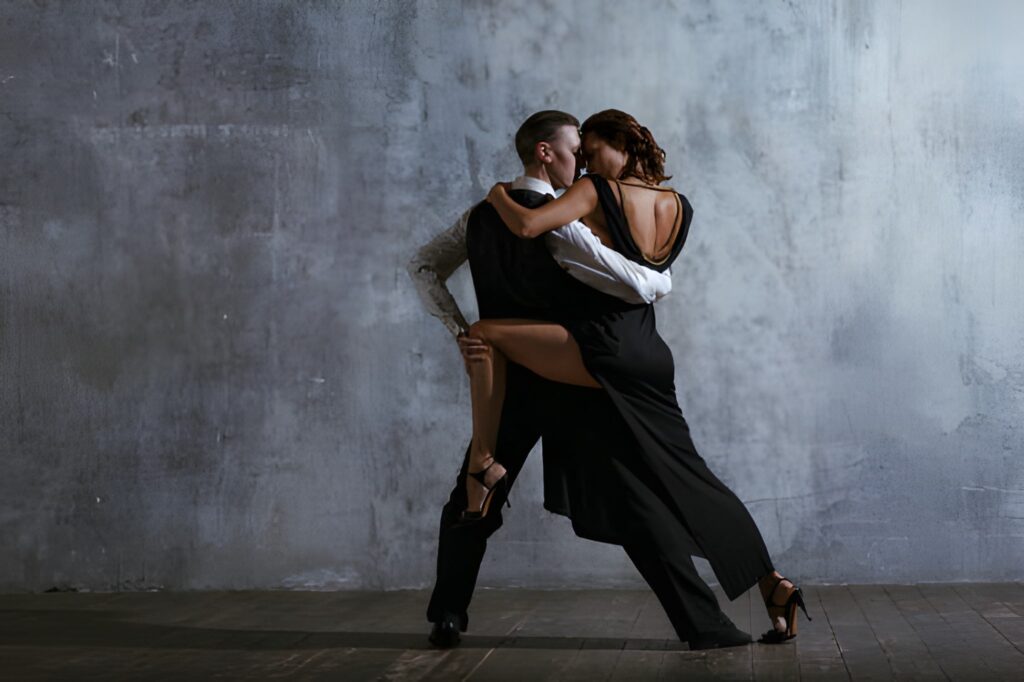
David Bowie’s diverse catalog provides exceptional material for ballroom dancing. Here’s how to dance to the Starman’s greatest hits.
David Bowie’s musical legacy extends far beyond rock and pop—his diverse catalog provides exceptional material for ballroom dancing. From the sultry rhythms of “Heroes” to the infectious groove of “Let’s Dance,” Bowie’s compositions translate beautifully to the dance floor.
Whether you’re preparing a showcase routine, rehearsing at your next Practice Party, or looking for unique social dance music, Bowie’s discography offers unexpected possibilities for ballroom dancers.
Why Bowie Works for Ballroom
David Bowie constantly reinvented himself musically, exploring genres from glam rock to electronic to soul. This stylistic range created songs with diverse tempos, rhythms, and emotional textures—qualities that map naturally onto different ballroom dances.
His strong melodic sense provides clear musical structure for dancing. His dynamic arrangements offer natural builds and releases that choreographers can exploit. His emotional depth creates connection between dancers and music that elevates performances beyond technical execution.
Five Essential Bowie Songs for Ballroom Dancing
“Fame” – West Coast Swing
Why It Works
“Fame” features a driving funk groove with strong bass emphasis—exactly what West Coast Swing demands. The song’s attitude matches the dance’s cool, sophisticated character.
Technical Elements:
- Tempo: 116 BPM (ideal West Coast Swing range)
- Strong, consistent beat for anchor steps
- Musical accents that invite syncopation
- Groove that encourages body movement and styling
Dance Tips
Use the bass line to ground your anchor steps. Let the funky rhythm influence your arm styling and body movement. The song’s confident energy should permeate your dancing—this isn’t music for tentative movement.
The extended instrumental sections provide excellent opportunity for open patterns and creative variation. Advanced dancers can play with the musical accents, hitting specific moments with unexpected movements.
“Heroes” – Rumba
Why It Works
“Heroes” builds from intimate beginning to anthemic climax, mirroring Rumba’s journey from tender connection to passionate expression. The song’s emotional vulnerability matches Rumba’s character as the dance of love.
Technical Elements:
- Tempo: 112 BPM (can be danced as slow Rumba)
- Emotional dynamics that support choreographic storytelling
- Space for movement between vocal phrases
- Building intensity that creates natural performance arc
Dance Tips
Begin with subtle, contained movement as the song opens quietly. Allow your dancing to grow as the music intensifies. The “we can be heroes, just for one day” chorus invites full expression—use it as a moment of peak connection with your partner.
The instrumental breaks provide opportunity for spotlight moments or dramatic pauses. Let the music’s emotional journey guide your movement choices rather than dancing the same intensity throughout.
“Dancing in the Street” (with Mick Jagger) – East Coast Swing or Cha-Cha
Why It Works
This Bowie-Jagger collaboration pulses with party energy perfect for either East Coast Swing or Cha-Cha. The celebratory lyrics and driving rhythm create irresistible dance floor appeal.
Technical Elements:
- Tempo: 120 BPM (works for both dances)
- Clear, strong beat for basic timing
- Call-and-response vocal sections
- High energy throughout
Dance Tips
For East Coast Swing, emphasize the bounce and travel that matches the song’s exuberance. Rock steps should feel energetic, and swing-outs should cover ground.
For Cha-Cha, let the driving rhythm power your Cuban motion. The “dancing in the street” chorus invites open patterns and styling moments. Match the song’s joy with your movement—this isn’t a time for reserved dancing.
“Let’s Dance” – Hustle or Cha-Cha
Why It Works
Bowie’s biggest commercial hit seems designed for the dance floor. The title alone makes it an anthem for dancers. The disco-influenced production fits Hustle perfectly, while the rhythm also accommodates Cha-Cha interpretation.
Technical Elements:
- Tempo: 114 BPM
- Strong four-on-the-floor beat for Hustle
- Latin-influenced percussion for Cha-Cha option
- Memorable hooks that audiences recognize
Dance Tips
For Hustle, use the driving beat to power your slot movement. The song’s energy supports continuous spinning and styling. When the “let’s dance” hook hits, your movement should feel like the song’s fulfillment—this is what dancing is for.
For Cha-Cha, find the Latin percussion under the disco production. The cross-rhythms provide sophisticated timing options for advanced dancers while the main beat keeps beginners oriented.
“As the World Falls Down” (from Labyrinth) – Waltz to Bolero
Why It Works
This Labyrinth soundtrack gem offers something rare: a song that transitions from Waltz character to Bolero, creating opportunity for a unique choreographic journey within a single piece.
Technical Elements:
- Opens with clear 3/4 Waltz timing
- Transitions to more sensual Bolero rhythm
- Emotional depth supporting theatrical interpretation
- Unusual structure that rewards creative choreography
Dance Tips
Begin in elegant Waltz, using the song’s opening to establish partnership and frame. As the music shifts, allow your dancing to transition—Bolero’s spot turns and arm styling replace Waltz’s traveling movement.
This song works best for prepared showcases rather than social dancing. The choreographic opportunity lies in the transition itself—making the stylistic shift feel organic rather than jarring.
Additional Bowie Songs Worth Exploring
“Under Pressure” (with Queen) – Foxtrot or Hustle
The driving bass line (one of rock’s most recognizable) provides solid foundation for either dance. The song’s dynamic range—from quiet verses to explosive choruses—creates natural choreographic structure.
“Modern Love” – Quickstep or East Coast Swing
The tempo and energy suit faster dances perfectly. The song’s relentless optimism matches Quickstep’s buoyant character or East Coast Swing’s celebratory feel.
“China Girl” – Rumba or Cha-Cha
The exotic flavor and moderate tempo work for Latin interpretation. The song’s sensuality suits Rumba, while the rhythm also accommodates Cha-Cha.
“Rebel Rebel” – East Coast Swing
The guitar-driven energy and rebellious attitude match East Coast Swing’s playful character. The recognizable hook creates audience engagement.
Creating Bowie Routines
Selecting Songs for Showcases
Consider these factors when choosing Bowie songs for choreographed routines:
- Audience recognition: Songs like “Let’s Dance” and “Heroes” provide instant connection
- Tempo suitability: Match the song’s BPM to your chosen dance style
- Emotional content: Select songs whose feeling matches your choreographic intent
- Length: Most songs need editing for competition or showcase formats
Editing Considerations
Bowie songs often run longer than typical showcase formats allow. Work with your instructor or choreographer to identify:
- Essential sections that must remain
- Transitions that can be shortened
- Endings that create satisfying conclusions
- Edits that feel musically natural rather than abrupt
Costuming Possibilities
Bowie’s theatrical persona offers rich costume inspiration. While you needn’t attempt Ziggy Stardust replication, elements like metallic or glitter accents, bold color choices, dramatic silhouettes, and statement accessories can honor Bowie’s aesthetic while remaining appropriate for ballroom performance.
Bowie’s Dance Floor Legacy
David Bowie understood dancing’s power. From his early mime training to his theatrical stage performances, movement was central to his artistic expression. His music invites physical response—it’s meant to be danced to, not just listened to.
When you dance to Bowie, you participate in his legacy of transformation through art. The same spirit of creative reinvention that defined his career can inspire your development as a dancer. Like Bowie, you can continually evolve, surprise, and push beyond comfortable boundaries.
Using Bowie Music at Practice Parties
Practice Parties are perfect for trying Bowie songs in a real social dance setting. With teachers present to observe and help, you can:
- Test how different songs feel with various partners
- Get feedback on your interpretation
- Build confidence dancing to less conventional music
- Discover which Bowie tracks work best for your dancing style
Ask your studio if they can add some Bowie to the playlist—you might inspire other students to explore his music too.
Frequently Asked Questions
Is David Bowie music appropriate for dance competitions?
Many Bowie songs work beautifully for competitions, particularly showcases and creative rhythm/smooth divisions. Always check competition rules regarding music content and length requirements.
What’s the easiest Bowie song for beginning dancers?
“Let’s Dance” offers clear rhythm and moderate tempo suitable for beginners learning Hustle or Cha-Cha. The recognizable melody helps with timing.
Can I use Bowie songs for wedding dances?
“Heroes” has become popular for wedding first dances. “Let’s Dance” works for upbeat reception dancing. Consider your comfort level with the songs’ emotional content when selecting.
What other rock artists work well for ballroom dancing?
Artists with strong rhythms and emotional range translate well: Queen, Michael Jackson, Prince, and contemporary artists like Bruno Mars provide excellent ballroom material.
Dancing to the Starman
David Bowie created music that transcends genre boundaries and continues inspiring dancers decades after its release. His songs offer sophisticated rhythms, emotional depth, and theatrical possibility that reward dancers who explore beyond typical ballroom playlists.
The next time you’re at a Practice Party or preparing a routine, consider Bowie’s catalog. You may discover that dancing to his music transforms your connection to both the movement and the music.
Let’s dance—to the Starman who showed us we could all be heroes, if only for one song. For more themed playlists, see our Halloween party dance playlist and holiday Waltz music guide.