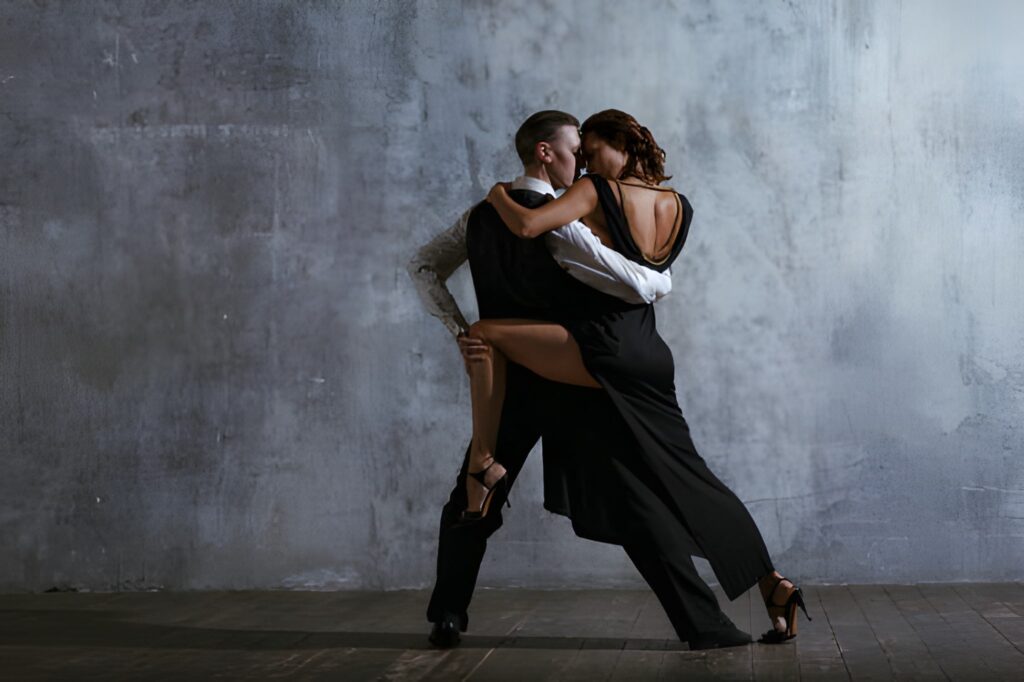
Here’s a question nobody asks: What if the best exercise for your body was also the best exercise for your social life?
Most activities force you to choose. The gym builds muscle but not friendships. Book clubs build community but not cardiovascular health. You optimize for one, and the other becomes a separate project.
Ballroom dancing refuses that trade-off. It’s an activity that scores high on both axes – physical health and social connection – which is rarer than you might think.
Let’s break down why.
The Dual-Axis Framework
When evaluating any recreational activity, there are two distinct benefits to consider:
Physical Health Axis – Does this activity improve your cardiovascular health, balance, flexibility, strength, or coordination? Does it burn calories? Does it engage your body in meaningful ways?
Social Health Axis – Does this activity connect you with other people? Does it create opportunities for new relationships? Does it build community and belonging?
Most activities score high on one axis and low on the other. What makes ballroom dancing unusual is that it scores high on both.
The Activity Comparison Chart
Let’s compare popular recreational activities on a 1-10 scale for each axis:
| Activity | Physical Health (1-10) | Social Health (1-10) | Combined Score |
|---|---|---|---|
| Gym/Weight Training | 9 | 2 | 11 |
| Running/Jogging | 8 | 2 | 10 |
| Yoga (studio classes) | 7 | 4 | 11 |
| Golf | 4 | 6 | 10 |
| Pickleball | 8 | 6 | 14 |
| Book Clubs/Social Groups | 1 | 8 | 9 |
| Team Sports (recreational) | 7 | 7 | 14 |
| Ballroom Dancing | 8 | 10 | 18 |
Ballroom dancing’s combined score of 18 is the highest on this chart – and that’s not an accident. The nature of the activity itself creates this dual benefit.
The Physical Benefits: More Than You Expect
Let’s start with the physical axis, because this is where ballroom dancing often surprises people.
Cardiovascular Health
Dancing gets your heart rate up. Significantly. A study published in the Journal of Aging and Physical Activity found that social dancing provides cardiovascular benefits comparable to moderate-intensity aerobic exercise. Depending on the dance – Quickstep and Jive are particularly demanding – you can burn 200-400 calories per hour.
In fact, many students are surprised how winded they feel after their first few lessons. Dancing doesn’t look like exercise, but your heart knows the truth.
Balance and Stability
Here’s something that becomes increasingly important with age: balance. Falls are a leading cause of injury in older adults, and balance-focused activities become increasingly valuable.
Dancing requires constant balance adjustments. Weight transfers, turns, moving backward, changing direction – every pattern challenges your proprioception (your body’s awareness of its position in space). Research published in the Journal of Neurophysiology has shown that dance training improves balance and reduces fall risk in older adults.
You’re not just learning patterns – you’re training your body to stay stable in motion.
Flexibility and Range of Motion
Dancing takes your joints through their full range of motion. Reaches in Waltz, hip movement in Latin dances, rotation in Tango – you’re constantly asking your body to extend, twist, and move in ways that everyday life doesn’t demand.
Over time, this maintains and improves flexibility. Students often notice they’re reaching higher shelves, turning more easily, moving with less stiffness in daily life.
Core Strength and Posture
Ballroom dancing requires constant engagement of your core muscles. You can’t maintain proper frame while slouching. You can’t lead or follow effectively without core stability.
The result? Dancers tend to develop better posture, not from conscious effort but from the demands of the activity itself. Your body learns to stand taller because that’s what dancing requires.
Coordination and Motor Skills
Dancing is a complex motor task. You’re coordinating multiple body parts simultaneously, responding to external stimuli (music, your partner), and making split-second adjustments. This complexity is what makes dancing effective for maintaining cognitive-motor connections.
The coordination demands of dancing make it more neurologically engaging than simpler physical activities. Your brain is working as hard as your body.
The Neurological Benefits: Dancing and Brain Health
Here’s where dancing truly separates itself from other physical activities: the impact on brain health.
Neuroplasticity and New Learning
Neuroplasticity is your brain’s ability to form new connections and pathways – essentially, its ability to keep learning and adapting. This ability declines with age unless it’s actively maintained.
Dancing is uniquely powerful for neuroplasticity because it combines:
- Motor learning – New physical patterns
- Cognitive processing – Remembering sequences, adapting to music
- Spatial reasoning – Navigating the floor, planning movements
- Social processing – Reading a partner, communicating through movement
A famous study published in the New England Journal of Medicine followed participants for over 20 years and found that dancing was the only physical activity associated with reduced risk of dementia. Not walking. Not swimming. Not cycling. Dancing.
In fact, regular dancing was associated with a 76% reduced risk of dementia – the highest risk reduction of any activity studied, physical or cognitive.
Memory Training
Every dance lesson requires memorization. Patterns, sequences, musical timing, leading and following cues – your memory is constantly engaged. This ongoing memory demand keeps cognitive pathways active.
Unlike crossword puzzles (which become easier as you learn the patterns), dancing continuously presents new challenges. You’re always learning new patterns, new dances, new variations. The memory training never plateaus.
Quick Decision-Making
Dancing on a crowded floor requires rapid decision-making. Navigate left or right? Lead this pattern or that one? Adapt to an unexpected movement from your partner? These micro-decisions happen constantly, training your brain’s executive function.
Pro Tip: This is why Practice Parties are so valuable. The cognitive demands of navigating real social dancing situations exceed what you experience in a private lesson.
The Social Benefits: The Hidden Superpower
Now let’s examine the social axis – and this is where ballroom dancing really shines.
Built-In Social Contact
Most physical activities require separate effort to be social. You can run alone. You can go to the gym alone. You can do yoga in a room full of people and never speak to anyone.
Ballroom dancing is inherently partner-based. Every dance involves direct physical connection with another person. You cannot do it alone. Social contact isn’t an add-on – it’s built into the activity itself.
Touch and Oxytocin
Here’s something we don’t talk about enough: Modern life has a touch deficit. Many adults go days or weeks without meaningful physical contact with another person. This matters because human touch triggers the release of oxytocin – sometimes called the “connection hormone” – which reduces stress, anxiety, and blood pressure.
Dancing involves constant, appropriate physical contact. The frame, the hand connections, the physical communication – all of this triggers the neurochemistry of human connection.
Safe to say, many students report feeling happier and more relaxed after dancing, even when the lesson was challenging. That’s the oxytocin doing its work.
Genuine Relationship Building
The relationships formed through dancing tend to be deeper than typical activity-based friendships. Why? Because dancing creates shared vulnerability.
You’re learning something difficult together. You’re making mistakes together. You’re encouraging each other through challenges. You’re celebrating breakthroughs together. This shared experience creates genuine bonds – not just acquaintanceship.
Many students describe their dance community as a second family. These aren’t people you just “do an activity with” – they become real friends who celebrate your wins and support you through struggles.
Intergenerational Connection
Here’s something unique about ballroom dancing: It brings together people of all ages. A 25-year-old and a 65-year-old might be in the same Group Class, dancing together at Practice Parties, supporting each other at showcases.
In a world that often segregates by age, dancing creates intergenerational community. Younger students learn from the life experience of older students. Older students are energized by the enthusiasm of younger ones. Everyone benefits.
Confidence Transfer
The social confidence built through dancing transfers to other areas of life. Students who learn to approach a stranger for a dance often become more comfortable in other social situations. The ability to connect physically and move harmoniously with another person builds social skills that extend far beyond the dance floor.
Mental Health Benefits: The Convergence
Physical and social benefits converge in their impact on mental health. Dancing addresses multiple factors that contribute to mental well-being:
Stress Reduction
Physical activity reduces cortisol (stress hormone). Music engagement reduces anxiety. Social connection triggers oxytocin. Dancing combines all three simultaneously.
Many students describe their dance lessons as their mental health time – the one hour where they’re fully present, not thinking about work or worries, completely engaged with the moment.
Combating Isolation
Loneliness has become a public health crisis. The statistics are startling – a significant percentage of adults report feeling chronically lonely, with health impacts comparable to smoking 15 cigarettes a day.
Dancing directly addresses isolation. You can’t be lonely while dancing – you’re literally in someone’s arms. And the community around dancing provides ongoing social infrastructure that prevents isolation between lessons.
Purpose and Achievement
Dancing provides continuous goals to work toward – the next level, the next showcase, the next dance to learn. This sense of purpose and progressive achievement is protective against depression.
In fact, the structured journey through the dance program provides exactly the kind of meaningful goal structure that research shows supports mental health.
Self-Expression
Dancing is a form of emotional expression. The music moves through you. Your body communicates feelings you might not put into words. This expressive outlet is psychologically healthy – it gives emotions somewhere to go.
The Age Factor: Benefits That Scale
Many activities become less beneficial (or less accessible) as you age. High-impact sports become risky. Intense gym workouts become harder to recover from. Social opportunities often narrow.
Dancing’s benefits actually scale positively with age:
- Balance training becomes more valuable as fall risk increases
- Cognitive engagement becomes more important for brain health
- Social connection becomes more valuable as other social circles shrink
- Physical activity remains low-impact and sustainable
Dancing is one of the few activities that becomes more beneficial relative to alternatives as you age. What starts as a fun hobby in your 30s becomes a crucial health practice in your 60s and beyond.
Why Ballroom Specifically?
Other forms of dance exist. Why does ballroom dancing score so high on the dual-axis framework?
Partner requirement – Forces social interaction (unlike solo dance styles)
Wide range of dances – Provides variety and continuous challenge
Community infrastructure – Studios, events, competitions create ongoing social opportunities
Scalable intensity – Can be gentle (Waltz) or intense (Quickstep) based on preference
Lifelong accessibility – Can be practiced from teens through 90s
Formal structure – Syllabus provides clear goals and progression
The Investment Calculation
Here’s how to think about ballroom dancing as a health investment:
Consider what you’d pay for:
- A personal trainer (physical health)
- A social club membership (social health)
- Brain training programs (cognitive health)
- Therapy or counseling (mental health)
Dancing addresses elements of all four. It’s not a replacement for medical care, but as a lifestyle activity, it covers remarkable ground.
Getting Started: Maximizing Both Axes
If you want to maximize both the physical and social benefits of dancing, here’s how to structure your involvement:
For Physical Health:
- Take lessons consistently (2-3 times per week for noticeable physical benefits)
- Include high-energy dances (Swing, Quickstep, Jive) in your repertoire
- Attend Practice Parties where you’ll dance more continuously
- Train for showcases (the preparation intensifies physical demands)
For Social Health:
- Attend Group Classes (meet other students)
- Go to Practice Parties and events (dance with multiple partners)
- Support other students at showcases
- Engage with the studio community
The students who get the most from dancing are the ones who engage with both dimensions – not just taking lessons, but becoming part of the community.
The Long-Term View
Most health activities deliver short-term benefits that fade when you stop. Dancing delivers compounding benefits that accumulate over years and decades:
Year 1: Basic fitness, some social connections, initial skill development
Year 3: Solid physical conditioning, established friendships, confident social dancer
Year 5+: Maintained mobility and balance, deep community ties, accumulated cognitive benefits, mastery-level skills
The longer you dance, the more the benefits compound. This isn’t a quick fix – it’s a lifelong practice.
The Bottom Line
Ballroom dancing is unusual because it refuses the trade-off that most activities require. You don’t have to choose between your body and your social life. You don’t have to sacrifice health for fun or connection for fitness.
The dual-axis framework reveals what’s actually happening: When you dance, you’re working out while making friends, reducing stress while challenging your brain, building balance while building relationships.
Is it the best exercise in the world? Maybe not (though it’s better than you’d think). Is it the best social activity? Maybe not (though it’s up there). But as a combined package – physical plus social plus cognitive plus emotional – it’s hard to beat.
The question isn’t whether ballroom dancing has benefits. The question is whether you’re ready to access them.
Ready to score high on both axes? Start your journey here.