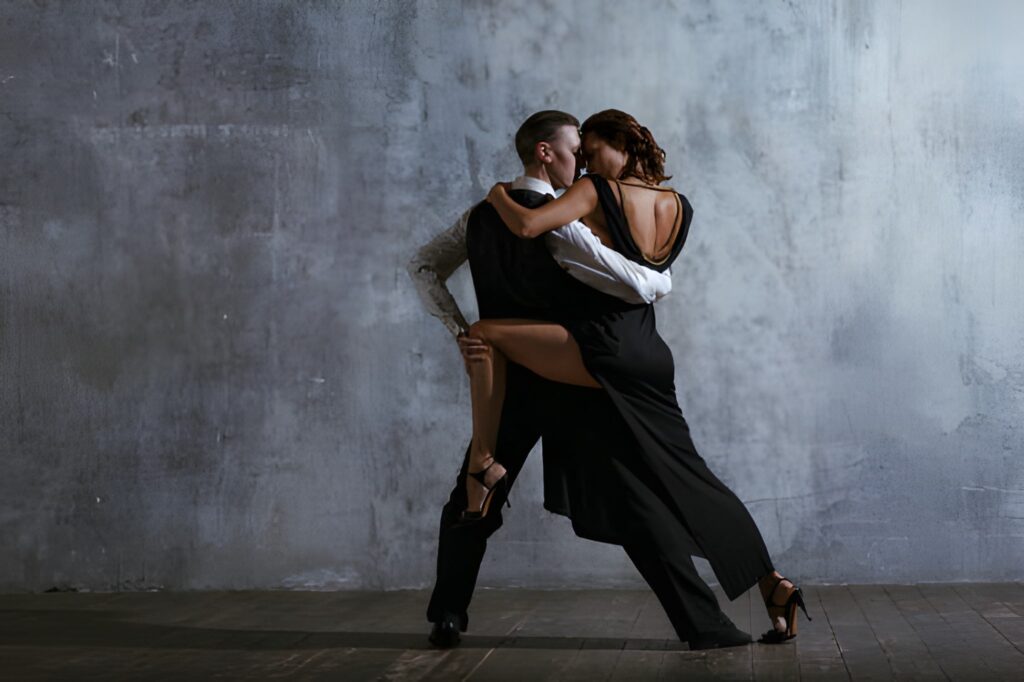

Misconceptions about ballroom dancing persist stubbornly. These eleven truths challenge common assumptions and reveal what this art form actually offers.
Some imagine exclusively elderly couples gliding across dusty dance halls. Others picture sequined costumes and rigid competition formats with no relevance to real life. Still others assume ballroom requires a partner, years of training, or natural talent they don’t possess.
These misconceptions prevent countless people from discovering something transformative. Ballroom dancing offers benefits spanning physical fitness, mental sharpness, social connection, and personal achievement—available to anyone willing to take a first lesson.
Truth 1: This Is Not (Necessarily) Your Grandparents’ Hobby
There was a time when “Ballroom” was widely considered as a pastime for retirees. Perhaps you imagine couples in their seventies and eighties slowly rotating around a dimly lit dance hall.
Today, nothing could be further from the truth.
Walk into any Arthur Murray studio and you’ll find students spanning every generation. Twenty-somethings preparing for wedding first dances. Thirty-somethings seeking social skills for nightlife. Forty-somethings reconnecting with romance. Fifty-somethings challenging themselves with new learning. And yes, sixty-somethings, seventy-somethings, and beyond—but sharing the floor with everyone else.
Ballroom dancing has experienced a renaissance driven by television exposure, social media visibility, and a growing recognition that screens cannot replace human connection.
Truth 2: Ballroom Doesn’t Just Mean Waltz
When most people hear “ballroom dancing,” they imagine Waltz—formal, flowing, romantic music in three-quarter time. While Waltz remains foundational, it represents just one option in a vast menu of styles.
“Ballroom Dancing” is an umbrella term—it covers a wide variety of styles and subsets.
Standard/Smooth Dances:
- Waltz (International and American styles)
- Tango (both ballroom and Argentine)
- Foxtrot
- Viennese Waltz
- Quickstep
Latin/Rhythm Dances:
- Cha-Cha
- Rumba
- Samba
- Paso Doble
- Jive
Social/Nightclub Dances:
- Salsa
- Bachata
- Merengue
- West Coast Swing
- East Coast Swing
- Hustle
- Country Two-Step
This variety means you can find dances matching your musical preferences, physical capabilities, and social goals.
Truth 3: It’s Kind of Like Dancing with the Stars, But…
Television competition shows have introduced millions to ballroom dancing. The dances you see on TV are the same dances you can learn in lessons. The partnership dynamic, the musical interpretation, the physical skill—it’s all the same fundamental art form.
But there are differences worth noting. Studio ballroom typically involves “more clothes on” than television performances. And the goals differ: competition TV creates spectacle, while social ballroom creates connection and capability you can use anywhere.
Think of it this way: what you see on Dancing with the Stars represents the competitive pinnacle. What you learn in lessons represents practical skills for real-world application.
Truth 4: Blending In Is Optional
Some students come to Arthur Murray seeking the ability to dance at weddings without embarrassment. They want social competence, not spotlight attention. That’s completely valid, and lessons accommodate this goal perfectly.
But other students embrace an entirely different aesthetic. They pursue “glitz and glamour”—rhinestones, performance costumes, dramatic styling, and choreography designed to captivate attention.
Both paths are available. Neither is required. Your ballroom journey can be as subtle or as spectacular as you choose.
Truth 5: It’s Kind of Perfect For Almost Everything
The versatility of ballroom dancing skills surprises many students. Once you develop competence, you discover applications everywhere:
Formal Occasions: Weddings, galas, corporate events, charity balls
Social Settings: High school reunions, nightclubs, supper clubs, country bars
Intimate Moments: Dancing in your kitchen to favorite songs, surprising your partner at home
The investment in learning keeps paying returns in situations you didn’t anticipate.
Truth 6: All Ages Welcome (Yes, Really)
There is no age cutoff for ballroom dancing. This isn’t marketing language—it’s operational reality.
Many former ballet, tap, and jazz dancers rediscover their passion for dancing through ballroom later in life. Students who assumed their dancing days ended decades ago find that ballroom opens doors they thought were permanently closed.
We have students that begin as young as 5 and others that pick it up through middle and high school. The multigenerational nature of Arthur Murray studios means children sometimes share the floor with great-grandparents.
Truth 7: Mental Benefits Backed by Research
Ballroom dancing doesn’t just feel mentally stimulating—research confirms its cognitive benefits.
Studies have shown that ballroom dancing was the most productive activity to improve brain health among activities examined. Consider what your brain processes while dancing:
- Physical movement: Coordinating your body through complex patterns
- Spatial navigation: Tracking your position relative to partner and floor
- Social processing: Reading your partner’s signals and responding appropriately
- Musical interpretation: Following rhythm, anticipating changes, expressing emotion
- Memory recall: Remembering patterns, sequences, and technique
No other common activity demands all these cognitive functions simultaneously. Your brain essentially gets a comprehensive workout disguised as entertainment.
Truth 8: Physical Benefits That Sneak Up on You
Every Arthur Murray dance studio has at least one student who has lost 50 pounds or more through dancing. Some students have lost even more—over 100 pounds in documented cases.
How does this happen? The secret lies in what makes dancing different from traditional exercise:
Disguised exertion: You’re having fun, connecting with partners, expressing yourself through music. You don’t notice you’re exercising.
Consistent engagement: Unlike gym equipment you stop using after initial motivation fades, dancing remains engaging. You want to come back.
Full-body involvement: Dancing engages legs, core, arms, and cardiovascular systems simultaneously.
The “undercover workout” effect means students often notice physical changes before they notice the effort creating them.
Truth 9: Social Benefits for the Digitally Exhausted
Everyone is in need of a community upgrade. Our social lives increasingly happen through screens. This digital interaction provides connection of a sort, but something essential is missing.
Ballroom dancing provides what screens cannot: embodied presence, shared physical experience, and authentic human contact.
The social benefits extend across multiple dimensions:
- Genuine connection: You can’t fake presence on a dance floor
- Diverse community: Dance studios attract people from wildly different backgrounds united by common interest
- Social skills development: The etiquette of social dancing builds communication skills increasingly rare in contemporary life
- Regular social rhythm: Weekly lessons and practice parties create consistent social touchpoints
Truth 10: Personal Achievement That Actually Matters
Many people live comfortable lives that rarely challenge them. Work becomes routine. Leisure becomes consumption. The last time they learned something genuinely difficult might be years in the past.
Ballroom dancing confronts this comfort.
Engaging with dance means confronting self-doubt and transforming fear into accomplishment through deliberate effort. You will feel awkward initially. You will make mistakes publicly. You will wonder whether you’re capable of learning.
And then, gradually, you’ll prove yourself wrong.
The personal achievement of learning to dance carries weight precisely because it’s difficult. When you dance successfully, you’ve accomplished something meaningful. You’ve expanded your capabilities.
Truth 11: Far-Reaching Effects You Can’t Predict
Some of the best things reveal themselves over time. Your initial reason for learning to dance may be something as simple as “I’ve always wanted to learn how to Salsa” but that doesn’t mean it can’t extend far beyond that.
Students regularly report effects they never anticipated:
- Improved posture affecting professional presence
- Confidence in social situations extending beyond dance contexts
- Relationship deepening with partners who learn together
- Stress relief becoming as reliable as any other therapeutic practice
- Community connections evolving into genuine friendships
- Physical health improvements creating cascading lifestyle changes
The dancer you become through lessons is not simply someone who knows dance steps. You become someone who learned something difficult, joined a community, invested in personal growth, and discovered capabilities you didn’t know existed.
Frequently Asked Questions
Do I need a partner to take ballroom lessons?
No. Dance studios provide instructors who serve as your partner during lessons. Many students learn entirely through instructor partnership before dancing with other students at practice parties or social events.
What’s the youngest/oldest age for ballroom dancing?
Students range from age 5 through 90+ at Arthur Murray studios. Programming adapts to different ages and capabilities, but there’s no upper age limit for participation.
How long until I can dance at social events?
Most students feel comfortable at basic social dancing within 8-12 weeks of consistent lessons. This varies by individual goals and practice frequency, but social competence develops faster than most people expect.
Is ballroom dancing good exercise?
Yes. Studies show ballroom dancing provides cardiovascular benefits comparable to cycling or swimming, with additional benefits from balance training and cognitive engagement.
What if I have “two left feet”?
This phrase describes a feeling, not a permanent condition. Coordination develops through practice. Every skilled dancer was once a beginner who felt uncoordinated. Professional instruction specifically addresses this common starting point. If dance anxiety is holding you back, read our guide on overcoming the fear of dancing.
Discover These Truths Yourself
Reading about ballroom dancing differs fundamentally from experiencing it. The truths described here become real only when you feel them yourself—the mental engagement, the physical exertion, the social connection, the personal achievement.
Schedule an introductory lesson at your local Arthur Murray studio. Discover which of these truths resonates most with your own experience. Let the journey reveal what ballroom dancing holds for you specifically.