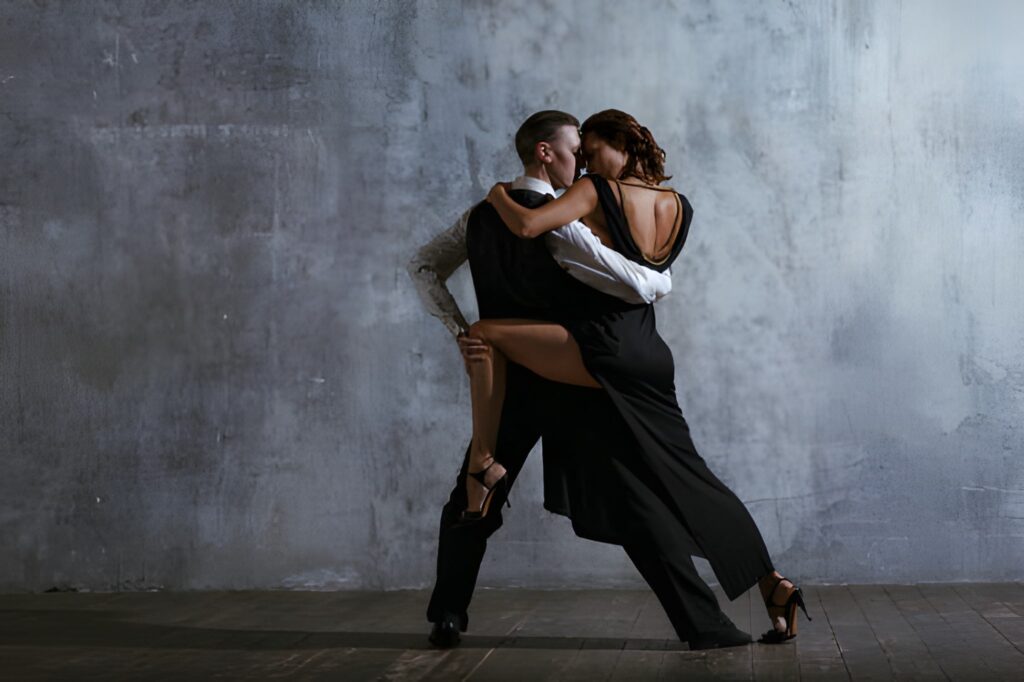
Practical strategies to conquer dance anxiety and finally get on the floor with confidence.
Let’s just put this on permanent record: It’s normal to have a fear of dancing.
It’s not unlike any other new and slightly scary activity: driving in a new part of town, giving a best man toast, or starting at a new gym for the first time. It’s self-preservation. That instinct that makes the hair on the back of your neck stand up when you’re walking into an unfamiliar situation.
Since a dance floor doesn’t pose any real threat to your life, Sigmund Freud might have labeled this fear as neurotic. We’d just call you a regular person.
The good news? This fear is completely conquerable. Thousands of people who once swore they’d never dance are now hitting the floor with confidence. Here’s how they did it, and how you can too.
Understanding Your Fear of Dancing
Before we tackle solutions, let’s understand what you’re actually afraid of. For most people, the fear of dancing breaks down into several components:
Fear of Looking Foolish
The worry that you’ll look ridiculous in front of others. That people will judge your movements, laugh at your attempts, or think less of you.
Fear of Not Knowing What to Do
The anxiety of being on a dance floor without any idea what steps to take, how to move to the music, or what to do with your arms.
Fear of Physical Awkwardness
The belief that your body simply won’t cooperate. That you lack rhythm, coordination, or the “dancer gene.”
Fear of Social Judgment
Concern about what others will think of you, especially if you’re at an event where people know you.
The reality? Every single dancer started exactly where you are now. The graceful dancers you admire were once complete beginners who felt just as awkward as you do.
5 Steps to Overcome Your Fear of Dancing
Step 1: Eliminate the Myths
There are a lot of myths that keep people on the sidelines, and off the dance floor. They’re told over and over, like folk legends that have become forgone conclusions.
And they are all fake.
Common myths include:
- “I was born with two left feet…”
- “You’re either born with rhythm or not…”
- “Dancing just isn’t for me…”
Did you ever wonder what these “dancing babies” looked like? You know, the ones supposedly born without two left feet, with perfect rhythm, who all declared dancing was their hobby of choice from birth?
VERDICT: FAKE
Here’s the Truth: Everyone, in any hobby, needs instruction to get better. Learning to dance is no different. Whether you call it “two left feet” or “super awkward,” everyone looks and feels that way—until they take lessons. Rhythm is not a born-with-it or born-without-it trait. It’s a skill. Skills can be taught. “Dancing isn’t for me” is just fear talking. For more myth-busting, see our 11 truths about ballroom dancing. Need more reassurance? Read our 5 Solutions for Your Two Left Feet.
Step 2: Schedule a Lesson
There is no way to conquer your fear of something by avoiding it. Avoidance only strengthens the fear. As psychologists explain, exposure therapy is one of the most effective treatments for social anxieties, including the fear of dancing.
How to choose the right instruction:
- Find a school that specializes in dance instruction, not a gym, community center, or nightclub
- Take PRIVATE LESSONS. More expensive, but worth every penny. You need a personal trainer to see you through this transition
- Look for a welcoming, judgment-free environment (this is what Arthur Murray is known for)
Why private lessons matter:
- No audience of strangers watching you learn
- Instruction tailored to your pace and learning style
- A professional who has helped hundreds of beginners
- Immediate feedback and encouragement
- A safe space to make mistakes
Step 3: Eliminate the Gaps
Avoid long gaps between your dance lessons. Here’s the math:
If it takes you 30 minutes to feel comfortable, and your lessons are 45 minutes… waiting a week won’t reduce that warm-up time on your next lesson. For more on this topic, check out For Everyone With Two Left Feet (A Poem). You might also enjoy Milestones: Lexus vs. Arthur Murray.
-30 + 45 = 15 minutes of comfortable dancing
On the other hand…
If it takes you 30 minutes to feel comfortable, and you take a 90-minute lesson, you’ve got 60 minutes of positive territory developing a new comfort zone.
-30 + 90 = 60 minutes of comfortable dancing
You can choose your own calendar, but the closer you keep your lessons scheduled, the sooner you’ll feel acclimated. Momentum matters. This is one of the key ways to speed up your dance progress.
Step 4: Avoid Early Assessments
Every lesson you’re making progress and feeling more comfortable. But no matter what you do… avoid making self-assessments too early.
It would be unfair to judge the entire process at such an early stage. It would be like judging a caterpillar in a butterfly contest. It’s too early!
During this time you should:
- Let your teacher give all the feedback
- Avoid watching yourself in the mirror (seriously)
- Keep an open dialogue with your teacher if you have concerns
At this early stage, it’s easy to throw the entire idea of dance lessons out the window. So leave the assessments and pass/fail opinions to your teacher.
Step 5: Attend a Group Class
Yes, group classes can seem scary, but they serve a much bigger purpose than just learning a few extra dance steps.
You need social proof. A group class is the perfect opportunity to:
- Meet other new students and share your stories
- Meet students who are newer than you. If there’s someone more afraid than you, won’t that open your eyes to your progress?
- Get positive reinforcement. It’s great when your teacher tells you you’re improving, but when you hear that from fellow students, and tell it to others, it’s incredibly validating
Group classes also normalize the learning experience. You’ll quickly realize that everyone makes mistakes, everyone feels awkward at first, and everyone improves with supervised work.
What to Expect on Your First Dance Lesson
Understanding what will happen removes a major source of anxiety. Here’s what a typical first lesson looks like:
Before the Lesson
- You’ll be greeted warmly and given a tour of the studio
- Your instructor will ask about your goals and any dance experience
- You’ll discuss what you hope to achieve (wedding dance, social confidence, etc.)
During the Lesson
- You’ll start with basic movements, nothing intimidating
- Your instructor will demonstrate, then guide you through each step
- You’ll likely learn the basic footwork of 1-2 dances
- There will be plenty of encouragement and patience
After the Lesson
- You’ll discuss your experience and any questions
- Your instructor will recommend next steps
- You’ll have options to continue (no pressure)
The key thing to know: Your instructor has seen thousands of beginners. Nothing you do will surprise them, and they’re experts at making nervous first-timers feel comfortable.
Learn more: How to Get Started With Ballroom Dance Lessons
Tips for Managing Dance Anxiety
Before You Dance
- Remind yourself that everyone starts as a beginner
- Focus on what you want to gain, not what might go wrong
- Breathe deeply to calm your nervous system
- Wear comfortable clothes you feel good in
During Your Lesson
- Focus on your instructor’s voice, not your internal critic
- Celebrate small wins (you took the first step!)
- Ask questions. There are no stupid questions
- Remember: your instructor wants you to succeed
Building Confidence Over Time
- Track your progress (you’ll be amazed how far you come)
- Attend Practice Parties when you’re ready
- Celebrate milestones, no matter how small
- Be patient with yourself. Learning takes time
The Transformation You Can Expect
Learning to dance is like learning to drive, or meeting new people at a social event. The only way to improve your confidence in the activity is to participate in the activity.
Taking dance lessons will make the activity of dancing improve, and therefore, reduce the fear. It’s that simple. Meta-analysis research confirms that dance participation decreases anxiety and increases quality of life.
Here’s what typically happens for students who push through the initial fear:
After 5 Lessons: The basic steps start to feel natural. You stop counting out loud.
After 10 Lessons: You can dance to music without intense concentration. It starts to feel fun.
After 20 Lessons: You look forward to dancing. You might even volunteer to dance at events.
After 50 Lessons: Friends ask when you learned to dance so well. The fear is a distant memory.
If you ever start to second-guess your decision, just remember: you could easily still be at home thinking that you “weren’t born a dancer.” Curious what progress looks like? Check out these 25 signs of dancing progress to track your journey.
Frequently Asked Questions About Dance Fear
What if I really do have no rhythm?
Rhythm is a learnable skill, not an inborn talent. Research in neuroscience confirms that rhythmic abilities develop through training, not genetics. Your instructor can teach you to hear the beat, count the music, and move in time. It comes with lessons and repetition.
What if my partner doesn’t want to dance?
Many couples start lessons together, but many individuals also start solo. In fact, learning to dance can be a wonderful way to encourage a reluctant partner. Once they see your progress, they often want to join.
What if I’m too old to start dancing?
You’re never too old. Dancing is accessible at any age and provides significant brain health benefits for older adults. Many of our most enthusiastic students started after retirement.
What if I mess up in front of people?
Every dancer messes up—even professionals. The difference is that experienced dancers have learned to recover gracefully. This is actually a skill we teach, and it becomes second nature quickly.
Take the First Step Today
The only way to overcome your fear of dancing is to dance. Every dancer you admire was once exactly where you are: nervous, uncertain, and wondering if they could do it.
They could. You can too.
Find an Arthur Murray studio near you and take that first step. Your future dancing self will thank you.
Because no one, in the 105+ year history of Arthur Murray, has ever said “I’m so glad I waited this long to get started.”