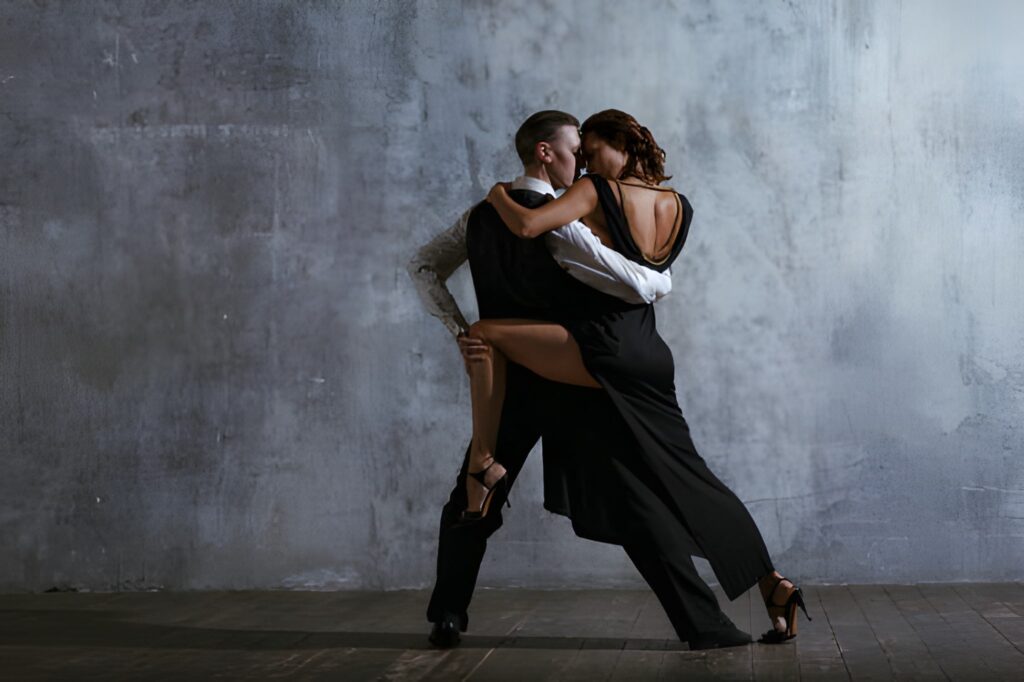

A milonga is not simply a tango social dance. It’s an immersive cultural experience with over a century of tradition woven into every detail. Here’s everything you need to know before your first visit.
The codes of conduct, the unwritten rules, the subtle social signals… all of this can feel overwhelming to newcomers who don’t know what to expect.
Walking into your first milonga unprepared can be intimidating, confusing, even alienating. But walking in with knowledge transforms the experience from anxiety-inducing to exhilarating. Understanding the etiquette allows you to focus on what matters: the music, the connection, and the joy of tango.
You might also enjoy: My First Tango Couple
You might also enjoy: An Argentine Tango Journey; and The Man Behind It
This comprehensive guide covers everything you need to know before attending your first milonga. Study these ten guidelines carefully, ideally starting three months before you plan to attend. Better yet, ask your tango teacher to quiz you on these protocols and practice scenarios with you before your inaugural milonga appearance.
Understanding the Milonga Environment
Before diving into specific milonga etiquette, it’s helpful to understand the milonga atmosphere. Unlike casual social dances, milongas maintain traditions dating back to Buenos Aires in the early 1900s. In fact, UNESCO recognized Argentine tango as Intangible Cultural Heritage in 2009, acknowledging its profound cultural significance. The formality might seem excessive to newcomers, but these customs serve important purposes: they facilitate clear communication, protect dancers from awkward situations, and preserve the intimate, respectful nature of tango culture.
Milongas typically take place in dimly lit venues with tables arranged around a central dance floor. The lighting is intentional. It creates ambiance and provides privacy for the subtle invitation system you’ll learn about below. Music plays in sets (tandas) separated by brief interludes (cortinas), creating a natural rhythm to the evening’s partnerships.
The atmosphere is simultaneously formal and passionate. Conversations happen in hushed tones. Dancers move counterclockwise around the floor in a smooth “line of dance.” The embrace between partners ranges from open to close, depending on personal preference and skill level. Everything unfolds according to established patterns that, once understood, feel natural and even liberating.
Tip 1: How to Dress for a Milonga
Your attire communicates respect for tango culture and signals your familiarity with its traditions. Dressing appropriately opens doors; dressing incorrectly can mark you as an outsider before you’ve danced a single step.
Dress Code for Leaders
Semi-formal attire is mandatory. No jeans, ever. The recommended ensemble includes dark dress pants, a blazer, and a light-colored dress shirt. A tie is optional and can be left untucked for a relaxed but still polished look.
Why light-colored shirts? Milongas get hot. Between the close embrace, sustained physical activity, and typically crowded venues, you will sweat. Dark shirts show perspiration marks obviously, while light colors hide them much more effectively.
Choose comfortable, well-fitting shoes. Dedicated tango shoes with suede soles offer ideal floor contact and facilitate pivots. If you’re just starting out, clean leather-soled dress shoes work acceptably. Avoid rubber soles at all costs. They grip the floor too much and impede the pivots and slides essential to tango movement.
Dress Code for Followers
Traditional milonga culture has strong opinions about women’s attire. Pants, while common at casual practica (practice sessions), conflict with tango’s traditional aesthetic at formal milongas.
A skirt or dress falling slightly below the knee strikes the right balance. Shorter lengths can send unintended social signals, while longer lengths can interfere with footwork visibility. The ideal hemline allows partners and observers to see your feet and shins during dancing, showcasing your technique and your tango shoes.
Tango heels typically range from 2 to 4 inches. Choose heels you can dance in comfortably for extended periods. Practice walking and dancing in them extensively before the milonga. Nothing undermines confidence like struggling with footwear.
Universal Grooming Standards
Tango involves sustained close contact. Personal hygiene matters tremendously.
- Arrive freshly showered and groomed
- Use deodorant, but go easy on cologne or perfume (some partners are sensitive)
- Bring breath mints and use them throughout the evening
- Consider bringing a fresh shirt if you perspire heavily
- Keep a small towel or handkerchief for discreetly managing perspiration
Tip 2: How to Get Invited and the Art of the Cabeceo
Invitations at milongas happen through the “cabeceo” (kah-beh-SAY-oh), a subtle system combining eye contact with a small head nod. Verbal invitations (“Would you like to dance?”) are considered inappropriate and mark the speaker as culturally uninformed.
How the Cabeceo Works
The process unfolds like this:
- You spot someone you’d like to dance with
- You attempt to catch their eye from across the room
- If they return your gaze and hold it, that signals potential interest
- You offer a small nod toward the dance floor
- They accept by nodding back, or decline by looking away
- If accepted, you both rise and meet on or near the dance floor
The entire exchange happens in seconds, often invisible to casual observers. Its subtlety is the point: it allows both parties to communicate interest (or disinterest) without public awkwardness.
Positioning Yourself for Invitations
Where and how you sit dramatically affects your cabeceo success.
Do:
- Sit in well-lit areas where your face is visible
- Position yourself facing the room and potential partners
- Maintain a pleasant, approachable expression
- Appear engaged with the music: tap your foot, move slightly to the rhythm
- Make yourself visible by sitting near the dance floor
Don’t:
- Sit in dark corners or with your back to the room
- Position yourself at the dance floor’s edge where you block traffic
- Sit exclusively with one companion (this signals unavailability)
- Stare intensely at one person (desperate energy repels invitations)
- Look at your phone or appear disengaged from the environment
Tip 3: Understanding Tandas and When to Say ‘Thank You’
Music at milongas is organized into tandas: sets of 3-4 consecutive songs in the same style, typically by the same orchestra or from the same era. Between tandas, a cortina (a short, distinct musical interlude) signals that it’s time to change partners.
The Critical Thank-You Rule
Never say “thank you” between songs within a tanda.
This rule surprises many newcomers, but it’s absolutely essential. In milonga culture, saying “thank you” between songs carries a specific meaning: “Thank you very much for the dance. I do not wish to dance with you anymore.”
Saying it after the first song essentially tells your partner that they danced so poorly you’re ending the partnership early. Even if you intend it as simple politeness, your partner will interpret it as rejection, and everyone observing will think the same.
Wait until the cortina plays (you’ll recognize it as clearly different music, often non-tango). Then thank your partner warmly: “Thank you, that was lovely” or simply “Thank you.” Escort them back toward their seat before seeking your next partner.
Tip 4: What to Talk About Between Dances
The moments between songs within a tanda offer brief opportunities for conversation. What you discuss reveals your experience level to observant partners.
Topics to Avoid
Never talk about the dance itself between songs. This includes:
- “Was that okay?”
- “Sorry, I messed up that sequence”
- “Could you try to follow better?”
- “Let me explain what I was trying to lead”
- “Your balance seemed off”
Dance analysis during the tanda breaks the spell and suggests insecurity or inexperience.
Appropriate Conversation Topics
Instead, treat between-song moments as brief social intervals:
- “Beautiful weather we’re having lately”
- “What do you do when you’re not dancing?”
- “That dress/suit looks wonderful on you”
- “Have you been coming to this milonga long?”
- “The orchestra tonight sounds particularly good”
Keep conversations light and pleasant. The dancing speaks for itself.
Tip 5: How to Invite Someone for a Dance
Initiating a cabeceo requires subtlety and patience. Never verbally request a dance. This cannot be emphasized enough. Much like the protocols of ballroom dance etiquette, these social customs protect both parties from uncomfortable situations.
Move to a seat or standing position near your intended partner, close enough to establish clear eye contact but not so close that you’re looming over them. One or two tables away works well.
The first song of a new tanda is the traditional invitation window. Use intermittent eye contact rather than continuous staring. Look at your intended partner for about 5 seconds, then look away for 2-3 seconds, then look back. This rhythm appears confident rather than desperate.
Once you’ve established mutual interest through cabeceo, rise and walk toward your partner. Meet somewhere between your two positions. Neither person should walk all the way across the room alone while the other waits.
Tip 6: Understanding the Different Dance Styles at Milongas
Three primary dance styles appear at milongas, and dancing the wrong style to the music marks you as inexperienced.
Tango
The foundational dance and the safest choice, since the majority of music at any milonga will be tango. This is what most people envision when they think of Argentine Tango: the dramatic pauses, the intricate footwork, the close embrace, the walking in perfect connection with your partner. If you want to explore essential tango music for your collection, start building familiarity with the classic orchestras before your first milonga.
Vals (Tango Waltz)
Vals is tango’s waltz, in 3/4 time with a flowing, rotational quality. The embrace often opens slightly compared to tango, and movements become rounder, more lilting. Vals appears in tandas interspersed between tango tandas, typically once every hour or so.
Milonga
Despite sharing its name with the event itself, milonga is a distinct dance style—faster than tango, more playful, with a syncopated rhythm that challenges even experienced dancers. The steps tend to be smaller, the embrace more compact, and the movement more continuous.
Critical Guidance
Only dance styles you’ve actually learned. If you’ve only studied tango, sit out the vals and milonga tandas. Use that time to rest, hydrate, observe skilled dancers, and plan your next cabeceo. The milonga community respects honest self-awareness far more than overconfident stumbling. Interestingly, NIH research on partnered dancing shows that this kind of social dance promotes cognitive, emotional, and physical health benefits.
Tip 7: How to Gracefully Reject a Dance Invitation
The cabeceo system makes rejection simple and painless: just look away.
When someone attempts cabeceo and you prefer not to dance:
- Simply don’t return their gaze
- Look at someone else or toward the floor
- Engage in conversation with a tablemate
- Appear absorbed in the music with eyes closed
The lack of returned eye contact communicates clearly within the cabeceo system. No verbal refusal needed.
Tip 8: Handling Rejection with Grace
Being declined is a normal part of milonga culture. It happens to everyone, including the most skilled and attractive dancers. Don’t take it personally. Learning to politely decline a dance invitation yourself is equally important.
When someone doesn’t return your cabeceo, they might be:
- Tired from dancing consecutive tandas
- Waiting for a specific style of music
- Already engaged in a cabeceo with someone else
- Not seeing you clearly in the dim lighting
Redirect your attention elsewhere smoothly. Never show visible disappointment, frustration, or offense. The dancers who thrive in milonga culture maintain equanimity through both acceptance and rejection.
Tip 9: How to Try Dancing with Someone New
When you’re curious about dancing with an unfamiliar partner but uncertain about compatibility, strategic timing minimizes risk for both of you.
The Last-Song Strategy
Remain inactive during the first three songs of a tanda. Watch, rest, and observe. Then, during the final song, use the cabeceo to invite the person you’re curious about.
If the connection works well, you’ve discovered someone new to seek out for full tandas later in the evening. If it doesn’t click, the tanda ends naturally after just one song. You both move on without the discomfort of three more dances together.
Tip 10: When to Go Home and the Art of the Exit
Your departure timing significantly impacts how you remember the entire evening. Leave strategically, not randomly.
The Optimal Exit
Here’s the secret experienced milongueros know: depart immediately following your best tanda of the evening.
When everything clicked—the connection felt magical, the music moved you, and you’re floating on endorphins—that’s when you leave. This final impression colors your entire memory of the milonga. You’ll remember the evening as wonderful, successful, and fulfilling.
Don’t stay until exhaustion sets in. Tired dancing is poor dancing. Ending on a low note taints the entire experience in memory.
Preparing for Your First Milonga
Three Months Before
- Begin intensive tango study if you haven’t already
- Learn basic navigation and floor craft
- Study the different music styles (tango, vals, milonga)
- Practice the cabeceo with classmates and friends
- Start acquiring appropriate attire and footwear
One Month Before
- Ask your teacher to assess your readiness
- Practice scenarios: receiving cabeceos, declining gracefully, handling rejection
- Attend practicas to build comfort with varied partners
- Fine-tune your wardrobe choices
Frequently Asked Questions
How long should I study tango before attending my first milonga?
Most teachers recommend at least three months of regular lessons before attempting a milonga. You should be comfortable with basic walking, simple figures, navigation in traffic, and both open and close embrace. Understanding the fundamentals of leading and following will serve you well.
What if someone breaks protocol and asks me verbally to dance?
You can politely decline (“I’m resting, thank you”) or accept if you’d like to dance with them. Don’t lecture them on cabeceo protocol. They’ll learn through observation.
Is it okay to dance with the same person multiple times in one evening?
Yes, but with awareness. Dancing every tanda with the same person signals romantic involvement and limits your opportunities to develop connections with others. Most experienced dancers aim for variety.
What if I make a mistake while dancing?
Keep dancing. Don’t stop to apologize or explain. In tango, small mistakes happen constantly and are immediately forgotten as the dance continues.
What if I feel nervous about my first milonga?
This is completely normal. Consider attending with a friend or fellow student for moral support. Arrive prepared to observe and absorb the atmosphere before dancing. Remember that everyone at the milonga was once a nervous newcomer.
The Reward of Preparation
Walking into a milonga prepared feels entirely different from walking in blind. Instead of anxiety about unknown rules, you’ll feel confident in your knowledge of the culture. Instead of awkward moments, you’ll navigate social situations smoothly.
The tango community welcomes newcomers who demonstrate respect for traditions. Your preparation shows that respect and opens doors to extraordinary dance experiences and meaningful connections. If you’re curious about other forms of social dancing, the skills you develop here transfer beautifully.
Ready to begin your journey toward the milonga? Start with tango lessons that prepare you not just technically but culturally. At Arthur Murray, our instructors share both the steps and the context that make social tango deeply rewarding. For more on why tango deserves a place in your repertoire, see why your instructor recommends the tango.